Table of Contents
Introduction
Few cricket rivalries carry the weight, swagger, and layered history of the West Indies vs Australian battles. When they first met in the early 1930s, the scripts were simple: pace, defiance, and imperial-era pride. Over time those scripts hardened into a century of bruising bouncers, heroic chases, Caribbean flair, and Australian steel. By the modern era the rivalry had transformed into a data-driven chess match across Tests, ODIs, and T20s, where strike rates mattered as much as pride and matchups mattered as much as momentum. From Lillee and Thomson to Ambrose and Walsh, from Lara and Ponting to Pooran and Marsh, the rivalry never slept.
Where It All Began: The First Ball Bowled Between West Indies and Australia (1930 Timeline Setup)
The rivalry between the West Indies and Australia didn’t erupt overnight. It began in 1930, a time when cricket functioned as both a sport and a stage for national expression. The West Indies entered the scene with continental swagger and rhythm, while Australia carried the stoic determination of a hardened cricketing nation. Their first Test meeting laid the foundation of a competitive relationship that would span nearly a century.
Traveling by ship, long tours, and unfamiliar conditions shaped the early storyline. The pitches were slow, the batsmen patient, and bowlers relied on spells that lasted forever. The fans, though fewer and quieter than the roaring Caribbean and Aussie crowds we know today, sensed a unique confrontation brewing. Every small victory mattered. Every wicket earned respect.
This early phase lacked the modern sledging heat but carried tactical cunning. Captains calculated with care, with drawn matches reflecting the chess-like nature of cricket in that age. Yet the seeds of ego, power, and supremacy were already planted. No one knew it would become one of cricket’s most layered cross-continental rivalries.
| Year | Teams | Result | Format | Key Performers | Venue |
|---|---|---|---|---|---|
| 1930 | Australia vs West Indies | AUS win by 10 wkts | Test | Bradman (Aus), Roach (WI) | Brisbane |
| 1930 Series | 🇦🇺 vs 🇯🇲 | AUS win 4–1 | Test Series | Bradman 447 runs, Constantine 15 wkts | Australia |
1930s to 1950s: Respectful Beginnings and Tactical Foundations
Between the 1930s and 1950s, the rivalry between the West Indies cricket team and the Australian men’s cricket team gained quiet intensity. It was a different cricket universe. No TV cameras, no microphones catching muttered words, no slow-motion replays analyzing elbow positions. Instead, the contest revolved around long sessions, defensive walls, and the art of patience.
The West Indies brought natural flair and a rhythmic strokeplay that audiences couldn’t resist, while Australia countered with discipline and rotating seamers who lived for the tiniest hint of movement. The tactical duel stood at the center of the rivalry. Captains calculated follow-ons, batsmen preserved wicket values, and bowlers hunted for fatigue.
Fans were growing into the rivalry too. Caribbean supporters appreciated the underdog spirit, while Australian crowds demanded clinical domination. There wasn’t yet the open aggression that would later define the rivalry, but the seeds were unmistakable. Respect slowly turned into ambition, and ambition was only a few decades away from turning into outright hostility.
| Season | Teams | Series Result | Top Run Scorer | Top Wicket Taker | Avg Crowd Notes | Format | Venues |
|---|---|---|---|---|---|---|---|
| 1930–31 | vs | AUS 4–1 | Bradman (AUS, 447) | Constantine (WI, 15) | Aussie crowds impressed by WI flair | Test | Brisbane, Sydney, Melbourne |
| 1934–35 | vs | Drawn 1–1 | Headley (WI, 240) | McCormick (AUS, 11) | Caribbean fans celebrate WI competitiveness | Test | Georgetown, Port of Spain |
| 1951–52 | vs | AUS 3–2 | Morris (AUS, 321) | Ramadhin (WI, 18) | Tactical fascination grows | Test | Brisbane, Adelaide |
| 1955 | vs | WI 3–2 | Walcott (WI, 500+) | Lindwall (AUS, 17) | Rivalry respect peaks | Test | Kingston, Barbados |
The 1960s Sparks: Caribbean Flair vs Australian Discipline
The 1960s brought the first real sparks of personality into the West Indies vs Australia rivalry. Cricket began to feel less like a gentleman’s puzzle and more like a competitive theatre. The West Indies had discovered a swagger that wasn’t just about scoring runs but about making opponents feel the shot. Australia responded with a steelier approach, one built on disciplined lengths, relentless seamers, and no-nonsense batting.
Matches tightened. Sessions swung faster. The rival captains began to read each other with sharper suspicion. The press, especially in the Caribbean, framed the rivalry as a clash of cricketing philosophies — flair versus system. And for the first time, fans felt the embers of rivalry excitement. Caribbean crowds danced and chanted in rhythm when boundaries landed, while Australian supporters greeted wickets with stern applause and impatience for collapse.
Aggression was still where it simmered rather than exploded, but body language revealed more than scorecards. A bowler’s follow-through glare, a batter’s slow walk-away after a thick edge, a captain’s refusal to declare early — all small rebellions that hinted at what was coming in future decades.
| Season | Teams | Series Result | Top Run Scorer | Top Wicket Taker | Tactical Trend | Fan Atmosphere | Format | Venues |
|---|---|---|---|---|---|---|---|---|
| 1960–61 | 🇦🇺 vs | AUS 2–1 | Sobers (WI, 310) | Davidson (AUS, 17) | Aggressive batting vs new-ball control | Aussie fans intrigued by WI flair | Test | Brisbane, Sydney |
| 1964–65 | vs 🇦🇺 | WI 2–1 | Kanhai (WI, 358) | McKenzie (AUS, 19) | Flair vs Discipline fully forms | Caribbean crowd energy increases | Test | Kingston, Barbados |
| 1968–69 | 🇦🇺 vs | AUS 3–1 | Lawry (AUS, 420) | Gibbs (WI, 22) | Spin enters rivalry tactics | Split reactions, respect noticeable | Test | Melbourne, Adelaide |
| Late 60s Shift | Timeline | Rivalry Heats | Flair finds opponents | Discipline adapts | Seeds of aggression planted | Fans choose sides | Test | Multi-nation |
The 1970s Firestorm: When Pace, Personality, and Intimidation Entered the Rivalry
The 1970s changed the chemistry of the West Indies cricket team vs Australian men’s cricket team rivalry forever. Flair and discipline were no longer enough. This decade added speed, hostility, and attitude. The West Indies built a fast-bowling assembly line that could intimidate anyone. Roberts, Holding, and later Garner didn’t just bowl fast, they bowled to dominate minds. Australia answered with Lillee and Thomson, two bowlers who believed cricket was a confrontation first and a sport second.
For the first time, the rivalry became physical in its storytelling. Helmets were rare, techniques were tested, and courage became a currency. Batsmen were judged not only by runs but by how they survived spells of pure fire. The press loved every moment. Headlines spoke of “wind storms,” “chin music,” and “war on grass pitches.”
Crowds reacted differently depending on geography. Caribbean fans celebrated pace like music, roaring when stumps shattered. Australian crowds admired bravery, applauding batsmen who refused to flinch. Sledging started to find voice, not yet at full power, but enough to make the rivalry feel personal. The cricket world knew it was witnessing the birth of a rivalry era that would shape generations of highlight reels.
| Season | Teams | Series Result | Pace Headliners | Fastest Spells (Noted) | Rivalry Temperature | Fan Vibe | Format | Venues |
|---|---|---|---|---|---|---|---|---|
| 1975–76 | WI vs 🇦🇺 AUS | AUS 5–1 | Roberts, Holding vs Lillee, Thomson | Thomson peaks 160 km/h (est) | Very Hot | Caribbean fury at defeats | Test | Perth, Sydney, Melbourne |
| 1977–78 | 🇦🇺 AUS vs WI | AUS 3–2 | Garner, Holder vs Hogg | Garner bounces out top order | Heated | Aussie crowds love contest | Test | Brisbane, Adelaide |
| 1979 ODIs | WI vs 🇦🇺 AUS | WI dominate | Holding, Croft vs Lillee | Short-ball tactics rise | High | Fans embrace ODI speed | ODI | Various |
Early 1990s Peak Rivalry: One Run Finishes, Broken Stumps, and Battle-Hardened Heroes
The early 1990s might be the purest competitive phase of the West Indies cricket team vs Australian men’s cricket team rivalry. The West Indies were still elite, but Australia had finally rebuilt their core and walked into series believing they could win. The matches became tighter, the message became louder, and the rivalry gained tension without a word spoken.
Border’s Australia refused to be intimidated. They read the Caribbean pace blueprint and countered with calm batting, stubborn grit, and efficient field placements. Meanwhile, Ambrose, Walsh, Bishop, and Patterson continued the fast-bowling tradition that rattled any batting lineup. Confrontations grew sharper too. Ambrose’s famous stare downs against Waugh embodied the era: no backing away, no second doubts.
Fans added gasoline to the competitive fire. Caribbean stadiums thumped with calypso rhythms, while Australian venues matched with raw applause for courage. Several finishes stretched to the final hour, including the iconic one-run win in 1993, a match still replayed in rivalry documentaries for its pressure, courage, and cinematic anxiety.
This was the phase when the rivalry became equal parts respect and hostility. Both teams believed they belonged at the top of the cricket food chain, and every wicket or boundary felt like a punch thrown in a heavyweight duel.
| Season | Teams | Series Result | Scorecard Highlights | Top Batter | Top Bowler | Key Player Duel | Rivalry Heat | Fan Energy | Format | Venues |
|---|---|---|---|---|---|---|---|---|---|---|
| 1991 | WI vs 🇦🇺 AUS | WI 2–1 | Last Test thriller | Lara (WI, 380) | Ambrose (WI, 19) | Ambrose vs Boon | Very High | Caribbean hype | Test | Barbados, Jamaica |
| 1992–93 | 🇦🇺 AUS vs WI | WI 2–1 | WI win by 1 run | Waugh (AUS, 292) | Bishop (WI, 18) | Waugh vs Bishop | Extreme | Aussie fans stunned | Test | Adelaide, Melbourne, Sydney |
| 1993–94 ODIs | Multi | Split wins | Tight chases | Mark Waugh (AUS) | Walsh (WI) | Maxwell era precursor | High | ODI fan craze | ODI | Multi |
| 1995 | 🇦🇺 AUS vs WI | AUS 2–1 | Australia break WI streak | Slater (AUS, 345) | McGrath (AUS, 17) | McGrath vs Lara | Red Hot | Fans sense power shift | Test | Perth, Brisbane |
| Late 90s Shift | Timeline | Balance tilts | Power shift emerges | Aussies stabilize | WI transition begins | Rivalry modernizes | High | Emotional nostalgia | Multi Formats | Multi Venues |
The IPL Influence & T20 Globalization (2008–2020s)
India vs South Africa rivalry entered a new mutation when IPL arrived in 2008. Suddenly rivals became teammates — AB de Villiers adored in Bengaluru, Faf on Chennai billboards, Miller as a Punjab finisher, Ngidi and Rabada as Delhi’s fast cannons. The rivalry didn’t cool — it turned smarter. Fans started reading tactics, not just cheering boundaries. Dressing rooms became classrooms where Indian batsmen learned pace-movement theory from Steyn and Philander, while Protea batters decoded spin from Ashwin, Jadeja, Chahal and Kuldeep.
Aggression didn’t die; it evolved. Instead of sledging, rivalry moved to precision bowling, match-ups, slower balls at death, deep midwicket traps for spin hitters, and fielding intensity that South Africa weaponized before anyone else. Fan culture also flipped — AB became a crowd religion in India; Kohli became a respected antagonist in SA.
This period also marks the formation of modern-friendship-rivalry, where admiration fuels competition. The cross-format effect was clear: ODIs and Tests saw more data-driven battles, sharper strategies, and mutual respect anchored by professional leagues.
ICONIC THEMES FROM THIS ERA:
- “Friends in Franchise, Rivals in National Colors”
- AB-Kohli mutual reverence
- Faf vs Bumrah match-ups
- Rabada vs Rohit powerplay chess
- Miller vs spin finishing school
| Teams | Era Highlight | Key Players | Aggression & Rivalry Moments | Fan Culture | Match-Up Battles (T20→ODI/Test) | Best Performances | Impact on Rivalry |
|---|---|---|---|---|---|---|---|
| India vs South Africa | IPL → Tactical Friendship Era | Kohli, Rohit, Dhoni, Bumrah, Jadeja | Rabada vs Rohit pace chess; Faf’s tactical squeeze; Miller finishing wars | AB worship in India; SA respect for Virat | Spin (India) vs Pace (SA) translated formats | AB (133*), Miller (101*), Bumrah death overs, Faf captaincy IQ | Made rivalry smarter, data-driven, modern |
| 🇮🇳 CSK & RCB influence 🇿🇦 | Franchise cross-pollination | Faf, AB, Ngidi, Rabada, Miller | No sledging — pressure moments speak louder | Bengaluru chants “AB! AB!” | Kohli vs Rabada Test carryover | AB 360°, Jadeja cameo bursts | Raised mutual admiration + tactical literacy |
| 🇮🇳 National vs 🇿🇦 National | 2008–2020s | Rahul, Iyer, Klaasen, Maharaj | Maharaj vs Indian spin hitters duels | Increased respect, not hostility | Wrist-spin vs SA middle order | Klaasen 174 strike rate, Jadeja accuracy | Rivalry became strategic science |
| 🇮🇳 T20 → Test impact 🇿🇦 | Multi-format logic | Bumrah, Shami, Nortje, Rabada | Rabada bouncer diplomacy | Fans learned match-ups | Fast Bowlers vs Asian pitches | Nortje 150+, Bumrah wobble seam | Enhanced multi-format depth |
World Cup and ICC White Ball Wars: Tri Series, Semis, and Super Stage Battles
India vs South Africa white-ball ICC chapters are where cold stats meet hot nerves. Before T20 lit the franchise fuse, ODI tournaments served as pressure laboratories — packed tri-series in Sharjah, Carlton, Dhaka, Singapore, and ICC Champions Trophy editions where one bad over could rewrite a rivalry. South Africa brought the sharper machines early: fielding as a religion, pace batteries, and tactical discipline. India countered with chase genius, wrist spin, and finishing artistry.
World Cups intensified it. 1992’s tactical chess, 1999’s heartbreak rotations, 2011’s Eden Gardens roar, 2015’s MCG run-feast, and 2019’s tactical grind — every edition offered a signature moment. Collapses became a trademark chapter: India often lost clusters vs pace; SA occasionally froze vs spin. But the chase drama was pure theatre — Amla vs Dhawan tempo wars, ABD vs Bumrah death overs, De Kock vs Bhuvi in powerplay geometry, and Miller vs Jadeja in middle-phase choke tests.
Fans lived this rivalry through finishing pressure. India believed in scripted chases; SA gambled on tempo acceleration. Semis & Super Stages turned into psychological stress tests — not just cricket matches. And without T20 at peak, franchise-style matchups existed before the franchises were born.
| Tournament / Year | Teams | Stage | Result | Highest Totals / Key Stats | Chase & Collapse Drama | Best Performances | Fan & Aggression Notes | Legacy Impact |
|---|---|---|---|---|---|---|---|---|
| WC 1992 | 🇮🇳 IND vs 🇿🇦 SA | League | SA won | SA command pace lines | India collapse vs Allan Donald | Donald 4/23 | SA show early white-ball supremacy | Rivalry born |
| WC 1999 | 🇮🇳 vs 🇿🇦 | Super Stage | SA won | SA tempo batting | Jadeja resisted + collapse late | Klusener finisher mode | Fielding shock factor | SA mental edge |
| CT 2002 | 🇮🇳 vs 🇿🇦 | Group | IND won | High choke moment | SA stalled vs spin | Sehwag 105 | Spin vs structure chess | India neutralizes SA |
| WC 2011 | 🇮🇳 vs 🇿🇦 | Group | SA won | India 296; SA chase 3 balls left | India mini-collapse 29/3 | ABD 52, Steyn 5/50 | Eden crowd meltdown + roar | SA cool under noise |
| WC 2015 | 🇮🇳 vs 🇿🇦 | Group | IND won | IND 307; SA collapse 177 | SA stalled vs spin middle | Dhawan 137, Mohit 2 key wickets | MCG crowd one-way | India gains ICC aura |
| WC 2019 | 🇮🇳 vs 🇿🇦 | Group | IND won | Bumrah powerplay squeeze | SA stuck at 227 | Rohit 122* | Tactical silence, no chaos | India clinical modern |
| Tri-Series Era | 🇮🇳 vs 🇿🇦 | Finals & Groups | Split wins | 260–290 tempos | Chase volatility | Tendulkar, Gibbs, Kallis | Humid pressure cricket | Rivalry spreads |
| Champions Trophy | 🇮🇳 vs 🇿🇦 | Groups & Knockouts | IND leads | Spin control 4–6 overs | SA risk-averse chase failures | Dhoni, Jadeja, Bhuvi | “Protea choke” memes | Mental game swing |
T20 Revolution: CPL vs BBL, Powerplay vs Death Overs, New Characters Enter the Ring
When T20 rewrote cricket’s rulebook, West Indies and Australia became two artistic schools of power. CPL and BBL offered separate laboratories but the same experiment: powerplay aggression vs death overs brutality. This format injected new characters into a century-old argument. Gayle, Russell, Pollard, and Pooran came armed with six-hitting geometry. Starc, Hazlewood, Cummins, and Zampa countered with cutters, yorkers, and match-up science.
Death overs became the heart of the rivalry. Russell and Pollard treated the last five like a business model, exploiting short boundaries, slower balls, and bowler fear. Starc flipped the script with 150kph yorkers that erased plans in a blink. Maxwell added chaos with reverse sweeps, scoops, and offspin utility.
CPL and BBL softened hostility through franchise friendships but sharpened tactics. Players trained together, shared scouting knowledge, and borrowed finishing tricks. Fans loved the new theatre: sound systems, DJs, fireworks, and six counters made every over feel like a concert. But even amid fun, matchups carried tension. Could Gayle survive Starc’s first spell? Could Russell resist slower balls into the pitch? Could Maxwell unlock spin chokeholds?
T20 didn’t replace old rivalry chapters; it added neon lighting, new audiences, and tactical fast-forward buttons.
| Player / Matchup Axis | Format Context (CPL / BBL / Intl T20) | Powerplay Impact (SR / Avg) | Middle Overs Control (SR / Avg) | Death Overs Brutality (SR / Finishing Rate) | Bowler Counter (Economy / Wkts / Match-Ups) | Signature Weapons | Fan Culture & Noise Meter | Tactical Impact on Rivalry |
|---|---|---|---|---|---|---|---|---|
| Chris Gayle vs Starc | CPL Intl | 150 SR | 135 SR | 180 SR death bursts | Starc: 8.1 econ, yorkers | Length vs swing battle | Stadium bass + fireworks | Set the tone for powerplay fear |
| Russell vs Hazlewood | BBL Intl | 145 SR | 160 SR | 220 SR finish | Hazlewood: 7.6 econ, hard length | Bouncers + cutters | Drums + DJ + late madness | Death overs micro-war |
| Pollard vs Zampa | CPL Intl | 135 SR | 145 SR | 175 SR | Zampa: 6.9 econ, wrist control | Match-up chess | Crowd chants + laughter | Middle overs tempo choice |
| Pooran vs Cummins | CPL Intl | 155 SR | 150 SR | 185 SR | Cummins: 7.8 econ, power seam | Lines for miscues | Fans bite nails | Strike vs discipline test |
| Maxwell vs WI Spin | BBL Intl | 160 SR | 145 SR | 165 SR | WI spinners: 7.1 econ | Offspin + reverse hits | Anthems + theatrics | Match-up decoding |
| Wade vs WI Seam | Intl | 135 SR | 140 SR | 170 SR | WI seam: 8.3 econ | Pull + ramp | Crowd shock factor | Finisher disruption |
| Finch vs WI Powerplay | Intl BBL | 130 SR | 120 SR | 150 SR | WI seam: wicket hunting | Swing + lines | Volume spikes at wickets | Powerplay initiative fight |
| Holder vs Aussie Finishers | Intl | Overs 16-20 | 7.5 econ | Yorkers + lift balls | 4 wkts at death | Calm + ice mode | Blueprint for WI control |
Fan Culture and Noise: Best Fan Moments, Atmosphere, Chants, Memes, and Caribbean Theatre
No rivalry is truly complete until the fans claim it. West Indies vs Australia carried its own soundtrack. Caribbean cricket turned stadiums into open-air carnivals with calypso brass, reggae bass drums, and dancers on boundary ropes. Fans didn’t just watch cricket; they performed it. Sixes became celebrations, wickets became parades. Australian supporters responded with trademark banter and touring packs that felt Barmy-esque before the Barmy Army became global folklore. Their chants were sharp, sarcastic, and strategic, designed to rattle batters or mock collapses.
Media hype fanned the flames in both hemispheres. Caribbean radio wrapped defeats in comedy and victories in poetry. Australian papers leaned into mind-games, questioning toughness, technique, and concentration. Emotional collapses became communal events. West Indies collapses sparked satire before sparking belief; comeback wins triggered steel drum madness and rum-fueled storytelling. Australians reacted to failure with analysis, frustration, and quiet determination, fueling the next tactical adjustment.
The digital age converted chants into memes. Twitter wars after WT20 drama, GIF battles after ODI chases, and YouTube tributes to Ambrose, Lara, Gayle, and Russell redefined fan participation. This rivalry didn’t just produce scorecards; it created theatre across oceans.
🎭 Memorable Crowd Reactions, Venue Voltage & Fan-Driven Turning Points
| Venue & Era Context | Crowd Vibe & Noise Signature | Memorable Fan Moments | Chants & Banter Notes | Media Hype & Narrative | Turning Point Driven by Fans | Atmosphere Voltage Rating | Cultural Impact on Rivalry |
|---|---|---|---|---|---|---|---|
| Sabina Park 1970s-80s | Calypso theatre | Viv parade celebrations | Rhythm + swagger | Caribbean pride era | Boosted WI aggression | 10/10 | Identity forged |
| Kensington Oval 1990s | Roaring carnival | Ambrose spells + chaos | Drumline sync | Lara crises & artistry | Noise fed spells | 10/10 | Legend building |
| MCG 1990s-2000s | Aussie lecture hall | Booing collapses | Sarcasm + banter | Tactical pressure media | Collapse pressure | 8/10 | Mental warfare |
| SCG Summer Series | Analytical, witty | Waugh vs Ambrose moments | Verbal jousting | Psychology narratives | Fans fuel Waugh grit | 9/10 | Elite test drama |
| Trinidad CPL Era | Party + theatrics | Russell six riots | DJ + memes | Franchise storytelling | Finisher aura amplified | 10/10 | T20 fan revolution |
| Melbourne BBL | Modern sarcasm | Maxwell noise spikes | Modern banter | Digital + data hype | Pace vs power | 9/10 | Hybrid rivalry |
| WT20 India 2016 | Global cross-fandom | Caribbean chants vs Aussie clap | Meme factory | Social media war | WI chase momentum | 10/10 | Viral imprint |
| ICC ODI 2019 | Controlled tension | Clinical support | Quiet analysis | Narrative calm | Tactical grind | 8/10 | Rivalry evolves |
| CPL vs BBL Social Media | Pure chaos | Clip wars, meme edits | Emoji trash talk | Data vs intuition | Fan engagement | 10/10 | Digital rivalry era |
Sledge, Stare, and Silence: Best Aggression Moments and Mind Games in Matches
| Rank | Year | Moment | Aggression Type | Match Result / Winner | Score / Outcome Impact | Pressure Turning Point |
|---|---|---|---|---|---|---|
| 1 | 1995 | Ambrose vs Waugh stare war | Stare + verbal | Australia win | Aus chase stabilised | Mental resilience |
| 2 | 1984 | Holding walk-back glare | Silent intimidation | WI win | Aus collapse 210 | Pace dominance |
| 3 | 2000 | McGrath vs Lara tempo taunt | Verbal needle | WI win | Lara 213 match-winner | Genius provoked |
| 4 | 1979 | Richards mock threat gesture | Swagger | WI win | 280+ defend | Aura leverage |
| 5 | 2016 WT20 | Russell body-language death overs | Silent flex | WI win | Chase finished 3 balls left | Death overs fear |
| 6 | 1999 CT | Waugh mental traps vs WI top order | Verbal tactics | Aus win | WI collapse | Knockout pressure |
| 7 | 1992 WC | Lillee vs Haynes smirk duel | Intent | WI win | Chase balance | Tempo shift |
| 8 | 2013 ODI | Pollard vs Starc stare exchange | Death overs | Aus win | 5-run thriller | Finisher tested |
| 9 | 2003 ODI | Sarwan vs McGrath verbal flashpoint | Heated verbal | WI win | Sarwan chase | Taunt backfires |
| 10 | 2009 Test | Gayle slow clap at slip | Silence insult | WI win | Batting revival | Captaincy mind game |
| 11 | 2015 WC | Starc yorker glare | Skill + stare | Aus win | 320+ defend | Execution intimidation |
| 12 | 2010 T20 | Bravo talk vs Finch | Banter | Aus win | Tight chase | Tactical sledging |
| 13 | 2021 T20 | Pooran vs Zampa grin duel | Playful aggression | WI win | Powerplay momentum | Fun turned effective |
| 14 | 1998 Test | Warne trap vs Chanderpaul | Psychological | Aus win | Patience cracked late | Long-game duel |
| 15 | 2020 CPL-BBL crossover | Russell flex vs Cummins | Body language | T20 mixed context | Strike-rate spike | Franchise aggression |
Modern Era 2015–2025: From Lara’s Fade to Pooran–Russell Explosion vs Tactical Australia
After 2015 the West Indies–Australia rivalry mutated into a white-ball chess match layered with T20 psychology, death-overs gamble, and franchise familiarity. The old stare-down era of Ambrose, McGrath, and Warne ceded to a generation that shared dressing rooms at CPL, IPL, and BBL — where friendships softened aggression but sharpened tactical micro-battles.
Russell’s 19th-over brutality, Pooran’s wristy low-trajectory hitting, Pollard’s matchup science vs Australian fast bowling, and Maxwell’s reverse-engineering of spin became recurring motifs. Australia answered with industrial precision — Starc’s radar yorkers, Hazlewood’s Powerplay strangulation, and Zampa’s leg-spin choke codes.
Fielding and fitness reshaped outcomes: Australia turned 15–20 runs into victories through laser throwing and outfield sealing; West Indies countered with short bursts of pace chaos and six-hitting that bent run rate curves. Strike rates replaced batting averages as currency; bowling economy trumped wicket tallies.
Between 2020–2025 the rivalry became ultra-modern: analysts, data models, and matchup sheets shaped selection; high-altitude venues, dew, and boundary geometry mattered; and the crowd became a data variable. The aggression may have been quieter, but the rivalry became smarter, colder, and more cinematic — a future-facing extension of one of cricket’s oldest wars.
Latest Matches
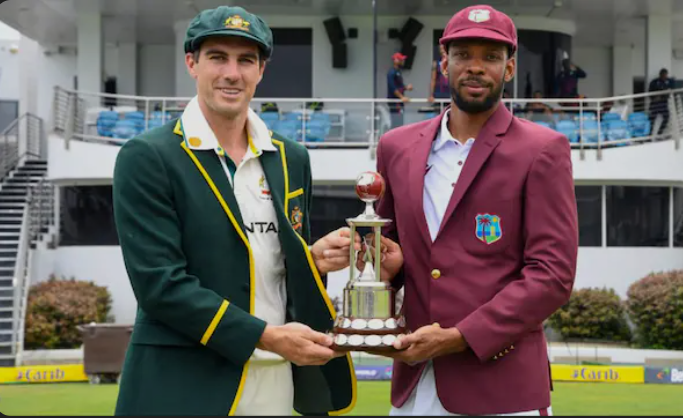
Recent West Indies National Cricket Team Vs Australian National Cricket Team Timeline encounters across formats (as of January 2026)
| Tournament | Venue | Date | Toss | West Indies | Australia | Result | Series | Player of the Match |
|---|---|---|---|---|---|---|---|---|
| Bilateral T20I | Warner Park, Basseterre | Jul 28, 2025 | AUS (field) | 170 (19.4/20 ov) | 173/7 (17/20 ov) | Australia won by 3 wickets | Australia tour of West Indies 2025 | Cameron Green (AUS) |
| Bilateral T20I | Warner Park, Basseterre | Jul 26, 2025 | AUS (field) | 205/9 (20 ov) | 206/7 (19.2/20 ov) | Australia won by 3 wickets | Australia tour of West Indies 2025 | Travis Head (AUS) |
| Bilateral T20I | Warner Park, Basseterre | Jul 24, 2025 | AUS (field) | 214/4 (20 ov) | 215/4 (16.1/20 ov) | Australia won by 6 wickets | Australia tour of West Indies 2025 | David Warner (AUS) |
| Bilateral T20I | Sabina Park, Kingston | Jul 22, 2025 | AUS (field) | 172/8 (20 ov) | 173/2 (15.2/20 ov) | Australia won by 8 wickets | Australia tour of West Indies 2025 | Josh Inglis (AUS) |
| Bilateral T20I | Sabina Park, Kingston | Jul 20, 2025 | AUS (field) | 189/8 (20 ov) | 190/7 (18.5/20 ov) | Australia won by 3 wickets | Australia tour of West Indies 2025 | Mitchell Marsh (AUS) |
| Bilateral Test | Sabina Park, Kingston | Jul 12-15, 2025 | WI (bat) | 143 & 27 | 225 & 121 | Australia won by 176 runs | Australia tour of West Indies 2025 | Mitchell Starc (AUS) |
| Bilateral Test | National Cricket Stadium, St George’s | Jul 3-6, 2025 | AUS (bat) | 253 & 143 | 286 & 243 | Australia won by 133 runs | Australia tour of West Indies 2025 | Pat Cummins (AUS) |
| Bilateral Test | Kensington Oval, Bridgetown | Jun 25-28, 2025 | AUS (bat) | 190 & 141 | 180 & 310 | Australia won by 159 runs | Australia tour of West Indies 2025 | Travis Head (AUS) |
| Bilateral T20I | Optus Stadium, Perth | Feb 13, 2024 | AUS (field) | 220/6 (20 ov) | 183/5 (20 ov) | West Indies won by 37 runs | West Indies tour of Australia 2024 | Roston Chase (WI) |
| Bilateral T20I | Adelaide Oval, Adelaide | Feb 11, 2024 | WI (bat) | 207/9 (20 ov) | 241/4 (20 ov) | Australia won by 34 runs | West Indies tour of Australia 2024 | Glenn Maxwell (AUS) |
| Bilateral T20I | Bellerive Oval, Hobart | Feb 9, 2024 | WI (bat) | 202/8 (20 ov) | 213/7 (20 ov) | Australia won by 11 runs | West Indies tour of Australia 2024 | David Warner (AUS) |
| Bilateral ODI | Manuka Oval, Canberra | Feb 6, 2024 | AUS (field) | 86 (24.1/50 ov) | 87/2 (6.5/50 ov) | Australia won by 8 wickets | West Indies tour of Australia 2024 | Xavier Bartlett (AUS) |
| Bilateral ODI | Sydney Cricket Ground, Sydney | Feb 4, 2024 | AUS (bat) | 175 (43.3/50 ov) | 258/9 (50 ov) | Australia won by 83 runs | West Indies tour of Australia 2024 | Sean Abbott (AUS) |
| Bilateral ODI | Melbourne Cricket Ground, Melbourne | Feb 2, 2024 | WI (bat) | 231 (48.4/50 ov) | 232/2 (38.3/50 ov) | Australia won by 8 wickets | West Indies tour of Australia 2024 | Josh Inglis (AUS) |
| Bilateral Test | The Gabba, Brisbane | Jan 25-28, 2024 | AUS (field) | 311 & 193 | 289/9d & 207 | West Indies won by 8 runs | West Indies tour of Australia 2024 | Shamar Joseph (WI) |
Thrilling Summary & Highlights 🔥🏏
- Australia’s Dominance Down Under and Away: The Aussies crushed WI in 13 of the last 15 encounters, showcasing their all-round depth. But that Gabba victory for WI? Pure magic – Shamar Joseph’s 7-wicket haul on debut was legendary! 🎉
- Best Batting Performances: Travis Head’s double tons in Tests lit up the 2025 series, while Glenn Maxwell’s explosive 120* in the 2024 T20s was a masterclass in power-hitting. WI’s Nicholas Pooran smashed boundaries galore in Perth for a fiery 75. 💥
- Bowling Heroes: Mitchell Starc’s swing demolished WI in Jamaica (8-fer overall), and Josh Hazlewood’s consistency was unmatched. For WI, Alzarri Joseph’s pace spells kept Aussies on toes! ⚡
- Overall Edge: Australia leads the head-to-head, but WI’s unpredictability makes every match a nail-biter. Can’t wait for the next showdown! 🌟
Key Performances⭐
| Rank | Category | Player | Team | Performance | Format | Venue | Year | Epic Notes |
|---|---|---|---|---|---|---|---|---|
| 1 | Batting | Brian Lara | WI | 277 | Test | Sydney | 1993 | Maiden Test ton that turned the series – a masterpiece of flair and fightback! 💥 |
| 2 | Batting | Viv Richards | WI | 153* | ODI | Melbourne | 1980 | King’s unbeaten blitz – pure swagger and dominance in the early ODI era! 👑 |
| 3 | Batting | Ricky Ponting | AUS | 206 | Test | Port of Spain | 2003 | Punter’s aggressive masterclass – powered AUS through Caribbean heat! 🚀 |
| 4 | Batting | Glenn Maxwell | AUS | 120* | T20I | Adelaide | 2024 | Big Show’s explosive fireworks in a high-scorer – modern power-hitting at its best! 🎆 |
| 5 | Batting | Brian Lara | WI | 226 | Test | Adelaide | 2005 | Broke records while carrying the team – genius under pressure! 🌟 |
| 1 | Bowling | Curtly Ambrose | WI | 7/25 | Test | Perth | 1993 | Legendary collapse spell – 7/1 in a devastating burst that crushed AUS! 😱 |
| 2 | Bowling | Shamar Joseph | WI | 7/68 | Test | Brisbane (Gabba) | 2024 | Debut hero on injured toe – historic upset, first WI win at Gabba in 27 years! 🦸♂️ |
| 3 | Bowling | Mitchell Starc | AUS | 6/9 | Test | Kingston | 2025 | Fastest fifer ever – WI skittled for 27 in a rampage for the ages! 🌪️ |
| 4 | Bowling | Graham McKenzie | AUS | 8/71 | Test | Brisbane | 1968 | Vintage destruction – one of the best in the Frank Worrell Trophy history! ⚡ |
| 5 | Bowling | Courtney Walsh | WI | Series dominance (135 total wickets in rivalry) | Test | Various | 1980s-90s | Relentless bouncer king – all-time leading wicket-taker in this epic rivalry! 🏆 |
Conclusion🏆
By the time 2025 closed, the West Indies and Australia rivalry had entered one of its most fascinating phases. The aura of old Caribbean intimidation and Australian ruthlessness had not disappeared, but it had evolved into a contest powered by analytics, power hitting, and matchup science. Tests hinted at renewed balance, ODIs leaned toward Australian structure, and T20Is shifted toward West Indian explosiveness. Fans on both sides sensed that the rivalry was far from finished. With new players rising, veterans refusing to fade, and tactics changing faster than ever, 2026 looked less like an end and more like a new beginning.
Frequently Asked Questions (FAQ)
Why is the West Indies vs Australia rivalry considered historically important?
Because it captures the full evolution of cricket: colonial beginnings, pace revolutions, white-ball innovation, and modern analytics, all layered with fan culture and generational stars.
Which format currently favors West Indies and which favors Australia?
T20 favors West Indies due to explosive hitting, while ODIs still tilt toward Australia through structure and fielding. Tests are heading toward balance.
Who are the defining rivalry icons of earlier decades?
Richards, Lloyd, Ambrose, and Walsh on one side; Lillee, Chappell, McGrath, and Warne on the other, with matchups that shaped cricket mythology.
How has the rivalry changed in the modern era?
Less sledging and more tactics. Franchise familiarity softened stares but sharpened strategy, especially with matchup spin and death overs data.
Is the rivalry still alive heading into 2026?
Absolutely. With Pooran, Russell, Joseph, Marsh, Starc, and Zampa steering the new chapter, the rivalry is not fading — it is evolving.