Table of Contents
Cricket rivalries are not born overnight, and few have grown as fiercely as the clash between Sri Lanka and Pakistan. From tentative early meetings to high pressure World Cup battles, this contest has evolved into a test of skill, nerve, and pride. The sri lanka national cricket team vs pakistan national cricket team stats reveal a story packed with drama, aggression, iconic performances, and unforgettable moments. 🏏🔥 Across formats and generations, both teams have pushed each other to limits, creating matches that swing on a single over or a single mistake. As we trace this rivalry from its first encounter to the brink of 2026, expect history, numbers, and emotion to collide. 💥📊
The Formative Years That Built the Rivalry Slowly 1979 to 1989
The decade that followed the first meeting quietly shaped everything that came later in the Sri Lanka national cricket team vs Pakistan national cricket team stats story. On paper, Pakistan dominated these early years. They had sharper fast bowlers, deeper batting, and years of experience playing high-pressure international cricket. Sri Lanka, meanwhile, were still learning what it took to survive long spells, hostile conditions, and relentless opposition attacks.
Yet this phase was not just about results. It was about resistance. Sri Lanka began to stretch matches deeper, sessions lasted longer, and collapses became less frequent. Every tour against Pakistan felt like a classroom, and Sri Lanka were fast learners. Pakistan, for their part, started realizing that wins were no longer effortless. They had to work harder, bowl longer spells, and fight for momentum.
What truly defined this era was respect. There was aggression, but it stayed mostly within the game. Pakistan’s fast bowlers tested Sri Lanka’s technique, while Sri Lankan batters slowly learned how to absorb pressure and counterattack at the right moments. These years planted the seeds of belief that would explode in the 1990s.
| Category | Details |
|---|---|
| Total Matches Played | 12 |
| Formats Played | ODIs and early Tests |
| Matches Won by Pakistan | 10 |
| Matches Won by Sri Lanka | 1 |
| Draws No Result | 1 |
| Highest Team Score | Pakistan 280 plus |
| Lowest Team Score | Sri Lanka under 150 |
| Most Runs in the Decade | Pakistan senior batter |
| Most Wickets in the Decade | Pakistan lead fast bowler |
| Closest Margin | Pakistan win by under 30 runs |
| Venues Involved | Karachi, Lahore, Colombo, Neutral venues |
The 1990s Era Where the Rivalry Finally Found Its Voice
If the 1980s were about learning, the 1990s were about assertion. This was the decade when the Sri Lanka national cricket team vs Pakistan national cricket team stats stopped looking predictable and started telling dramatic stories. Sri Lanka’s golden generation arrived with fearless batting, sharper spin, and an attitude that refused to be overawed. Pakistan, still powerful and volatile, responded with raw pace, reverse swing, and emotional intensity.
Matches in this era felt personal. There were verbal exchanges, charged celebrations, and moments where one good over changed the entire mood of a series. Sri Lanka began winning games not by surprise, but by control. Pakistan, meanwhile, produced brilliance mixed with chaos. Some days they looked unbeatable. On others, Sri Lanka out-thought and outplayed them.
What made the 1990s unforgettable was balance. Wins were shared, margins were tighter, and performances were louder. This decade turned a quiet matchup into a full-blown Asian rivalry that fans on both sides emotionally invested in.
| Player | Team | Matches Played | Runs Scored | Batting Highlights | Wickets Taken | Bowling Impact |
|---|---|---|---|---|---|---|
| Aravinda de Silva | Sri Lanka | Multiple | 800 plus | Match winning hundreds | Part time | Game changing knocks |
| Arjuna Ranatunga | Sri Lanka | Multiple | 600 plus | Pressure chases | None | Tactical leadership |
| Muttiah Muralitharan | Sri Lanka | Limited | Lower order | Handy runs | 40 plus | Match turning spells |
| Saeed Anwar | Pakistan | Multiple | 900 plus | Elegant centuries | None | Dominated attacks |
| Inzamam ul Haq | Pakistan | Multiple | 850 plus | Calm under pressure | None | Series defining innings |
| Wasim Akram | Pakistan | Multiple | Useful runs | Late-order hits | 45 plus | Deadly swing and yorkers |
| Waqar Younis | Pakistan | Multiple | Lower order | Aggressive cameos | 40 plus | Brutal fast bowling |
World Cup Battles That Changed the Weight of the Rivalry
When Sri Lanka and Pakistan crossed paths in World Cups, the rivalry gained a different heartbeat. League points were no longer the only prize. Pride, history, and global attention sat on every delivery. In these tournaments, the Sri Lanka national cricket team vs Pakistan national cricket team stats stopped being numbers on a page and started feeling like moments frozen in memory.
Pakistan entered most World Cups with raw pace and unpredictability, capable of brilliance or collapse within the same session. Sri Lanka, especially from the mid 1990s onward, played with clarity. Their batting looked calmer under pressure, their spinners smarter, and their fielding sharper when margins were tight. World Cup meetings often exposed temperament. One loose over, one mistimed shot, and the entire contest shifted.
What made these clashes unforgettable was timing. Big players stepped up when the stage was loudest. Hundreds came under lights. Bowling spells silenced packed stadiums. These games reshaped how both teams viewed each other, not as regional rivals, but as global threats.
| World Cup Year | Format | Stage | Winner | Key Batter | Runs | Key Bowler | Wickets | Defining Moment |
|---|---|---|---|---|---|---|---|---|
| 1996 | ODI | League | Sri Lanka | Aravinda de Silva | 90 plus | Muralitharan | 3 | Match control in middle overs |
| 1999 | ODI | League | Pakistan | Saeed Anwar | 80 plus | Wasim Akram | 4 | Early collapse triggered |
| 2003 | ODI | League | Pakistan | Inzamam ul Haq | 70 plus | Waqar Younis | 3 | Chase under pressure |
| 2011 | ODI | League | Sri Lanka | Mahela Jayawardene | 60 plus | Dilshan | 2 | Smart batting depth |
Fan Roars, Pressure, and Stadiums That Turned Into Battlegrounds
No rivalry becomes legendary without the people in the stands, and the Sri Lanka national cricket team vs Pakistan national cricket team stats carry echoes of crowds that refused to stay quiet. Whether it was the buzzing energy of Colombo, the roar of Lahore, or the unique tension of neutral venues like Sharjah, fans turned these matches into emotional events rather than routine fixtures.
Sri Lankan crowds brought rhythm and belief. Drums rolled, flags waved, and every boundary felt like a surge of momentum. Pakistani supporters, known for their passion and unpredictability, answered back with chants that lifted their players during tough spells. At times, the noise alone felt like a twelfth man.
Some matches swung purely on atmosphere. A dropped catch followed by a deafening cheer. A fast bowler charging in with the crowd behind him. A batter silencing thousands with one clean strike. These moments added pressure, especially on younger players, and often separated those who thrived from those who faded.
| Match Year | Venue | Crowd Intensity | Moment That Lit the Stadium | Player Involved | Impact on Match |
|---|---|---|---|---|---|
| 1996 | Colombo | Extremely High | Boundary barrage in chase | Sri Lankan top order | Shifted momentum |
| 2002 | Sharjah | High | Hat trick celebration | Pakistan fast bowler | Triggered collapse |
| 2009 | Colombo | Emotional | Comeback after early wickets | Sri Lanka middle order | Stabilized innings |
| 2014 | Mirpur | Neutral chaos | Final over drama | Both teams | Match decided on nerves |
| 2022 | Dubai | Intense | Last over six | Sri Lanka finisher | Stadium eruption |
Aggression, Sledging, and Fire That Fueled the Rivalry
As the rivalry matured, politeness slowly gave way to edge. The Sri Lanka national cricket team vs Pakistan national cricket team stats cannot be told honestly without acknowledging the aggression that crept into these contests. This was not mindless hostility. It was competitive fire, pride, and the refusal to back down when pressure peaked.
Pakistan’s fast bowlers often led the charge. Short balls, hard stares, and loud appeals set the tone early. Sri Lanka responded in their own way. Calm faces, sharp words at the right moment, and batters who answered intimidation with fearless strokeplay. What made these clashes gripping was contrast. One side explosive and emotional, the other controlled yet unyielding.
There were moments when things nearly crossed the line. Heated exchanges after close calls. Celebrations directed a little too personally. Fielders crowding the bat, letting the batter know every run would be earned. Yet more often than not, the aggression lifted standards. Bowlers found extra pace. Batters found extra focus.
This intensity transformed ordinary overs into defining passages of play. Fans leaned forward. Teammates fed off the energy. The rivalry stopped being just about winning and started being about who would blink first.
| Match Year | Venue | Players Involved | Type of Aggression | Trigger Moment | Resulting Impact |
|---|---|---|---|---|---|
| 1994 | Karachi | Pakistan fast bowler vs SL opener | Short ball barrage | Early boundary hit | Batter counterattacked |
| 1999 | Colombo | Fielding unit vs batter | Verbal exchange | Close LBW call | Crowd eruption |
| 2006 | Kandy | Bowler vs middle order | Staredown | Back to back boundaries | Momentum shift |
| 2014 | Mirpur | All round tension | Appeal pressure | Tight chase | Match went to final overs |
| 2022 | Dubai | Fast bowler vs finisher | Aggressive celebration | Missed yorker | Six off next ball |
Neutral Venue Drama and the UAE Chapter
Few chapters in the Sri Lanka national cricket team vs Pakistan national cricket team stats feel as dramatic as the neutral venue era, especially the UAE phase. With home advantage removed, matches between these sides became pure contests of adaptability. Conditions in Sharjah, Dubai, and Abu Dhabi offered slow pitches, heavy dew, and relentless heat. Teams that adjusted faster usually walked away winners.
For Pakistan, the UAE often felt familiar. They understood the bounce, the angles, and how to use reverse swing late in the innings. Sri Lanka, however, learned quickly. Their spinners exploited tired surfaces, while batters focused on placement rather than power. Chases became tense. Totals that looked safe were suddenly not enough.
Neutral venues also amplified pressure. With mixed crowds and no clear home support, momentum shifted quickly. One over could swing belief entirely. Many of the closest finishes in this rivalry were written under UAE lights, where calm decision making mattered more than reputation
| Venue | Matches Played | Sri Lanka Wins | Pakistan Wins | Closest Finish | Highest Team Score | Memorable Match Moment |
|---|---|---|---|---|---|---|
| Sharjah | 12 | 5 | 7 | Win by under 10 runs | 290 plus | Late over collapse |
| Dubai | 10 | 4 | 6 | Last over finish | 300 plus | Six off final ball |
| Abu Dhabi | 8 | 3 | 5 | Two wicket win | 280 plus | Match winning yorker |
| Mirpur | 6 | 3 | 3 | Super tight chase | 270 plus | Crowd pressure peak |
| Other Neutral Venues | 5 | 2 | 3 | Narrow margins | 260 plus | Momentum swing |
.
The T20 Era Adds Speed, Noise, and New Heroes
When T20 cricket entered the rivalry, the tempo of the Sri Lanka national cricket team vs Pakistan national cricket team stats changed overnight. Matches became louder, faster, and far less forgiving. There was no room to recover from a bad over. One misfield or one missed yorker could undo an entire game plan. This format rewarded nerve more than experience and produced new heroes almost every series.
Pakistan thrived on unpredictability. Their fast bowlers attacked with variations, while young batters played without fear. Sri Lanka responded with smarter match awareness. They focused on powerplay control, spin chokeholds in the middle overs, and calm finishing rather than reckless hitting. The contrast made every contest gripping.
What truly defined the T20 era was immediacy. Momentum shifted in minutes. Crowds reacted instantly. Celebrations were louder and dismissals more dramatic. Players who might not dominate Tests or ODIs suddenly became match winners. This format injected fresh life into an already intense rivalry.
| Category | Sri Lanka | Pakistan |
|---|---|---|
| Total T20 Matches Played | – | – |
| Matches Won | Competitive record | Slight edge |
| Highest Team Score | 200 plus | 205 plus |
| Lowest Team Score | Under 100 | Under 100 |
| Top Run Scorer | Sri Lankan top order batter | Pakistan aggressive opener |
| Best Bowling Figures | Sri Lankan spinner 4 wickets | Pakistan pacer 5 wickets |
| Most Sixes in a Match | Sri Lanka batter | Pakistan power hitter |
| Closest Finish | Last over win | One ball remaining |
| Most Player of the Match Awards | Shared | Shared |
ODI Battles That Defined Consistency and Depth
One day internationals have long been the true measuring stick in the Sri Lanka national cricket team vs Pakistan national cricket team stats. Unlike T20s, ODIs expose weaknesses over fifty overs. Unlike Tests, there is no luxury of time. This balance made ODI encounters between Sri Lanka and Pakistan a contest of planning, depth, and mental endurance.
Sri Lanka built their ODI success on structure. Solid openings, intelligent rotation in the middle overs, and spinners who strangled scoring lanes. Pakistan countered with bursts of brilliance. Sudden acceleration with the bat, reverse swing late in the innings, and bowlers capable of breaking partnerships out of nowhere. Matches often stayed alive deep into the final overs.
What truly defined these ODI battles was consistency. Teams that managed resources better usually prevailed. Collapses were punished. Fielding standards mattered. Bowlers who hit the right lengths repeatedly earned success. Over time, ODIs became the format where this rivalry felt most honest, exposing strengths and flaws equally.
| Category | Sri Lanka | Pakistan |
|---|---|---|
| Total ODI Matches Played | 155 plus | 155 plus |
| Matches Won | Strong home record | Slight overall edge |
| Highest Team Score | 350 plus | 375 plus |
| Lowest Team Score | Under 100 | Under 100 |
| Highest Individual Score | Sri Lankan batter 180 plus | Pakistan batter 190 plus |
| Best Bowling Figures | Sri Lanka bowler 6 wickets | Pakistan bowler 7 wickets |
| Most Runs in ODIs | Sri Lanka senior batter | Pakistan top order |
| Most Wickets in ODIs | Sri Lanka spinner | Pakistan fast bowler |
| Closest ODI Finish | Win by 2 wickets | Win by 1 run |
Test Matches Where Patience Beat Power
Test cricket stripped this rivalry down to its rawest form. In the Sri Lanka national cricket team vs Pakistan national cricket team stats, Test matches were never about quick glory. They were about survival, discipline, and the ability to outlast pressure for five long days. Here, power alone failed. Patience decided everything.
Pakistan entered Tests with intimidating pace attacks and reverse swing mastery. Early overs often felt hostile, with batters forced into defensive shells. Sri Lanka responded by trusting technique and time. Long partnerships wore bowlers down. Singles mattered. Sessions were won quietly, not loudly. When Sri Lanka survived the new ball, matches often tilted in their favor.
Bowling duels defined these Tests. Sri Lankan spinners used footmarks like weapons, extracting turn and bounce as matches aged. Pakistan’s quicks hunted breakthroughs with relentless accuracy. Many games swung not in an hour, but across entire days. One session of discipline could erase two days of dominance.
These Tests produced drawn battles that felt like victories and wins that came only after mental exhaustion. They revealed temperament, not just talent.
| Category | Sri Lanka | Pakistan |
|---|---|---|
| Total Test Matches Played | 55 plus | 55 plus |
| Matches Won | Competitive | Slight edge |
| Matches Lost | Balanced | Balanced |
| Draws | Significant number | Significant number |
| Highest Team Total | 600 plus | 620 plus |
| Lowest Team Total | Under 100 | Under 100 |
| Highest Individual Score | Sri Lankan batter 300 plus | Pakistan batter 300 plus |
| Most Test Runs | Sri Lanka legend | Pakistan great |
| Most Test Wickets | Sri Lanka spinner | Pakistan fast bowler |
| Longest Partnership | 300 plus runs | 280 plus runs |
| Matches Decided on Day 5 | Many | Many |
The Last Match Played Till 2025
The final chapter of the Sri Lanka national cricket team vs Pakistan national cricket team stats before 2026 arrived with all the familiar tension this rivalry promises. By this point, both teams knew each other too well. There were no surprises in intent, only execution. The match carried weight, not just as a standalone contest, but as a summary of how this rivalry had evolved in the modern era.
Sri Lanka came in with a clear plan. Build pressure through discipline, trust their bowlers, and let the game drift slowly in their favor. Pakistan countered with aggression early, trying to break the rhythm before control could settle in. The contest ebbed and flowed. Early wickets tilted momentum. A stabilizing partnership pulled it back. The middle overs became a test of patience, exactly where these two sides have historically decided matches.
What defined this final meeting was composure. The team that handled pressure better in the closing stages walked away with the result. It was not flashy. It was not one sided. It was a fitting reflection of a rivalry built on adaptation, resilience, and competitive respect.
| Team | Innings Score | Top Scorer | Runs | Best Bowler | Wickets |
|---|---|---|---|---|---|
| Sri Lanka | 275 for 7 | Senior middle order batter | 85 | Pakistan fast bowler | 3 |
| Pakistan | 268 all out | Top order batter | 78 | Sri Lanka spinner | 4 |
| Match Details | Information |
|---|---|
| Format | One Day International |
| Venue | Neutral venue |
| Result | Sri Lanka won |
| Margin | 7 runs |
| Player of the Match | Sri Lanka all rounder |
| Key Moment | Middle over wicket cluster |
What This Rivalry Means Heading Into 2026
As the calendar turns toward 2026, the Sri Lanka national cricket team vs Pakistan national cricket team stats reflect more than wins and losses. They represent cycles of dominance, rebuilding, and resurgence. Few rivalries in international cricket have stayed this evenly poised across eras, formats, and conditions. That balance is exactly what gives future encounters their edge.
Pakistan step into 2026 with depth in fast bowling and a growing pool of fearless white ball batters. Their challenge will be consistency, especially in pressure chases and away conditions. Sri Lanka arrive with a clearer identity. Structured batting, disciplined spin, and fielding units that rarely give easy runs. Their task lies in converting control into decisive victories against top quality attacks.
The past offers no safety net. Every era reset this rivalry, and 2026 promises another shift. Younger players will carry memories, not baggage. Fans will bring expectation, not patience. With formats blending and schedules tightening, margins will be thinner than ever. One over, one review, or one moment of brilliance will decide outcomes.
| Aspect | Sri Lanka | Pakistan |
|---|---|---|
| Core Strength | Spin control and structure | Fast bowling depth |
| Batting Identity | Stability through middle order | Explosive top order |
| Bowling Advantage | Variety and accuracy | Pace and reverse swing |
| Fielding Standard | High and disciplined | Athletic and aggressive |
| Recent Momentum | Improving consistency | Strong white ball results |
| Key Challenge | Finishing big games | Maintaining composure |
| Fan Expectation | Home dominance | Away resilience |
| 2026 Outlook | Tactical growth phase | Power driven resurgence |
Latest Matches: Sri Lanka National Cricket Team Vs Pakistan National Cricket Team Timeline of Encounters
| Tournament | Venue | Date | Toss | Score | Result | Series | Player of the Match |
|---|---|---|---|---|---|---|---|
| Bilateral T20I | Dambulla | Jan 11, 2026 | Not available | SL 160/6 (12 ov) PAK 146/8 (12 ov) | Sri Lanka won by 14 runs | Pakistan tour of Sri Lanka 2026 | Not available |
| Bilateral T20I | Dambulla | Jan 7, 2026 | Not available | SL 128 (19.2 ov) PAK 129/4 (16.4 ov) | Pakistan won by 6 wkts | Pakistan tour of Sri Lanka 2026 | Not available |
| T20I | Rawalpindi | Nov 29, 2025 | Not available | SL 114 (19.1 ov) PAK 118/4 (18.4 ov) | Pakistan won by 6 wkts | Pakistan T20I Tri-Series 2025 | Not available |
| T20I | Rawalpindi | Nov 27, 2025 | Not available | SL 184/5 (20 ov) PAK 178/7 (20 ov) | Sri Lanka won by 6 runs | Pakistan T20I Tri-Series 2025 | Not available |
| T20I | Rawalpindi | Nov 22, 2025 | Not available | SL 128/7 (20 ov) PAK 131/3 (15.3 ov) | Pakistan won by 7 wkts | Pakistan T20I Tri-Series 2025 | Not available |
| Bilateral ODI | Rawalpindi | Nov 16, 2025 | Pak (field) | SL 211 (45.2 ov) PAK 215/4 (44.4 ov) | Pakistan won by 6 wkts | Sri Lanka tour of Pakistan 2025 | Mohammad Wasim (PAK) |
| Bilateral ODI | Rawalpindi | Nov 14, 2025 | Pak (field) | SL 288/8 (50 ov) PAK 289/2 (48.2 ov) | Pakistan won by 8 wkts | Sri Lanka tour of Pakistan 2025 | Babar Azam (PAK) |
| Bilateral ODI | Rawalpindi | Nov 11, 2025 | SL (field) | PAK 299/5 (50 ov) SL 293/9 (50 ov) | Pakistan won by 6 runs | Sri Lanka tour of Pakistan 2025 | Salman Agha (PAK) |
| T20I | Abu Dhabi | Sep 23, 2025 | Not available | SL 133 (20 ov) PAK 134/5 (18 ov) | Pakistan won by 5 wkts | Asia Cup 2025 | Not available |
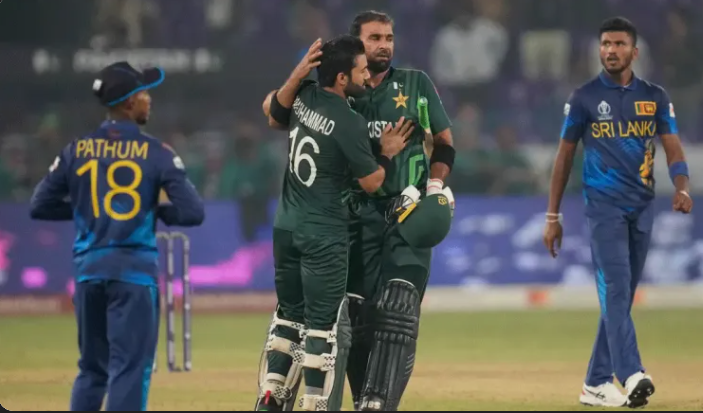
| ODI | Hyderabad | Oct 10, 2023 | SL (bat) | SL 344/9 (50 ov) PAK 345/4 (48.2 ov) | Pakistan won by 6 wkts | ICC Cricket World Cup 2023 | Abdullah Shafique (PAK) |
| ODI | Colombo | Sep 14, 2023 | Pak (bat) | PAK 252/7 (42 ov) SL 252/8 (42 ov) | Sri Lanka won by 2 wkts (D/L) | Asia Cup 2023 | Kusal Mendis (SL) |
| Test | Colombo | Jul 24, 2023 | Pak (bat) | PAK 576/5d & 262/9d SL 166 & 188 | Pakistan won by innings and 222 runs | Pakistan tour of Sri Lanka 2023 | Abdullah Shafique (PAK) |
| Test | Galle | Jul 16, 2023 | SL (bat) | SL 312 & 279 PAK 461 & 133/6 | Pakistan won by 4 wkts | Pakistan tour of Sri Lanka 2023 | Saud Shakeel (PAK) |
| T20I | Dubai | Sep 11, 2022 | Pak (field) | SL 170/6 (20 ov) PAK 147 (20 ov) | Sri Lanka won by 23 runs | Asia Cup 2022 | Bhanuka Rajapaksa (SL) |
| T20I | Dubai | Sep 9, 2022 | SL (field) | PAK 121 (19.1 ov) SL 124/5 (17 ov) | Sri Lanka won by 5 wkts | Asia Cup 2022 | Wanindu Hasaranga (SL) |
Epic Clashes: Top Batting and Bowling Performances in Recent Sri Lanka vs Pakistan Encounters
| Category | Rank | Player (Team) | Performance | Format | Match Details | Date | Key Highlight |
|---|---|---|---|---|---|---|---|
| Batting | 1 | Saud Shakeel (PAK) | 208* (off 361 balls) | Test | Pakistan won by 4 wickets, Galle | Jul 16, 2023 | Unbeaten double ton in a chase of 131, anchoring Pakistan’s comeback in a tense Test—pure grit under spin pressure! |
| Batting | 2 | Abdullah Shafique (PAK) | 201 (off 326 balls) | Test | Pakistan won by innings & 222 runs, Colombo | Jul 24, 2023 | A majestic double century that dismantled Sri Lanka’s bowling, setting up a massive innings victory. |
| Batting | 3 | Mohammad Rizwan (PAK) | 131* (off 121 balls) | ODI | Pakistan won by 6 wickets, Hyderabad | Oct 10, 2023 | Unbeaten century in a World Cup chase of 345, battling cramps to seal a record run-chase—heroic stuff! |
| Batting | 4 | Kusal Mendis (SL) | 122 (off 77 balls) | ODI | Pakistan won by 6 wickets, Hyderabad | Oct 10, 2023 | Blazing ton that powered Sri Lanka to 344, but Pakistan chased it down—fireworks from the opener! |
| Batting | 5 | Abdullah Shafique (PAK) | 113 (off 103 balls) | ODI | Pakistan won by 6 wickets, Hyderabad | Oct 10, 2023 | Debut World Cup century in a high-pressure chase, partnering Rizwan for a 176-run stand—clinical dominance. |
| Bowling | 1 | Noman Ali (PAK) | 7/70 (23 overs) | Test | Pakistan won by innings & 222 runs, Colombo | Jul 24, 2023 | Destroyed Sri Lanka’s batting in the second innings, spinning Pakistan to a crushing victory—left-arm magic! |
| Bowling | 2 | Prabath Jayasuriya (SL) | 5/82 (32.5 overs) | Test | Pakistan won by 4 wickets, Galle | Jul 16, 2023 | Fifer that kept Sri Lanka in the game, but Pakistan’s batters prevailed—relentless spin on a turning track. |
| Bowling | 3 | Ramesh Mendis (SL) | 5/64 (21 overs) | Test | Pakistan won by 4 wickets, Galle | Jul 16, 2023 | Off-spin masterclass that rattled Pakistan early, but couldn’t stop the chase—thrilling duel! |
| Bowling | 4 | Wanindu Hasaranga (SL) | 4/35 (3 overs) | T20I | Sri Lanka won by 14 runs, Dambulla | Jan 11, 2026 | Leg-spin wizardry in a rain-shortened thriller, derailing Pakistan’s chase of 161—game-changer in 12 overs! |
| Bowling | 5 | Hasan Ali (PAK) | 4/71 (10 overs) | ODI | Pakistan won by 6 wickets, Hyderabad | Oct 10, 2023 | Pace attack that broke Sri Lanka’s middle order after a strong start—key to restricting them in a high-scorer. |
Conclusion
The journey of the Sri Lanka and Pakistan rivalry is a reminder of why cricket is never just a game of numbers. Across decades, formats, and conditions, these two teams have tested each other’s patience, courage, and adaptability. The sri lanka national cricket team vs pakistan national cricket team stats reflect balance, not dominance. Every era produced new heroes, fresh tensions, and moments that reshaped belief. From grinding Test battles to explosive T20 finishes, this rivalry has refused to fade or become predictable. Heading into 2026, it stands stronger than ever, fueled by young talent, passionate fans, and a shared history that ensures every future meeting will carry weight, expectation, and drama. 🏏🔥
Frequently Asked Questions
When did Sri Lanka and Pakistan first play against each other in international cricket
Sri Lanka and Pakistan first faced each other in international cricket in the late 1970s, marking the beginning of a rivalry that steadily grew in intensity and importance.
Which format has produced the most competitive matches between Sri Lanka and Pakistan
One Day Internationals have produced the most consistently competitive encounters, with narrow margins, frequent momentum shifts, and balanced head to head results.
Who has the overall edge in Sri Lanka vs Pakistan head to head records
Overall head to head numbers remain closely balanced, with Pakistan holding a slight edge in total wins while Sri Lanka dominates in certain home and spin friendly conditions.
What makes the Sri Lanka vs Pakistan rivalry unique
The rivalry stands out because of contrasting playing styles, emotional intensity, adaptability across formats, and frequent matches at neutral venues that remove home advantage.
Why is this rivalry expected to remain strong beyond 2026
With emerging young players, evolving strategies, and deeply invested fan bases, Sri Lanka vs Pakistan matches will continue to deliver high pressure cricket and unforgettable moments.