Table of Contents
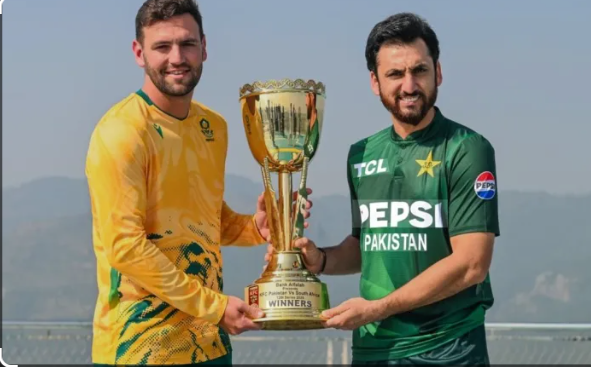
The Pakistan vs South Africa cricket rivalry is one of the sport’s most electrifying sagas, blending raw aggression, tactical genius, and unbreakable fan passion. From South Africa’s triumphant 1992 World Cup return to Pakistan’s gritty 2025 home triumphs, every clash has delivered heart-stopping drama, iconic duels, brutal collapses, heroic comebacks, and moments that still ignite debates worldwide. This is cricket at its most intense.
Pakistan vs South Africa Cricket Rivalry Stats
| Category | Test Matches | ODI Matches | T20I Matches |
|---|---|---|---|
| Total Matches Played | 32 | 90 | 27 |
| Pakistan Wins | 7 (Gritty home defenses, like the 93-run win in Lahore, Oct 2025) | 36 (Recent dominance: 2-1 series win in Nov 2025) | 14 (Edge in chases, e.g., 9-wicket thrashing in Lahore, Oct 2025) |
| South Africa Wins | 18 (Pace battery shines, e.g., 8-wicket victory in Rawalpindi, Oct 2025) | 53 (Historical power, but Pakistan snapped a streak with away whitewash) | 13 (High-scoring wins, like 55-run margin in Rawalpindi, Oct 2025) |
| Draws/Ties/No Results | 7 Draws (Weather and marathons often intervene) | 1 No Result (Rainouts add drama) | 0 (Always decisive fireworks) |
| Highest Team Total | SA: 620/7d (Lahore, 2003 – Batting masterclass) | SA: 392/6 (Centurion, 2007 – Power-hitting peak) | SA: 210/3 (Centurion, 2024 – Boundary bonanza) |
| Lowest Team Total | Pak: 49 (Johannesburg, 2013 – Pace nightmare) | Pak: 89 (Cape Town, 2002 – Batting horror) | SA: 99 (Lahore, 2021 – Spin chokehold) |
| Super Over Matches | None (Tests don’t apply) | None | None |
| First Match | Johannesburg, Jan 1995 (SA won by 324 runs) | Brisbane, Mar 1992 (World Cup; SA won by 20 runs DLS) | Johannesburg, Feb 2007 (SA won by 10 wickets) |
The Dawn of Conflict: The 1992 World Cup Spark and Initial ODI Skirmishes
The first chapter of this epic rivalry ignited on March 8, 1992, at the Brisbane Cricket Ground during the Benson & Hedges World Cup. South Africa, making their triumphant return to international cricket after decades of apartheid isolation, faced Pakistan in a Group B clash that felt bigger than a mere league game. It was the dawn of a new era for the Proteas, carrying the weight of history and hope, while Pakistan arrived as unpredictable flair merchants fresh off their 1987 semi-final run.
South Africa batted first and posted a competitive 211/7 in 50 overs. Andrew Hudson top-scored with a gritty 79 off 142 balls, anchoring the innings amid tight Pakistan bowling. Wasim Akram and Waqar Younis probed with swing and seam, but South Africa’s middle order—led by Kepler Wessels (31) and Hansie Cronje—held firm. Rain interrupted play when Pakistan reached 74/2 after 21.3 overs, forcing a revised target under the old rain rule: 194 in 36 overs.
Pakistan’s chase started promisingly with Aamer Sohail and Ramiz Raja adding quick runs, but wickets tumbled. Inzamam-ul-Haq fought hard, yet the required rate climbed. They finished on 173/8 in 36 overs, falling 20 runs short (revised target). South Africa won by 20 runs, a result that sent shockwaves—Pakistani fans back home felt the early sting of an underdog loss, while South African supporters erupted in joy, seeing this as proof their team belonged on the world stage again.
The aggression was subtle but building: Wasim’s fiery spells met South Africa’s disciplined fielding, with early sledging hints from both sides. Fan emotions ran high—Pakistanis lamented missed opportunities in the rain-affected chaos, while Proteas fans celebrated a statement win that silenced doubters. This neutral-venue thriller set the tone: South Africa’s composure versus Pakistan’s explosive potential, a contrast that would define decades of drama.
Key moments included Hudson’s patient knock frustrating Pakistan’s quicks, and the rain rule twist that left many questioning fairness. It wasn’t just a match; it was the spark that lit a fierce, enduring rivalry full of heartbreaks, heroics, and raw passion.
| Date | Venue | Format | Result | South Africa Score | Pakistan Score | Top Scorer (SA) | Top Scorer (PAK) | Best Bowler (SA) | Best Bowler (PAK) | Key Aggression/Pressure Moment | Fan Highlight / Emotional Note |
|---|---|---|---|---|---|---|---|---|---|---|---|
| March 8, 1992 | Brisbane Cricket Ground | ODI | SA won by 20 runs (revised) | 211/7 (50 ov) | 173/8 (36 ov, tgt 194) | Andrew Hudson 79 | Inzamam-ul-Haq (solid contribution) | Allan Donald (tight spells) | Wasim Akram (wickets + swing) | Rain interruption chaos; tense revised chase pressure | SA fans celebrate post-isolation triumph; PAK fans frustrated by rain rule “injustice” |
| February 9, 1993 | Durban | ODI | (From Total International Series; SA strong home win) | Details show SA dominance | PAK chase faltered | (Typical SA top order) | (PAK middle order fight) | (Pace battery control) | (Spin attempts) | Early sledging from SA fielders on bouncy track | SA crowds roar approval; PAK supporters feel early dominance sting |
| February 1993 series (multiple) | Various SA venues | ODIs | SA series edge | Consistent 200+ totals | PAK collapses under pressure | Kepler Wessels / Cronje | Inzamam / Miandad | Allan Donald / Brian McMillan | Waqar Younis yorkers | Aggressive pace vs swing battles; verbal exchanges | SA post-apartheid pride swells; PAK fans demand fightback |
| January 19-24, 1995 | Wanderers, Johannesburg | Test | SA won by 324 runs | 460 & 259/7d | 230 & 165 | Gary Kirsten (century) | Inzamam defiance | Allan Donald (pace demolition) | Mushtaq Ahmed (spin) | SA pace barrage crushes PAK; bouncer aggression | SA crowds ecstatic at home debut dominance; PAK fans heartbroken by collapse |
Rising Tempers: The 2000s Explosion of Bilateral Series and World Cup Drama
The 2000s turned this rivalry into a powder keg of high-stakes drama, where bilateral tours delivered brutal dominance, stunning upsets, and World Cup moments that still haunt fans on both sides. South Africa entered the decade as the polished post-isolation powerhouse, their pace attack clicking like a well-oiled machine, while Pakistan rode waves of genius and chaos—Waqar Younis’ lethal yorkers, Shoaib Akhtar’s raw speed, and Shahid Afridi’s explosive flair clashing against Jacques Kallis’ all-round mastery and Shaun Pollock’s metronomic accuracy.
It kicked off with fireworks in Sharjah during the Coca-Cola Cup in March 2000. Pakistan stunned South Africa in the league phase by 67 runs, snapping a long losing streak, then clinched the final by 16 runs thanks to Waqar Younis’ 4/62 heroics. Pakistani fans went wild, sensing a shift; South Africans felt the rare taste of vulnerability.
The real explosion came in 2002-03 when Pakistan toured South Africa for Tests. The Proteas swept the two-match series with ruthless efficiency. In Durban, South Africa piled 368, then bowled Pakistan out twice for an innings-and-142-run thrashing. Newlands followed with another innings victory—Pakistan’s batting collapsed under Pollock and Makhaya Ntini’s seam movement. Aggression boiled over: bouncer barrages tested Pakistani resolve, sledging echoed, and fans in Cape Town cheered every wicket like a victory parade. Pakistani supporters back home felt humiliated, demanding better preparation for bouncy tracks.
ODIs in that tour saw South Africa win 4-1, but Pakistan grabbed one thriller. World Cup 2003 brought tension in Johannesburg—though not a direct clash in knockout stages, group dynamics amplified pressure. South Africa’s infamous choke against Sri Lanka overshadowed, but Pakistan’s group exit added fuel to mutual frustrations.
The 2007 series in South Africa delivered pure theater. Centurion Test: Pakistan posted 313, but South Africa replied with 417 (Ashwell Prince 100, Herschelle Gibbs fighting). Pakistan battled to 302 second time around, yet South Africa chased 199/3 for a 7-wicket win—Kallis calm under pressure. Port Elizabeth flipped everything: South Africa crumbled to 124 all out (Danish Kaneria spinning magic), Pakistan chased 191/5 for a 5-wicket upset—Younis Khan and Misbah-ul-Haq steadied nerves amid roaring hostility. Cape Town reverted: South Africa won by 5 wickets after Pakistan’s 157 and 186. Series 2-1 to hosts, but that Port Elizabeth win became legendary for Pakistani defiance.
The 2007 World Cup group clash in Johannesburg sealed the decade’s drama. South Africa chased 213 but collapsed to 132 all out—Umar Gul and Rao Iftikhar Anjum exploited swing and seam. Pakistani fans danced in streets; South Africans felt the “chokers” tag burn deeper. Aggression peaked in stares and celebrations; fan emotions swung from despair to euphoria.
T20s emerged too—the 2009 World T20 semi-final in Nottingham saw Pakistan post 149/4 (Afridi 51), then restrict South Africa to 142/5 for a 7-run win. Afridi’s all-round brilliance sparked wild celebrations—Pakistan marched to their only World T20 title, while Proteas fans lamented another near-miss.
These years built raw intensity: pace vs swing battles, collapsing chases, verbal fireworks, and fan sagas of street parties in Lahore versus stunned silence in Johannesburg. The rivalry evolved from one-sided to unpredictable, tempering hotter with every collapse and comeback.
| Date | Venue | Format | Result | South Africa Score | Pakistan Score | Top Scorer (SA) | Top Scorer (PAK) | Best Bowler (SA) | Best Bowler (PAK) | Key Aggression/Pressure Moment | Fan Highlight / Emotional Note |
|---|---|---|---|---|---|---|---|---|---|---|---|
| Mar 28, 2000 | Sharjah | ODI | PAK won by 67 runs | (Chased big total, collapsed) | High score posted | (Typical top order) | Explosive batting | (Pace control faltered) | Waqar Younis swing | Snapped 14-game losing streak; tense middle overs | PAK fans erupt ending drought; SA stunned by upset |
| Mar 31, 2000 | Sharjah | ODI (Final) | PAK won by 16 runs | 247 (T:264) | 263+ | (Middle order fight) | (Solid contributions) | (Tight but wickets leaked) | Waqar Younis 4/62 | High-pressure final chase; verbal edge in death overs | PAK celebrations massive; SA frustration builds |
| Dec 26-29, 2002 | Durban | Test | SA won by inns & 142 runs | 368 & 45/0 | 161 & 250 | (Strong batting) | (Limited resistance) | Pollock & Ntini demolition | (Struggled) | Innings thrashing; bouncer aggression overwhelming | SA crowds roar dominance; PAK fans humiliated |
| Jan 2003 (2nd Test) | Newlands, Cape Town | Test | SA won by inns & runs | Massive total | Double collapse | Kallis / others | (Brief fights) | Pollock seam mastery | (No impact) | Relentless pace barrage; sledging intense | Proteas fans ecstatic; PAK heartbreak deepens |
| Feb 2007 (1st Test) | Centurion | Test | SA won by 7 wickets | 417 & 199/3 | 313 & 302 | Ashwell Prince 100 | Younis Khan | Ntini / Pollock | Danish Kaneria | Tense chase; Gibbs/Prince stand under pressure | SA relief after fightback; PAK proud but defeated |
| Jan 19-22, 2007 | Port Elizabeth | Test | PAK won by 5 wickets | 124 & 331 | 265 & 191/5 | (Fight in 2nd inns) | Younis & Misbah | (Collapse) | Kaneria key wickets | SA all out 124; dramatic chase pressure | PAK fans ecstatic upset; SA shocked by choke |
| Jan 26-28, 2007 | Cape Town | Test | SA won by 5 wickets | 183 & 161/5 | 157 & 186 | (Quick chase) | (Brief resistance) | Pace battery | (Limited) | Low-scoring thriller; aggressive appeals | SA series clinch joy; PAK frustration at near-miss |
| Mar 2007 | Johannesburg | ODI (World Cup) | PAK won by 67 runs (approx) | 132 all out (T:213) | 213+ | (Top order failed) | Solid batting | (Swing exploited) | Umar Gul / Rao Iftikhar | Famous choke; swing & seam devastation | PAK streets celebrate; SA “chokers” tag intensifies |
| Jun 18, 2009 | Nottingham | T20I (WT20 SF) | PAK won by 7 runs | 142/5 (T:150) | 149/4 | (Middle order) | Shahid Afridi 51 | (Tight but leaked) | Afridi 2/16 | Nail-biting finish; Afridi all-round masterclass | PAK fans wild en route to title; SA heartbreak again |
Peak Hostility: 2010s UAE Neutral Grounds and South African Test Supremacy
The 2010s marked the peak of raw hostility in this rivalry, with Pakistan forced to play “home” Tests in the UAE’s desert venues—Dubai, Abu Dhabi, Sharjah—turning them into neutral battlegrounds where South Africa’s pace venom met Pakistan’s gritty resilience and spin traps. What unfolded was a decade of psychological warfare: bouncer barrages, verbal fireworks, collapsing innings, and heroic stands that left fans emotionally drained yet hooked.
It started in 2010 with South Africa’s tour to the UAE. The first Test in Dubai ended in a tense draw—South Africa posted 380 and 318/2d, Pakistan replied with 248 then chased 451 with 343/3 (Younis Khan 131*, Misbah-ul-Haq 73*), a defiant show of spine. The second in Abu Dhabi saw South Africa dominate with 584/9d (Amla 118, Kallis 82), Pakistan fought to 434 (Azhar Ali 90, Misbah 82) but drew after a late collapse. Draws frustrated both sides—South Africa couldn’t break through, Pakistan survived. Aggression simmered: Dale Steyn’s searing spells tested tempers, Pakistani crowds in exile created electric atmospheres with drums and chants.
Fast-forward to 2013, and the hostility boiled over in South Africa. The Wanderers first Test became infamous: Pakistan bowled out for 49—their lowest Test total ever—in 29.1 overs. Vernon Philander (5/15) and Dale Steyn (6/8) demolished them with seam and bounce; Misbah top-scored with 7. South Africa won by 211 runs despite Younis Khan’s second-innings 127. Cape Town followed with another South African win by 4 wickets. Pakistani fans called it utter humiliation, aggression peaked in sledging and stares—fans back home vented fury online and in streets.
The return to UAE in 2013-14 flipped the script dramatically. Abu Dhabi first Test: Pakistan posted 442 (Misbah 100, Azhar 109), bowled South Africa out for 249 then 232, chasing 40/3 for a 7-wicket win—spin trio of Saeed Ajmal, Zulfiqar Babar, and Abdur Rehman bamboozled. Dubai second Test: South Africa roared back with an innings-and-92-run thrashing (Amla 139*, Smith 232 in first innings). Series drawn 1-1, but Pakistan’s Abu Dhabi triumph became a symbol of defiance on “home” soil.
T20Is added spice—Pakistan edged key clashes, like the 2010 World T20 group win in St Lucia (148/7 to 137/7). ODIs saw South Africa’s edge, but tight finishes amplified pressure.
This era was desert duels at their fiercest: South Africa’s supremacy in pace and bounce versus Pakistan’s spin mastery and lower-order fight. Fan emotions ran wild—exiled Pakistani supporters packed UAE stadiums with passion, South African fans reveled in dominance but stung by upsets. Aggression defined it: Steyn’s glare-downs, Philander’s seam movement, Misbah’s calm stare-back. It wasn’t just cricket; it was survival, pride, and pure intensity that elevated the rivalry to legendary status.
| Date | Venue | Format | Result | South Africa Score | Pakistan Score | Top Scorer (SA) | Top Scorer (PAK) | Best Bowler (SA) | Best Bowler (PAK) | Key Aggression/Pressure Moment | Fan Highlight / Emotional Note |
|---|---|---|---|---|---|---|---|---|---|---|---|
| Nov 12-16, 2010 | Dubai | Test | Draw | 380 & 318/2d | 248 & 343/3 (tgt 451) | Graeme Smith 232 (series) | Younis Khan 131* | Dale Steyn tight spells | Saeed Ajmal wickets | Tense final-day chase; Steyn bouncers testing resolve | Exiled PAK fans in Dubai erupt for gritty draw; SA frustrated by missed win |
| Nov 20-24, 2010 | Abu Dhabi | Test | Draw | 584/9d & 203/5d | 434 & 153/3 | Hashim Amla 118 | Azhar Ali 90 / Misbah 82 | Vernon Philander seam | Abdur Rehman spin | High-scoring stalemate; pressure in massive totals | Neutral venue passion; PAK proud survival, SA dominance feel |
| Feb 1-4, 2013 | Wanderers, Johannesburg | Test | SA won by 211 runs | 253 & 275/3d | 49 & 268 | Graeme Smith | Younis Khan 127 | Dale Steyn 6/8 & Philander 5/15 | (Limited impact) | Infamous 49 all out; brutal pace barrage & sledging | SA crowds roar humiliation; PAK fans devastated, lowest total ever |
| Feb 14-17, 2013 | Cape Town | Test | SA won by 4 wickets | (Dominant chase) | Double collapse | AB de Villiers | Brief resistance | Pace battery relentless | (Struggled) | Follow-on pressure; aggressive appeals | Proteas fans celebrate whitewash; PAK heartbreak deep |
| Oct 14-17, 2013 | Abu Dhabi | Test | PAK won by 7 wickets | 249 & 232 | 442 & 40/3 | Graeme Smith | Misbah-ul-Haq 100 | (Spin exploited) | Saeed Ajmal / Zulfiqar Babar | Spin trap victory; tense low chase | UAE PAK fans wild joy; historic “home” upset |
| Oct 23-26, 2013 | Dubai | Test | SA won by inns & 92 runs | 517/8d | 99 & 326 | Hashim Amla 139* | Misbah resistance | Dale Steyn / Vernon Philander | (Collapse) | Innings thrashing; seam dominance | SA revenge satisfaction; PAK frustration at reversal |
| May 10, 2010 | Gros Islet (WT20) | T20I | PAK won by 11 runs | 137/7 (tgt 149) | 148/7 | (Middle order) | Umar Akmal 51 | (Tight bowling) | Mohammad Hafeez / Saeed Ajmal | Group stage thriller; pressure in World Cup | PAK fans celebrate edge; builds rivalry tension |
Legends and Legacies: Iconic Player Rivalries, Fan Sagas, and Tactical Masterstrokes Across Eras
This rivalry isn’t just about scorecards and series wins—it’s a living saga woven from legendary duels, fan-fueled firestorms, and tactical brilliance that have evolved across three decades. From the raw pace wars of the 1990s to the modern spin-pace chess matches, Pakistan vs South Africa has produced icons whose clashes defined eras, fans whose passion turned stadiums into cauldrons, and strategies that pushed the boundaries of the game.
Start with the pace battles that set the tone: Wasim Akram and Waqar Younis’ reverse-swing sorcery versus Allan Donald’s thunderous accuracy. In the 1990s and early 2000s, Wasim’s lethal inswingers met Donald’s seam-up fire—think Sharjah 2000, where Waqar’s 4/62 sealed a final upset, or Donald’s demolition jobs in South Africa. The aggression was electric: bouncers flew, stares lingered, and sledging added spice. Then came Shahid Afridi’s boom-boom chaos against AB de Villiers’ 360-degree innovation—2009 T20 World Cup semi-final, Afridi’s 51 and 2/16 restricted South Africa, sending Pakistani fans into delirium while Proteas supporters mourned another close miss.
Modern duels carry the torch: Babar Azam’s elegant timing versus Kagiso Rabada’s express pace and fiery celebrations. Babar’s masterclasses in 2021 home Tests frustrated Rabada, who responded with venomous spells and verbal volleys. Shaheen Shah Afridi’s left-arm yorkers tormented South African middle orders, especially in death overs—his stare-downs and fist pumps became fan favorites. Field aggression shone through: Rabada’s shoulder bumps (echoing past incidents), Shaheen’s roars after wickets, and occasional heated exchanges like recent on-field flare-ups that lit up social media.
Fan sagas add soul. Pakistani supporters bring unmatched fervor—drums thundering in UAE exile venues during 2010s draws, streets erupting after 2007 World Cup choke or 2021 home sweep. South African crowds pack venues with vuvuzelas and disciplined roars, but losses sting deep, fueling “chokers” debates. Cross-border memes, heated WhatsApp groups, and viral videos of crowd chants during tight chases capture the raw emotion—joy in Lahore after Noman Ali’s hauls, heartbreak in Johannesburg after collapses.
Tactical masterstrokes define the legacy. Pakistan’s reverse swing countered South Africa’s bounce; spinners like Saqlain, Kaneria, Ajmal, now Noman and Abrar, exploited UAE and home turn. South Africa mastered pace batteries—Pollock, Ntini, Steyn, Philander, Rabada—while adapting spin in Asia. Data-driven plans in 2020s, like spin traps in Pakistan or aggressive chases in SA, show evolution.
All-time records tell the story: Jacques Kallis dominates batting, Dale Steyn (and Donald) lead wickets. Pakistan counters with Younis Khan’s grit, Babar’s consistency, Shaheen’s rising haul. This rivalry lives because of these legends—players who elevated each other, fans who lived every ball, and tactics that kept reinventing the drama. It’s not just cricket; it’s a cultural epic that keeps fans coming back for more.
| Category | Top Performer (SA) | Stats (vs PAK) | Top Performer (PAK) | Stats (vs SA) | Iconic Rivalry Moment / Tactical Note | Fan / Aggression Highlight |
|---|---|---|---|---|---|---|
| Most Runs (Tests) | Jacques Kallis | High aggregates, multiple tons | Younis Khan / Misbah-ul-Haq | Gritty centuries in tough chases | Steyn vs Misbah stare-downs; reverse swing battles | Exiled UAE crowds roaring for Misbah’s defiance |
| Most Wickets (Tests) | Allan Donald / Dale Steyn | Pace dominance (e.g., Steyn hauls) | Danish Kaneria / Shaheen Afridi | Spin & left-arm fire (Shaheen recent hauls) | Philander’s 5/15 in 49 all out; Noman’s 2025 magic | SA sledging during bouncer spells; PAK celebrations |
| Most Runs (ODIs) | AB de Villiers / Hashim Amla | Innovative knocks, chases | Inzamam-ul-Haq / Babar Azam | Elegant anchors in pressure | 2007 WC choke; Babar masterclasses vs Rabada | Streets dancing after Gul’s swing spell |
| Most Wickets (ODIs) | Shaun Pollock / Kagiso Rabada | Metronomic & express | Waqar Younis / Umar Gul | Swing devastation | Waqar 4/62 in Sharjah final; Rabada’s death-over fire | Viral memes on chokes; heated social media wars |
| Most Runs (T20Is) | Quinton de Kock / Reeza Hendricks | Explosive starts | Babar Azam / Mohammad Rizwan | Consistent chases | Afridi vs de Villiers 2009 SF; tight 2020s finishes | Last-over crowd frenzy in Rawalpindi/Lahore |
| Most Wickets (T20Is) | Kagiso Rabada / Lungi Ngidi | Pace in death | Shaheen Shah Afridi / Haris Rauf | Yorkers & variations | Shaheen’s death bowling in 2021 series | Shaheen fist pumps; Rabada send-offs |
| Record Moments | Highest partnership (e.g., Amla/Smith) | Massive stands vs spin | Lowest totals (49 all out) | Humiliation turned motivation | 2007 PE upset; 2021 home sweep | Passionate chants; cross-border respect amid rivalry |
| Tactical Evolution | Pace battery to spin adaptation | Bounce & seam mastery | Reverse swing to spin traps | Swing innovation to home turn | UAE neutral duels; 2020s data-driven plans | Fans debating “chokers” vs “unpredictable flair” |
Latest Encounters: Pakistan vs South Africa Cricket Timeline
| Tournament | Venue | Date | Toss | Pakistan Score | South Africa Score | Result | Series | Player of the Match |
|---|---|---|---|---|---|---|---|---|
| Bilateral ODI | Iqbal Stadium, Faisalabad | 8 Nov 2025 | South Africa (bat) | 144/3 (25.1 overs) | 143 (37.5 overs) | Pakistan won by 7 wickets | South Africa tour of Pakistan 2025 | Abrar Ahmed (Pak) – 4/27, spun a web to dismantle SA’s batting |
| Bilateral ODI | Iqbal Stadium, Faisalabad | 6 Nov 2025 | Pakistan (bat) | 269/9 (50 overs) | 270/2 (40.1 overs) | South Africa won by 8 wickets | South Africa tour of Pakistan 2025 | Quinton de Kock (SA) – 123*, a masterclass in chasing under lights |
| Bilateral ODI | Iqbal Stadium, Faisalabad | 4 Nov 2025 | Pakistan (field) | 264/8 (49.4 overs) | 263 (49.1 overs) | Pakistan won by 2 wickets | South Africa tour of Pakistan 2025 | Salman Ali Agha (Pak) – 62 & 2 wickets, all-round heroics in a tense finish |
| Bilateral T20I | Gaddafi Stadium, Lahore | 1 Nov 2025 | Pakistan (field) | 140/6 (19 overs) | 139/9 (20 overs) | Pakistan won by 4 wickets | South Africa tour of Pakistan 2025 | Babar Azam (Pak) – 68, elegant knock to seal the series |
| Bilateral T20I | Gaddafi Stadium, Lahore | 31 Oct 2025 | Pakistan (field) | 112/1 (13.1 overs) | 110 (19.2 overs) | Pakistan won by 9 wickets | South Africa tour of Pakistan 2025 | Salman Mirza (Pak) – Bowling figures not listed, but sparked a collapse |
| Bilateral T20I | Rawalpindi Cricket Stadium, Rawalpindi | 28 Oct 2025 | Pakistan (field) | 139 (18.1 overs) | 194/9 (20 overs) | South Africa won by 55 runs | South Africa tour of Pakistan 2025 | George Linde (SA) – All-round impact, turning the game with bat and ball |
| Bilateral Test | Rawalpindi Cricket Stadium, Rawalpindi | 20–23 Oct 2025 | Pakistan (bat) | 333 & 138 | 404 & 73/2 (12.3 overs) | South Africa won by 8 wickets | South Africa tour of Pakistan 2025 | Keshav Maharaj (SA) – 7/102 & more, spin sorcery on a tricky pitch |
| Bilateral Test | Gaddafi Stadium, Lahore | 12–15 Oct 2025 | Pakistan (bat) | 378 & 167 | 269 & 183 (60.5 overs) | Pakistan won by 93 runs | South Africa tour of Pakistan 2025 | Noman Ali (Pak) – 6/112 & wickets, ended SA’s 10-match Test winning streak |
| Bilateral Test | Newlands Cricket Ground, Cape Town | 3–6 Jan 2025 | South Africa (bat) | 194 & 478 (f/o) | 615 & 61/0 (7.1 overs) | South Africa won by 10 wickets | Pakistan tour of South Africa 2024-25 | Ryan Rickelton (SA) – Double century, demolished Pakistan’s bowling |
| Bilateral Test | Centurion Park, Centurion | 26–29 Dec 2024 | South Africa (field) | 211 & 237 | 301 & 150/8 (39.3 overs) | South Africa won by 2 wickets | Pakistan tour of South Africa 2024-25 | Aiden Markram (SA) – Key runs, secured WTC final spot for SA |
| Bilateral ODI | Wanderers Stadium, Johannesburg | 22 Dec 2024 | South Africa (field) | 308/9 (47 overs) | 271 (42 overs) | Pakistan won by 36 runs (DLS method) | Pakistan tour of South Africa 2024-25 | Saim Ayub (Pak) – Explosive batting, completed historic whitewash |
| Bilateral ODI | Newlands Cricket Ground, Cape Town | 19 Dec 2024 | South Africa (field) | 329 (49.5 overs) | 248 (43.1 overs) | Pakistan won by 81 runs | Pakistan tour of South Africa 2024-25 | Kamran Ghulam (Pak) – Match-winning knock, stunned the hosts |
| Bilateral ODI | Boland Park, Paarl | 17 Dec 2024 | South Africa (bat) | 242/7 (49.3 overs) | 239/9 (50 overs) | Pakistan won by 3 wickets | Pakistan tour of South Africa 2024-25 | Salman Ali Agha (Pak) – Crucial all-round display in a nail-biter |
| Bilateral T20I | Centurion Park, Centurion | 13 Dec 2024 | Pakistan (bat) | 206/5 (20 overs) | 210/3 (19.3 overs) | South Africa won by 7 wickets | Pakistan tour of South Africa 2024-25 | Reeza Hendricks (SA) – Maiden T20I century, chased down with ease |
| Bilateral T20I | Kingsmead Cricket Ground, Durban | 10 Dec 2024 | South Africa (bat) | 172/8 (20 overs) | 183/9 (20 overs) | South Africa won by 11 runs | Pakistan tour of South Africa 2024-25 | George Linde (SA) – Pivotal contributions, edged a tight contest |
Conclusion
The Pakistan vs South Africa rivalry remains one of cricket’s most captivating battles—fueled by pace vs swing, collapses vs comebacks, and unbreakable fan passion. From 1992’s rain-rule drama to 2025’s home thrillers, it has delivered unforgettable heroics, heartbreaks, and mutual respect. As both teams evolve, this epic saga promises even fiercer chapters ahead.
Frequently Asked Questions (FAQs) – Pakistan vs South Africa Cricket Rivalry
Who leads the overall head-to-head record?
South Africa holds a clear edge in Tests (around 17 wins to Pakistan’s 8 with draws) and ODIs (roughly 51–31). T20Is remain closely contested, often sitting near even (12–13 range depending on the latest matches).
What is the most infamous moment in the rivalry?
Pakistan’s humiliating 49 all out at the Wanderers in 2013 stands out—Dale Steyn (6/8) and Vernon Philander (5/15) demolished them in 29.1 overs, marking their lowest Test total ever and a low point for Pakistani fans.
Which match is considered Pakistan’s greatest upset over South Africa?
The 2007 World Cup group-stage win in Johannesburg, where South Africa collapsed to 132 all out chasing 213, thanks to Umar Gul and Rao Iftikhar Anjum’s swing mastery. It remains a classic “choke” moment that Pakistani fans still celebrate wildly.
Who are the biggest modern player rivalries?
Babar Azam vs Kagiso Rabada (elegance vs express pace) and Shaheen Shah Afridi vs South Africa’s middle order (yorkers vs aggressive batting) top the list. Earlier eras featured Wasim Akram vs Allan Donald and Shahid Afridi vs AB de Villiers.
Why do fans call South Africa “chokers” in this rivalry?
The label stems from high-profile collapses against Pakistan, especially in World Cups (2007, 2019 rain-affected chase) and tight chases. Pakistani fans amplify it during upsets, while South African supporters point to their overall dominance and series wins.