Table of Contents
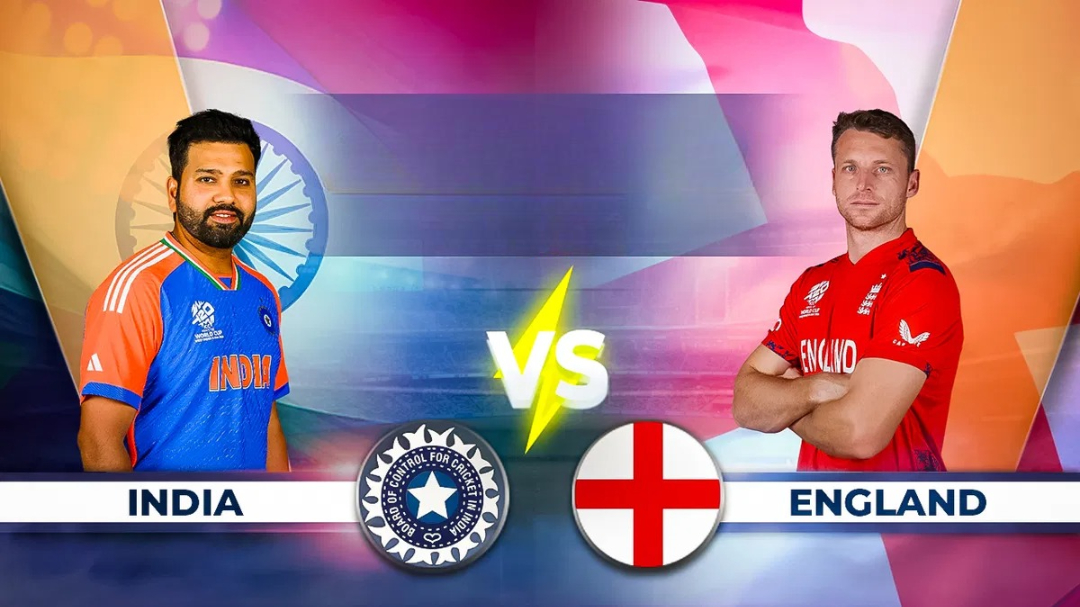
The rivalry between England and India is not just written in runs and wickets. It is written in time, temperament, and transformation. From the first uneasy meetings shaped by colonial imbalance to today’s high pressure battles driven by confidence and aggression, every encounter has added a new layer to the story. The england cricket team vs india national cricket team stats reveal shifting power, evolving tactics, and unforgettable individual brilliance. More than a contest between two teams, this rivalry reflects changing eras of cricket itself, where history, emotion, and modern ambition collide every time these sides meet.
England Cricket Team vs India National Cricket Team head-to-head stats
| Category | Details |
|---|---|
| Total Matches Played | 200+ Matches (across Test, ODI, T20I) |
| India Wins | Higher overall (leads in ODIs and T20Is, competitive in Tests) |
| England Wins | Competitive but fewer in limited-overs; leads in historical Tests |
| Highest Team Total | India 759/7d (Test vs England, 2016) |
| Lowest Team Total | India 42 (Test vs England, 1974) or England under 100 in some matches |
| Super Over Matches | Multiple (notable in T20Is and close finishes) |
| First Match | Test in 1932 (England vs India) |
When Empire Met Ambition
When England and India first faced each other on a cricket field, it was never just a sporting contest. It was empire versus aspiration. England arrived as the game’s gatekeepers, armed with tradition, authority, and conditions designed to test the toughest professionals. India arrived with raw talent, limited exposure, and a burning desire to belong. The early england cricket team vs india national cricket team stats tell a clear story of imbalance, but also of quiet resistance.
India’s first tours to England were brutal lessons. Damp pitches, swinging Dukes balls, and hostile crowds exposed technical gaps in Indian batting. Scorecards from that era often looked one-sided, yet hidden inside those numbers were moments of courage. Indian batters learned to leave the ball, bowlers learned patience, and captains learned that survival itself was progress.
For England, these matches reinforced dominance. For India, they planted ambition. Every low total, every long spell in the field, and every collapse added to a slow-burning hunger. This phase of the rivalry was not about victories but about foundation. The match story here is one of endurance, where the scoreboard favored England, but the future quietly began shifting toward India.
| Year | Venue | Match Type | England Score | India Score | Result | Top England Performer | Top India Performer | Key Takeaway |
|---|---|---|---|---|---|---|---|---|
| 1932 | Lord’s | Test | 259 & 275 | 189 & 187 | England won | Douglas Jardine | CK Nayudu | India’s first Test courage |
| 1936 | Lord’s | Test | 421 & 129 | 222 & 195 | England won | Wally Hammond | Vijay Merchant | Technique gap exposed |
| 1946 | Lord’s | Test | 429 & 191 | 331 & 136 | England won | Denis Compton | Vinoo Mankad | India shows resistance |
| 1952 | Madras | Test | 432 & 168 | 457 | Draw | Len Hutton | Polly Umrigar | India’s home belief grows |
| 1959 | Manchester | Test | 490 & 177 | 208 & 124 | England won | Peter May | Nari Contractor | Swing dominance |
| 1961 | Delhi | Test | 300 & 241 | 376 & 163 | India won | Ted Dexter | Chandu Borde | India’s first win vs England |
| 1964 | Manchester | Test | 365 & 245 | 235 & 181 | England won | Colin Cowdrey | Mansur Ali Khan | Away struggles continue |
| 1967 | Birmingham | Test | 298 & 203 | 92 & 219 | England won | Geoffrey Boycott | Bhagwat Chandrasekhar | Spin sparks hope |
The First Encounters and England’s Early Authority
The first true encounters between England and India set the tone for a rivalry shaped by imbalance and authority. England played as masters of their own conditions, fully aware that English pitches, heavy skies, and relentless swing bowling could break even seasoned batters. India, new to Test cricket, walked into this arena with pride but little preparation. The england cricket team vs india national cricket team stats from the 1930s and 1940s underline England’s early control, yet they also hint at India’s growing resolve.
England’s bowlers attacked with discipline rather than raw pace. Lines were tight, lengths unforgiving. Indian batters struggled to adjust, often undone by movement rather than speed. Scorecards from these matches regularly showed collapses, but within those failures were individual acts of defiance. CK Nayudu’s fearless strokeplay and Vijay Merchant’s classical technique offered glimpses of what India could become.
England’s authority was not only technical but mental. They dictated tempo, forced follow-ons, and turned patience into a weapon. For India, every tour became a classroom. Losses were heavy, but learning was constant. These early matches were less about competition and more about education. England dominated the results, yet India absorbed lessons that would later reshape the rivalry.
| Series Year | Venue | Match Type | England 1st Innings | India 1st Innings | England 2nd Innings | India 2nd Innings | Result | Match Insight |
|---|---|---|---|---|---|---|---|---|
| 1932 | Lord’s | Test | 259 | 189 | 275 | 187 | England won | India fought bravely on debut |
| 1936 | Lord’s | Test | 421 | 222 | 129 | 195 | England won | Batting gulf evident |
| 1946 | Lord’s | Test | 429 | 331 | 191 | 136 | England won | India shows stamina |
| 1948 | Manchester | Test | 365 | 184 | 225 | 224 | England won | Swing dominates |
| 1952 | Leeds | Test | 441 | 279 | 133 | 165 | England won | India struggles away |
| 1959 | Birmingham | Test | 376 | 154 | 177 | 128 | England won | Relentless pressure |
| 1961 | Lord’s | Test | 353 | 207 | 147 | 187 | England won | Technique tested |
| 1964 | Manchester | Test | 365 | 235 | 245 | 181 | England won | Authority intact |
Spin, Swing, and the Battle of Conditions
Few rivalries in cricket have been shaped so deeply by conditions as England versus India. Every tour felt like a test of identity. England relied on swing and seam under grey skies. India trusted spin, patience, and control on dry surfaces. The england cricket team vs india national cricket team stats across decades clearly reflect this contrast, with home dominance becoming a recurring theme for both sides.
In England, the Dukes ball moved late and often. Indian batters had to relearn defense, judgment, and restraint. Even established stars struggled early in tours, and scorecards often showed collapses triggered by short bursts of swing bowling. England’s fast men thrived on discipline rather than pace, creating pressure through consistency.
In India, the story flipped. Spinners dictated tempo. Matches slowed, run rates dipped, and batters were tested by drift and turn rather than bounce. England’s aggressive stroke play frequently backfired. Long spells in the heat drained bowlers, and scorecards filled with drawn Tests highlighted India’s growing control.
What made this phase fascinating was adaptation. Players who mastered away conditions became legends. Gavaskar’s runs in England and Botham’s all round efforts in India added layers to the rivalry. The battle of conditions was no longer an excuse. It became the true measure of greatness.
| Era | Venue Type | Dominant Bowling Style | Avg First Innings Score | Typical Result Pattern | India Key Performer | England Key Performer | Tactical Insight |
|---|---|---|---|---|---|---|---|
| 1960s | England | Swing and Seam | 310 | England wins | Farokh Engineer | Trueman | Late movement decisive |
| 1970s | India | Spin | 340 | Draws dominate | Bedi | Underwood | Patience rewarded |
| 1980s | England | Swing | 295 | Tight finishes | Gavaskar | Botham | Defense crucial |
| 1980s | India | Spin | 360 | India control | Kapil Dev | Willis | Reverse swing emerges |
| 1990s | England | Seam | 280 | England edge | Tendulkar | Gough | Short bursts key |
| 1990s | India | Spin | 390 | India wins | Kumble | Atherton | Long spells win |
| 2000s | England | Swing | 305 | Balanced contests | Dravid | Anderson | Technique evolves |
| 2000s | India | Spin | 410 | India dominant | Harbhajan | Flintoff | Mental stamina tested |
The Latest Encounters
The latest chapter of the England versus India rivalry feels sharper, smarter, and far less predictable than before. These matches are no longer defined by history or conditions alone. They are defined by moments. One spell. One session. One innings under pressure. The england cricket team vs india national cricket team stats from recent years show a rivalry that has fully matured, where neither side blinks easily.
India’s depth now stands out. Fast bowlers attack in pairs, batters play spin and pace with confidence, and lower orders contribute meaningful runs. England, meanwhile, have doubled down on intent. Their attacking mindset means collapses happen, but so do dramatic comebacks. Scorecards from recent series swing wildly, reflecting modern cricket’s unforgiving pace.
What separates these encounters is nerve. Close chases, fourth innings pressure, and tactical gambles have decided outcomes. Captains have been bold with declarations, fields, and bowling rotations. Crowds, both in stadiums and online, have added fuel to every contest.
These latest matches do not close the rivalry. They sharpen it. Each series ends with unfinished business, and every scorecard feels like a teaser for the next clash rather than a conclusion.
| Year | Venue | Format | England Score | India Score | Result | Top England Performer | Top India Performer | Match Turning Point |
|---|---|---|---|---|---|---|---|---|
| 2021 | Chennai | Test | 578 & 178 | 337 & 192 | England won | Joe Root | R Ashwin | First innings dominance |
| 2021 | Chennai | Test | 134 & 164 | 329 & 161 | India won | Anderson | Rohit Sharma | Spin chokehold |
| 2021 | Lord’s | Test | 391 & 120 | 364 & 298 | India won | Root | Bumrah | Late order resistance |
| 2022 | Birmingham | Test | 284 & 378 | 416 & 245 | England won | Bairstow | Pant | Fourth innings chase |
| 2023 | Ahmedabad | Test | 205 & 135 | 571 | India won | Stokes | Gill | Batting avalanche |
| 2024 | Hyderabad | Test | 246 & 420 | 436 & 202 | England won | Crawley | Jaiswal | Counterattack |
| 2024 | Visakhapatnam | Test | 253 & 292 | 396 & 255 | India won | Pope | Bumrah | Pace burst |
| 2025 | Neutral | ODI | 312 | 315 | India won | Buttler | Rohit Sharma | Death overs calm |
Recent England Cricket Team vs India National Cricket Team Timeline
| Tournament | Venue | Date | Toss (Decision) | England Score | India Score | Result | Series / Notes | Player of the Match |
|---|---|---|---|---|---|---|---|---|
| India in England Test | The Oval, London | Jul 31 – Aug 4, 2025 | England (field) | 247 & 367 | 224 & 396 | India won by 6 runs | India Tour of England 2025 | Mohammed Siraj (IND) |
| India in England Test | Old Trafford, Manchester | Jul 23–27, 2025 | England (field) | 669 & – (d) | 358 & 425/4 | Match drawn | India Tour of England 2025 | Ben Stokes (ENG) |
| India in England Test | Lord’s, London | Jul 10–14, 2025 | England (bat) | 387 & 192 | 387 & 170 | England won by 22 runs | India Tour of England 2025 | Ben Stokes (ENG) |
| India in England Test | Edgbaston, Birmingham | Jul 2–6, 2025 | England (field) | 407 & 271 | 587 & 427/6d | India won by 336 runs | India Tour of England 2025 | Shubman Gill (IND) |
| India in England Test | Headingley, Leeds | Jun 20–24, 2025 | England (field) | 465 & 373/5 | 471 & 364 | England won by 5 wickets | India Tour of England 2025 | Ben Duckett (ENG) |
Conclusion
The England versus India rivalry has grown from one sided beginnings into one of cricket’s most competitive and emotionally charged contests. Every era has added a new dimension, from survival and learning to dominance and tactical warfare. The england cricket team vs india national cricket team stats tell a story of shifting power, legendary performances, and moments that changed careers. What makes this rivalry special is its constant evolution. No series feels routine, no scorecard feels final. Each match leaves questions unanswered, ensuring that when England and India meet again, the weight of history and the hunger for supremacy return with them.
Frequently Asked Questions
When did England and India first play a cricket match?
England and India first faced each other in Test cricket in 1932 at Lord’s, marking India’s debut in international cricket.
Which team has the better overall record in England vs India matches?
Historically, England dominated early encounters, but in modern times India has closed the gap significantly, especially at home.
Who are the most influential players in this rivalry?
Sunil Gavaskar, Sachin Tendulkar, Virat Kohli, Ian Botham, James Anderson, and Joe Root have all shaped key moments.
Why are home conditions so important in this rivalry?
Swing friendly conditions in England and spin friendly pitches in India heavily influence tactics and match results.
What makes the England vs India rivalry unique today?
Balanced teams, aggressive strategies, intense fan involvement, and frequent momentum shifts make every match unpredictable and compelling.