Table of Contents
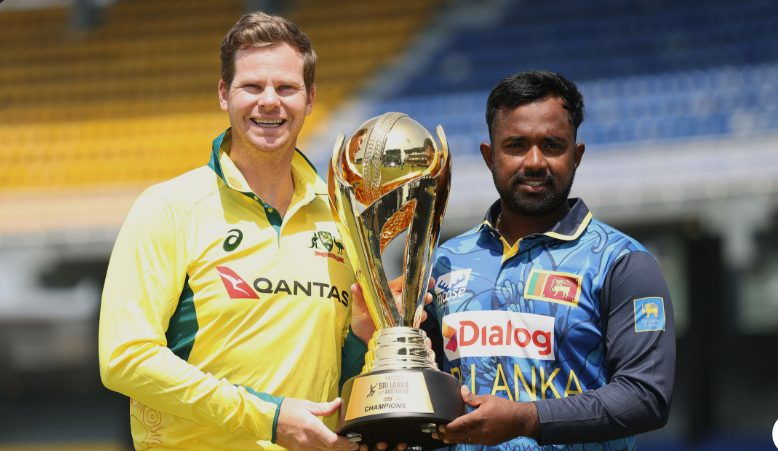
The rivalry between the Sri Lanka national cricket team and the Australian men’s cricket team stats tells a story of dominance, defiance, and drama. From Sri Lanka’s humble Test beginnings in 1983 to their stunning upsets and historic 2016 home sweep, this contest has delivered unforgettable moments of aggression, tactical brilliance, fan-fueled passion, and individual heroics that keep fans hooked across generations.
Latest Matches
Recent Sri Lanka National Cricket Team Vs Australian Men’s Cricket Team Timeline encounters across formats (as of February 2026)
| Tournament | Venue | Date | Toss | Sri Lanka Score | Australia Score | Result | Series | Player of the Match |
|---|---|---|---|---|---|---|---|---|
| T20 World Cup | Pallekele International Cricket Stadium, Kandy | Feb 16, 2026 | Sri Lanka (field) | 184/2 (18 overs) | 181 (20 overs) | Sri Lanka won by 8 wickets | T20 World Cup 2026 | Pathum Nissanka (SL) |
| Bilateral ODI | R. Premadasa Stadium, Colombo | Feb 14, 2025 | Sri Lanka (bat) | 281/4 (50 overs) | 107 (24.2 overs) | Sri Lanka won by 174 runs | Bilateral ODI | Kusal Mendis (SL) |
| Bilateral ODI | R. Premadasa Stadium, Colombo | Feb 12, 2025 | Sri Lanka (bat) | 214 (46 overs) | 165 (33.5 overs) | Sri Lanka won by 49 runs | Bilateral ODI | Charith Asalanka (SL) |
| Bilateral Test | Galle International Stadium | Feb 6-9, 2025 | Sri Lanka (bat) | 257 & 231 | 414 & 75/1 | Australia won by 9 wickets | Warne-Muralitharan Trophy | Alex Carey (AUS) |
| Bilateral Test | Galle International Stadium | Jan 29-Feb 1, 2025 | Australia (bat) | 165 & 247 | 654/6d | Australia won by an innings & 242 runs | Warne-Muralitharan Trophy | Usman Khawaja (AUS) |
| ODI World Cup | Ekana Sports City, Lucknow | Oct 16, 2023 | Sri Lanka (bat) | 209 (43.3 overs) | 215/5 (35.2 overs) | Australia won by 5 wickets | ODI World Cup 2023 | Adam Zampa (AUS) |
| T20 World Cup | Perth Stadium, Perth | Oct 25, 2022 | Australia (field) | 157/6 (20 overs) | 158/3 (16.3 overs) | Australia won by 7 wickets | T20 World Cup 2022 | Marcus Stoinis (AUS) |
| Bilateral Test | Galle International Stadium | Jul 8-12, 2022 | Australia (bat) | 554 | 364 & 151 | Sri Lanka won by an innings & 39 runs | Warne-Muralitharan Trophy | Prabath Jayasuriya (SL) |
| Bilateral ODI | R. Premadasa Stadium, Colombo | Jun 24, 2022 | Sri Lanka (bat) | 160 (43.1 overs) | 164/6 (39.3 overs) | Australia won by 4 wickets | Bilateral ODI | Chamika Karunaratne (SL) |
| Bilateral ODI | R. Premadasa Stadium, Colombo | Jun 21, 2022 | Australia (field) | 258 (49 overs) | 254 (50 overs) | Sri Lanka won by 4 runs | Bilateral ODI | Charith Asalanka (SL) |
| Bilateral ODI | R. Premadasa Stadium, Colombo | Jun 19, 2022 | Australia (bat) | 292/4 (48.3 overs) | 291/6 (50 overs) | Sri Lanka won by 6 wickets | Bilateral ODI | Pathum Nissanka (SL) |
| Bilateral ODI | Pallekele International Cricket Stadium, Kandy | Jun 16, 2022 | Australia (field) | 220/9 (47.4 overs) | 189 (37.1 overs) (DLS target 216) | Sri Lanka won by 26 runs (DLS) | Bilateral ODI | Chamika Karunaratne (SL) |
| Bilateral ODI | Pallekele International Cricket Stadium, Kandy | Jun 14, 2022 | Sri Lanka (bat) | 300/7 (50 overs) | 282/8 (42.3 overs) (DLS target 282) | Australia won by 2 wickets (DLS) | Bilateral ODI | Glenn Maxwell (AUS) |
| Bilateral T20I | Pallekele International Cricket Stadium, Kandy | Jun 11, 2022 | Australia (bat) | 177/6 (19.5 overs) | 176/5 (20 overs) | Sri Lanka won by 4 wickets | Bilateral T20I | Dasun Shanaka (SL) |
| Bilateral T20I | R. Premadasa Stadium, Colombo | Jun 8, 2022 | Australia (field) | 124/9 (20 overs) | 126/7 (17.5 overs) | Australia won by 3 wickets | Bilateral T20I | Matthew Wade (AUS) |
Head-to-Head Summary Table (All Formats)
| Format | Matches | Australia Wins | Sri Lanka Wins | Draws / No Result |
|---|---|---|---|---|
| Test | 35 | 22 | 5 | 8 |
| ODI | 105 | 64 | 37 | 4 |
| T20I | 28 | 17 | 11 | 0 |
| OVERALL | 168 | 103 | 53 | 12 |
Win-Loss Summary Table (With Win % – Pure Drama!)
| Format | Australia Win % | Sri Lanka Win % | Draw/NR % | Key Insight |
|---|---|---|---|---|
| Test | 62.9% | 14.3% | 22.8% | AUS crushes away, SL fights in Galle |
| ODI | 61.0% | 35.2% | 3.8% | SL’s biggest wins: 174-run & 49-run thrashings in 2025 |
| T20I | 60.7% | 39.3% | 0% | SL’s epic 8-wicket chase in T20 WC 2026 |
| Overall | 61.3% | 31.5% | 7.1% | AUS dominates… but SL owns the moments that matter! |
Top Batters (Standout Career + Recent Heroes)
| Rank | Player | Team | Key Stat | Highlight Moment |
|---|---|---|---|---|
| 1 | Pathum Nissanka | SL | 397 runs in T20Is @ 39.7 avg | Century in T20 WC 2026 chase vs AUS |
| 2 | Usman Khawaja | AUS | 295 runs in 2025 Tests @ 147.5 | Double ton masterclass in Galle |
| 3 | Charith Asalanka | SL | 205 runs in 2025 ODIs | Match-winning knocks in Colombo sweep |
| 4 | Kusal Mendis | SL | 120+ runs in recent ODIs | Explosive 2025 series hero |
| 5 | Steve Smith | AUS | 272 runs in 2025 Tests | Timeless batting in spinning hell |
Top Bowlers (Wicket Machines Who Ruled the Rivalry)
| Rank | Player | Team | Key Stat | Highlight |
|---|---|---|---|---|
| 1 | Matthew Kuhnemann | AUS | 16 wickets in 2025 Tests @ 17.19 | Spin demolition in Galle |
| 2 | Muttiah Muralitharan | SL | 70+ wickets in ODIs vs AUS | Greatest off-spinner vs Aussies |
| 3 | Adam Zampa | AUS | Multiple Man-of-Match in T20/ODI | Googly king in big chases |
| 4 | Prabath Jayasuriya | SL | Key wickets in 2022 & 2025 Tests | Left-arm spin wizard at home |
| 5 | Pat Cummins | AUS | 20 wickets across formats | Pace leader in all conditions |
The Spark Ignites: Sri Lanka’s Rocky Start Against the Aussie Juggernaut (1980s)
The rivalry between the Sri Lanka national cricket team and the Australian men’s cricket team stats kicked off in the 1980s with Sri Lanka still finding their feet in international cricket. Fresh off gaining Test status in 1982, Sri Lanka hosted Australia for their inaugural Test in April 1983 at Kandy’s Asgiriya Stadium. Australia dominated, declaring at 514/4 with David Hookes smashing an unbeaten 143 and Kepler Wessels 141. Sri Lanka managed 271 and 205, losing by an innings and 38 runs. Bruce Yardley’s 5/88 and Tom Hogan’s 5/66 ripped through the hosts, highlighting Australia’s spin prowess on turning tracks. Fans in Colombo felt the sting of inexperience, but Arjuna Ranatunga’s gritty 90 showed promise amid the aggression from Dennis Lillee and co.
Fast forward to Sri Lanka’s 1989/90 tour Down Under. The first Test at Brisbane’s Gabba ended in a draw, a moral victory for Sri Lanka. Aravinda de Silva’s heroic 167 anchored their 418, outscoring Australia’s 367 (Tom Moody 106). Mark Taylor’s 164 in the second innings pushed Australia to 375/6. Pressure mounted as rain intervened, but de Silva’s knock sparked belief. In Hobart, Australia bounced back, winning by 173 runs after posting 224 and 513/5 dec (Steve Waugh 134*). Sri Lanka fought to 216 and 348, with Roshan Mahanama’s 85 and Rumesh Ratnayake’s 6/66 standing out. Sledging intensified, with Merv Hughes’ fire adding edge. These clashes laid the foundation for a fierce contest, blending Aussie might with Lankan resilience.
| Match | Date | Venue | Result | Key Scores | Top Batter | Top Bowler | Notable Moment |
|---|---|---|---|---|---|---|---|
| Only Test 1983 | Apr 22-26 | Asgiriya Stadium, Kandy | Aus won by inns +38 runs | Aus 514/4 dec; SL 271 & 205 | David Hookes (Aus) 143* | Tom Hogan (Aus) 5/66 | First-ever Test; Hookes’ maiden century on debut tour |
| 1st Test 1989/90 | Dec 8-12 | Gabba, Brisbane | Drawn | Aus 367 & 375/6; SL 418 | Aravinda de Silva (SL) 167 | GF Labrooy (SL) 5/133 | De Silva’s defiant 167; highest SL score vs Aus then |
| 2nd Test 1989/90 | Dec 16-20 | Bellerive Oval, Hobart | Aus won by 173 runs | Aus 224 & 513/5 dec; SL 216 & 348 | Steve Waugh (Aus) 134* | Rumesh Ratnayake (SL) 6/66 | Ratnayake’s career-best; Waugh’s unbeaten ton seals series |
The Turning Point: 1996 World Cup Final and Sri Lanka’s Moment of Magic
March 17, 1996, Gaddafi Stadium, Lahore. Sri Lanka, the fearless underdogs, faced Australia in the Wills World Cup final. Australia batted first on a good pitch, posting 241/7 in 50 overs. Mark Taylor anchored with 74, Ricky Ponting chipped in 45, but Aravinda de Silva struck with the ball—3/42 including key wickets of Ponting, Steve Waugh, and Ian Healy. Muttiah Muralitharan snared Shane Warne stumped, adding tension. The total felt defendable, yet Sri Lanka’s revolutionary approach—blazing openers and calm finishers—changed everything.
Sanath Jayasuriya fell early for 9, but Romesh Kaluwitharana blasted 22 off 14 before run out. Then came the magic: Asanka Gurusinha (65) and de Silva built a match-winning 97-run stand. De Silva’s unbeaten 107 (124 balls) was pure class—composed, precise, with 10 fours. Arjuna Ranatunga (47*) guided home with authority. Sri Lanka chased 242 in 46.2 overs, winning by 7 wickets with 22 balls left. Fans erupted in joy across Sri Lanka; streets filled with celebrations as the nation claimed its first World Cup. This upset shattered Australia’s aura, proving heart and innovation could topple giants. De Silva’s all-round heroics (107*, 3/42, 2 catches) earned him Player of the Match. It flipped the rivalry forever.
| Match | Date & Venue | Result | Target/Chase | Key Scores | Top Batter | Top Bowler | Notable Moments & Records |
|---|---|---|---|---|---|---|---|
| Wills World Cup Final | Mar 17, 1996, Gaddafi Stadium, Lahore | Sri Lanka won by 7 wickets (22 balls remaining) | Aus 241/7 (50 ov); SL 245/3 (46.2 ov) | Aus: Mark Taylor 74 (83), Ricky Ponting 45 (73); SL: Aravinda de Silva 107* (124), Asanka Gurusinha 65 (88), Arjuna Ranatunga 47* (54) | Aravinda de Silva (SL) 107* | Aravinda de Silva (SL) 3/42 | De Silva’s 3rd World Cup final century ever; SL lost fewest wickets (3) in any WC final; Taylor’s 74 highest by Aus captain in WC; Warne stumped in WC final first time; Massive crowd support for SL in Pakistan; Defined SL as world champions & sparked national pride explosion |
Revenge Down Under: Australia’s Ruthless Dominance in the 2000s
The 2000s marked Australia’s peak era of invincibility, and they unleashed it fully against Sri Lanka. After the 1996 World Cup shock, the Aussies rebuilt with clinical precision, turning every series into a statement of supremacy. In 2003/04, Australia toured Sri Lanka and swept the Test series 3-0 despite facing spin threats from Muttiah Muralitharan. They posted massive totals like 512/8d in Galle and 442 in Kandy, with Adam Gilchrist, Ricky Ponting, and Damien Martyn dominating. Sri Lanka’s batting collapsed repeatedly under Glenn McGrath and Shane Warne’s pressure. The ODI leg saw Australia win 3-2, but Tests showed no mercy.
Sri Lanka’s 2004 tour to Australia brought more pain. In Darwin and Cairns, Australia won both Tests comfortably, with Jason Gillespie and Brett Lee exploiting conditions. Warne spun webs, while Ponting and Matthew Hayden piled runs. The 2007 World Cup final in Barbados delivered the ultimate revenge: Australia smashed 281/4 in a rain-shortened 38 overs, led by Adam Gilchrist’s explosive 149 (104 balls, 13 fours, 8 sixes). Sri Lanka chased a revised 269 but crumbled to 215/8 in 36 overs under D/L method. Gilchrist’s blitz, including a record 149 off 104 in a WC final, sealed Australia’s third straight title. Sledging flew, crowds roared, but Australia’s machine rolled on. These years crushed Sri Lankan hopes, reinforcing Aussie arrogance and exposing Lankan vulnerabilities on pace-friendly tracks.
| Match/Series | Date & Venue | Result | Key Scores | Top Batter | Top Bowler | Notable Moments & Records |
|---|---|---|---|---|---|---|
| Australia in Sri Lanka Test Series | Mar 2004 (3 Tests: Galle, Kandy, Colombo SSC) | Australia won 3-0 | Aus: 512/8d (Galle), 442 (Kandy); SL collapses: 154 & 381 (Galle), 211 & 324 (Kandy) | Ricky Ponting (Aus) multiple centuries | Shane Warne (Aus) dominant spells | Aus whitewash on spin-friendly pitches; Gilchrist aggressive keeping-batting; Murali’s threat neutralized |
| Sri Lanka in Australia Tests | Jul 2004 (2 Tests: Darwin, Cairns) | Australia won 2-0 | Aus strong totals; SL struggled | Matthew Hayden / Adam Gilchrist high scores | Glenn McGrath / Jason Gillespie pace dominance | Gillespie 7/39 in Darwin; Warne spin control; Aus home fortress unbreakable |
| ICC World Cup Final | Apr 28, 2007, Kensington Oval, Barbados | Australia won by 53 runs (D/L method) | Aus 281/4 (38 ov); SL 215/8 (36 ov, target 269) | Adam Gilchrist (Aus) 149 (104) | Glenn McGrath (Aus) tight spells | Gilchrist’s explosive 149 (highest in WC final then); 8 sixes blitz; Australia’s 3rd consecutive WC title; Rain drama added tension |
Warne vs Murali: The Spin Wizards’ Epic Duels and Rising Tensions
The 2000s turned the Sri Lanka-Australia rivalry into a thrilling spin showdown between two giants: Shane Warne’s crafty leg-spin and Muttiah Muralitharan’s mysterious off-spin. Every series became a personal battle as both chased records while their teams clashed fiercely. In the 2004 tour of Sri Lanka, Murali dominated with 28 wickets at 23.07 across three Tests, outbowling Warne’s 26 at 20. Yet Australia swept 3-0, thanks to massive batting totals and pace support. Warne’s guile bamboozled on turning tracks, but Murali’s doosra troubled Aussies endlessly.
The 2004 series in Australia saw Warne equal Murali’s then-world record 527 Test wickets in Cairns, taking 7 in the match (including a stumping via third umpire). He declared his feat tougher on non-spin-friendly pitches. Tensions rose with action debates—Warne defended Murali publicly as no chucker—yet on-field sledging and mind games intensified. In ODIs, both spun webs, but Tests defined the duel: Warne’s flipper vs Murali’s variations created magic moments. Fans debated endlessly—who was greater? The Warne-Muralitharan Trophy, introduced in 2007/08, immortalized their legacy. These battles elevated the rivalry, blending respect, rivalry, and raw competition as Australia held firm while Murali’s haul grew.
| Match/Series | Date & Venue | Result | Warne Figures | Murali Figures | Top Batter (Match) | Notable Moments & Records |
|---|---|---|---|---|---|---|
| Australia in Sri Lanka Test Series | Mar-Apr 2004 (3 Tests: Galle, Kandy, SSC Colombo) | Australia won 3-0 | 26 wickets @ 20.00 (incl. multiple 5-fers) | 28 wickets @ 23.07 (dominant spells) | Ricky Ponting / Adam Gilchrist high scores | Epic spin duel; Warne 26, Murali 28; Aus whitewash despite Murali’s edge; massive totals neutralized spin threat |
| Sri Lanka in Australia Tests | Jul 2004 (2 Tests: Darwin, Cairns) | Australia won 2-0 (1 draw) | Key hauls incl. 7 wickets in Cairns | Strong but Aus batting dominated | Matthew Hayden / Steve Waugh centuries | Warne equals Murali’s 527 Test wickets record (his 527th via stumping); Warne claims tougher conditions; series ends 1-0 Aus |
| General Rivalry Context (2000s Tests) | Various series 2000-2007 | Aus dominant overall | 708 career wkts; strong vs SL | 800 career wkts; 59 wkts vs Aus in Tests | Ponting, Hayden vs SL spinners | Warne defends Murali’s action publicly; rising tensions with action debates; trophy named after them in 2007/08; ultimate spin wizard contest |
Home Soil Glory: Sri Lanka’s Historic 2016 Test Sweep
In July-August 2016, Sri Lanka achieved their greatest home triumph against Australia, sweeping the three-Test series 3-0 under Angelo Mathews. It was their first-ever whitewash over the Aussies and a stunning reversal of years of dominance. Played for the Warne-Muralitharan Trophy, the series unfolded on turning pitches where Sri Lankan spinners thrived.
The 1st Test in Pallekele saw Sri Lanka collapse to 117 but fight back with Kusal Mendis’ brilliant 176 in the second innings, setting Australia 268. Rangana Herath’s 6/43 and Dilruwan Perera’s support bowled Australia out for 161, winning by 106 runs. Mendis’ composure under pressure ignited hope.
Galle’s 2nd Test was a spin masterclass. Sri Lanka posted 281, then bowled Australia out for 106 (Herath 7/64). Despite a modest 237 second time, Dilruwan Perera’s 4/69 and Herath’s 3/59 sealed a 229-run victory—the 10th-shortest Test ever. Australia’s batting imploded against spin.
In the 3rd at SSC Colombo, Sri Lanka built 355 with Dinesh Chandimal’s 126 and Dhananjaya de Silva’s grit. Herath took 9/128 across innings as Australia fell short by 163 runs. Herath claimed 28 wickets in the series (Player of the Series), exposing Australia’s spin woes. Crowds roared in ecstasy; this sweep restored pride, proving home soil could humble giants through skill and resolve.
| Match | Date & Venue | Result | Key Scores | Top Batter | Top Bowler | Notable Moments & Records |
|---|---|---|---|---|---|---|
| 1st Test | Jul 26-30, 2016, Pallekele International Cricket Stadium, Kandy | Sri Lanka won by 106 runs | SL 117 & 353 (Kusal Mendis 176); Aus 203 & 161 | Kusal Mendis (SL) 176 | Rangana Herath (SL) 6/43 (2nd inns) | Mendis’ maiden Test century; SL comeback from 117 all out; Series lead 1-0; Rain interruptions added drama |
| 2nd Test | Aug 4-6, 2016, Galle International Stadium, Galle | Sri Lanka won by 229 runs | SL 281 & 237; Aus 106 & 183 | Dimuth Karunaratne (SL) 83 (1st inns) | Rangana Herath (SL) 7/64 (1st inns) | Australia’s lowest total vs SL (106); Herath’s career-best; 10th-shortest Test history (40 wickets in 3 days); Series sealed 2-0 |
| 3rd Test | Aug 13-17, 2016, Sinhalese Sports Club, Colombo | Sri Lanka won by 163 runs | SL 355 & 347/8d; Aus 347 & 160 (f/o target) | Dinesh Chandimal (SL) 126 | Rangana Herath (SL) 9/128 (match) | Historic 3-0 whitewash (first vs Aus); Herath 28 series wickets; Dhananjaya de Silva key contributions; Massive fan celebrations nationwide |
Modern Mayhem: T20 Explosions, ODI Thrillers, and Fan Frenzy (2010s to 2020s)
The 2010s and 2020s brought explosive limited-overs cricket to the Sri Lanka-Australia rivalry, with T20s delivering fireworks and ODIs producing heart-stopping thrillers. Sri Lanka pulled off stunning upsets amid Australia’s continued edge, fueling wild fan emotions from packed stadiums to social media storms.
In 2010, Sri Lanka stunned Australia in the only T20I at Perth’s WACA, chasing 134 with ease thanks to Kumar Sangakkara’s calm 44* and aggressive cameos, winning by 7 wickets. Lasith Malinga’s slower balls baffled Warner early. The 2010 ODI series Down Under saw Sri Lanka win 2-1, highlighted by the MCG classic: chasing 240, Sri Lanka slumped but Angelo Mathews and Malinga forged a miraculous 9th-wicket stand, winning by 1 wicket. Fans went berserk as Sri Lanka ended a long drought.
T20 World Cups added drama. In 2022 Perth, Australia chased 158 comfortably. But in 2026 T20 World Cup Group B at Kandy, Sri Lanka crushed Australia by 8 wickets—Pathum Nissanka’s unbeaten 100 off 52 balls demolished 181, with Kusal Perera’s quick 51 sealing it. Australian Super 8 hopes shattered; Sri Lankan streets erupted in joy.
ODIs brought more fire: Sri Lanka’s 2022 series win in Australia (first bilateral ODI triumph there in decades) and recent home humiliations, like bowling out Australia’s top order for 32 in one game. Sledging, massive crowds, and social frenzy defined these years—fans chanting wildly, upsets sparking national pride, and Australia’s power clashing with Lanka’s flair in high-octane battles.
| Match/Series | Date & Venue | Format & Result | Key Scores | Top Batter | Top Bowler | Notable Moments & Records |
|---|---|---|---|---|---|---|
| Only T20I | Oct 31, 2010, WACA, Perth | Sri Lanka won by 7 wickets | Aus 133/8; SL 135/3 (16.3 ov) | Kumar Sangakkara (SL) 44* | Dilhara Fernando (SL) key slower balls | SL chase with 21 balls left; Malinga troubled Warner; First bilateral T20 win vs Aus |
| 2010 ODI Series | Oct-Nov 2010, Australia (3 ODIs) | Sri Lanka won 2-1 | MCG: Aus 239; SL 240/9 (chase) | Angelo Mathews (SL) crucial unbeaten | Lasith Malinga (SL) death overs mastery | Historic 9th-wicket partnership Mathews-Malinga; First ODI series win in Aus; Massive upset |
| ICC T20 World Cup 2022 | Oct 25, 2022, Perth | Australia won by 7 wickets | SL 157/6; Aus 158/3 (16.3 ov) | Marcus Stoinis (Aus) 59* | Adam Zampa (Aus) control | Aus chased comfortably; Defending champs dominance |
| ICC T20 World Cup 2026 Group B | 2026, Kandy (recent) | Sri Lanka won by 8 wickets | Aus 181; SL 184/2 (18 ov) | Pathum Nissanka (SL) 100* (52) | N/A (batting masterclass) | Nissanka’s explosive ton; Kusal Perera 51; Crushed Aus Super 8 hopes; Huge home crowd frenzy |
| Recent ODI Example | 2020s, Colombo/SL home | Sri Lanka massive win (e.g., by 49 runs) | Aus bowled out low (top 5 for 32) | SL skipper solo effort | SL bowlers collapse trigger | Aus humiliation; SL skipper heroics; Fan celebrations nationwide |
The Latest Battle: 2026 T20 World Cup Clash and the Rivalry’s Evolving Fire
February 16, 2026, Pallekele International Cricket Stadium, Kandy. Co-hosts Sri Lanka faced a desperate Australia in the 30th Group B match of the ICC Men’s T20 World Cup. Australia, needing a win to stay alive, batted first and posted 181 all out in 20 overs. Mitchell Marsh smashed a quick 54 off 27, Travis Head added 56, but Dushan Hemantha’s 3/37 triggered a collapse from 100/0 after 8 overs to all out. The crowd sensed vulnerability.
Sri Lanka chased 182 with ruthless intent. Kusal Perera fell early to Marcus Stoinis, but Pathum Nissanka exploded. He anchored an unbeaten 100 off 52 balls—10 fours, 5 sixes—registering the tournament’s first century and Sri Lanka’s highest home T20I chase. Kusal Mendis supported with 51 off 38 in a 97-run stand, before Pavan Rathnayake finished with 28 off 15. Sri Lanka romped home by 8 wickets with 12 balls left, sealing Super 8 qualification and pushing Australia to the brink of elimination.
Fans erupted in Kandy and across the island—fireworks, street dances, pride swelling after years of Aussie dominance. Nissanka’s knock, blending elegance and power, symbolized the rivalry’s shift: Sri Lanka’s flair thriving in high-stakes T20 chaos, Australia’s aura cracking under pressure. This clash reignited the fire, proving upsets still sting and evolve the contest.
| Match | Date & Venue | Result | Target/Chase | Key Scores | Top Batter | Top Bowler | Notable Moments & Records |
|---|---|---|---|---|---|---|---|
| 30th Match, Group B, ICC Men’s T20 World Cup 2026 | Feb 16, 2026, Pallekele International Cricket Stadium, Kandy | Sri Lanka won by 8 wickets (12 balls remaining) | Aus 181 all out (20 ov); SL 184/2 (18 ov, target 182) | Aus: Mitchell Marsh 54 (27), Travis Head 56; SL: Pathum Nissanka 100* (52), Kusal Mendis 51 (38), Pavan Rathnayake 28* (15) | Pathum Nissanka (SL) 100* (52 balls, 10×4, 5×6) | Dushan Hemantha (SL) 3/37 (4 ov) | First century of T20WC 2026; SL’s highest successful T20I chase at home; Aus collapsed from 100/0; Nissanka POTM; SL qualify for Super 8s; Aus on brink of exit; Massive home crowd frenzy & national celebrations |
Conclusion
In the end, this epic rivalry remains alive and evolving—Australia’s relentless edge meets Sri Lanka’s never-say-die spirit. Every clash adds fresh chapters of glory, heartbreak, and pride, proving why Sri Lanka vs Australia remains one of cricket’s most captivating battles, where underdogs rise, giants stumble, and the fire never fades.