Table of Contents
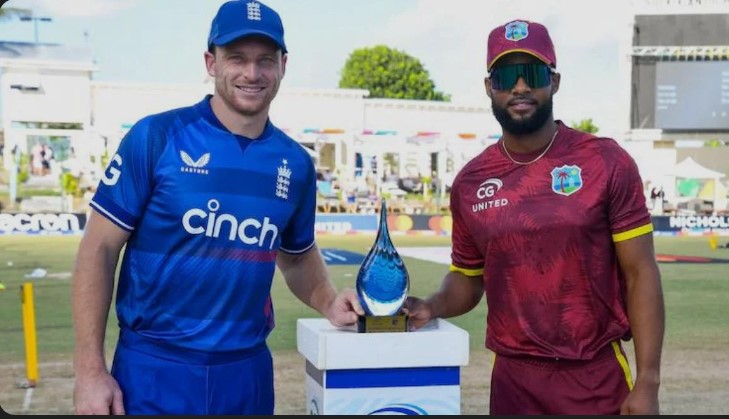
The rivalry between the England Cricket Team 🏴 and the West Indies Cricket Team 🇲🇸 is not just a series of matches; it is a sprawling, 98-year-old epic of resilience, revolution, and raw power. From the first ball bowled at Lord’s in 1928 to the high-octane “Bazball” clashes of 2025 and 2026, this feud has shaped the very soul of the sport. It has transitioned from a colonial exhibition into a fierce battle for global supremacy, moving through the terrifying pace of the 80s “Blackwashes” to the modern-day fireworks of T20 warfare. Whether it is the rhythmic thump of a Caribbean steel drum or the iconic roar of the Barmy Army, every encounter between these two giants carries a weight of history that few other rivalries can match.
Ultimate Rivalry Hall of Fame: All-Time Head-to-Head Stats (1928–2026)
| 📊 Format | 🏴 England Wins | 🇲🇸 West Indies Wins | Draws/NR | All-Time Leader |
| Test Matches | 54 | 59 | 53 | West Indies 🇲🇸 |
| ODI Matches | 57 | 48 | 6 | England 🏴 |
| T20 Internationals | 19 | 18 | 1 | England 🏴 |
| Overall Victory Count | 130 | 125 | 60 | England 🏴 |
| Most Runs | Joe Root | Brian Lara | — | Lara (Test Record) |
| Most Wickets | James Anderson | Courtney Walsh | — | Walsh (WI Legend) |
The Birth of a Feud: 1928 and the Colonial Challenge
The year was 1928, a time when the cricket field was less of a playground and more of a geopolitical stage. On June 23, the England Cricket Team welcomed the West Indies Cricket Team 🇲🇸 to the hallowed turf of Lord’s for their inaugural Test match. While the English press viewed the tourists as “noble apprentices,” the Caribbean men arrived with a hidden fire that would eventually burn down the established order. This wasn’t just about bat and ball; it was the start of a century-long struggle for identity.
The aggression in those early days was subtle but stinging. England, led by the formidable Percy Chapman, showcased a ruthless professionalism, clinching the first Test by an innings and 58 runs. Yet, amidst the clinical English dominance, a spark was ignited. A young George Headley began to emerge, proving that the Caribbean possessed the technical brilliance to match the “masters” of the game. Fans at Lord’s witnessed the first ripples of what would become a tidal wave of cricketing talent, marking the beginning of a statistical journey that remains the most vibrant thread in the fabric of the sport.
| Feature | England Stats | West Indies Stats 🇲🇸 | Rivalry Impact |
| Series Result | 3 – 0 (Clean Sweep) | 0 – 3 | Established English dominance early on. |
| Highest Team Total | 449 (3rd Test – The Oval) | 237 (3rd Test – The Oval) | Showed the massive gap in experience. |
| Top Run Scorer | Ernest Tyldesley (260 Runs) | Joe Small (143 Runs) | Headley’s arrival followed shortly after. |
| Best Bowling (Innings) | 6/34 (Tich Freeman) | 2/45 (Learie Constantine) | The start of the legendary Constantine legacy. |
| Fan Atmosphere | Formal, Quiet, Stiff Upper Lip | Curious, Hopeful, Rhythm-seeking | The contrast in cultures was immediate. |
| Aggression Level | Tactical & Disciplined | Raw & Unrefined Power | Setting the stage for a century of battle. |
The 1950s: The Victory Calypso and the First Taste of Blood
If 1928 was the introduction, 1950 was the revolution. This was the decade where the West Indies Cricket Team 🇲🇸 stopped being “participants” and became “conquerors.” The air in England was thick with post-war reconstruction, but on the cricket field, a different kind of rebuilding was happening. Led by the tactical brilliance of John Goddard, the West Indies arrived on English soil in 1950 with a secret weapon that would leave the England Cricket Team baffled: the “spin twins,” Sonny Ramadhin and Alf Valentine.
The aggression moved from the physical to the psychological. Watching the mystery of Ramadhin’s flicked off-breaks and Valentine’s relentless left-arm spin was a slow torture for the English greats like Hutton and Washbrook. When the West Indies secured their first-ever win at Lord’s, the stadium didn’t just see a result; it saw a cultural explosion. Caribbean fans flooded the pitch, guitars appeared from nowhere, and the “Victory Calypso” was born. This wasn’t just a match; it was a statement of independence. The fans brought a rhythm that the stiff-collared English galleries had never seen, forever changing the “vibe” of international cricket. It was the moment the underdog bit back, and the bite was deep.
| Statistical Category | England Performance | West Indies Performance 🇲🇸 | Viral “Blog-Worthy” Insight |
| Series Outcome | 1 Win (Defeated 1-3) | 3 Wins (Historic Series Victory) | The first time WI won a series in England! |
| The “Spin Twin” Terror | Batting Avg against Spin: 18.4 | 59 Wickets (Ramadhin 26, Valentine 33) | England had no answer for the mystery spin. |
| Highest Individual Score | 202* (Len Hutton – The Oval) | 168* (Allan Rae – Lord’s) | Hutton carried his bat in a legendary lone fight. |
| Lowest Team Total | 103 All Out (Lord’s) | 121 All Out (Old Trafford) | The Lord’s collapse triggered a Caribbean party. |
| Field Aggression Style | Defensive, Traditional Fields | Close-in Catching (The “Web”) | WI placed 5 men around the bat to rattle England. |
| Fan Energy Metric | Polite applause, golf-claps | Steel drums, Calypso singing, Pitch invasion | This series birthed the “cricket party” culture. |
| Key Partnership | 102 (Hutton & Washbrook) | 162 (Clyde Walcott & Gerry Gomez) | The “Three Ws” (Walcott, Weeks, Worrell) began. |
| Strike Rate Dominance | Steady & Slow (2.1 rpo) | Attacking & Fluid (3.4 rpo) | The Caribbean “flair” officially outpaced English grit. |
| Match Momentum Shift | The 1st Test Win at Old Trafford | Winning 3 Tests in a Row | WI lost the 1st Test but roared back to win 3-1. |
The Era of Brutality: Fire in Babylon (1970s – 1980s)
This was the era when the England Cricket Team learned the true meaning of fear. By the mid-1970s, the West Indies Cricket Team 🇲🇸 had transformed from a group of talented entertainers into a professional machine of destruction. The catalyst? A 1976 comment by England captain Tony Greig, who infamously vowed to make the West Indies “grovel.” It was the ultimate tactical blunder. Greig’s words ignited a fire in Clive Lloyd’s men that didn’t go out for two decades.
The aggression on the field was unlike anything seen before or since. Led by the “Four Horsemen of the Apocalypse”—Holding, Roberts, Garner, and Croft—the West Indies unleashed a relentless barrage of short-pitched bowling. English batsmen weren’t just losing their wickets; they were losing their skin, their teeth, and their confidence. The sight of Michael Holding (Whispering Death) gliding to the crease was a psychological nightmare. Fans in the Caribbean and the UK diaspora turned every match into a carnival of defiance, using cricket as a tool of social justice. This was “Fire in Babylon”—a period where the scorecard looked like a list of casualties, and the West Indies asserted their status as the undisputed kings of the world.
| Historical Metric | England Resistance | West Indies Dominance 🇲🇸 | The “Fear Factor” Analysis |
| Series Landmark | 1984 & 1985/86 “Blackwashes” | Two Consecutive 5-0 Clean Sweeps | The most dominant era for any team in history. |
| Pace Battery Speed | Average: 82-85 mph | Average: 90-97 mph | Marshall & Holding redefined human limits. |
| Top Run Machine | David Gower (733 Runs – 1984/85) | Viv Richards (829 Runs – 1976) | The “Master Blaster” batted without a helmet! |
| Bowling Masterclass | Ian Botham (Battle of All-rounders) | Malcolm Marshall (The Destroyer) | Marshall once took 7 wickets with a broken hand. |
| Aggression Level | High (Vocal & Tactical) | Extreme (Physical & Psychological) | The “short-ball theory” became a legal weapon. |
| Fan Atmosphere | Stunned Silence at Lord’s/Headingley | Pure Euphoria & Dancing in the Aisles | Fans carried banners saying “Grovel this!” |
| Key Partnership | 170 (Gower & Lamb) | 236 (Greenidge & Haynes) | The greatest opening duo to ever play the game. |
| Boundary Count | Defensive Mindset | Aggressive 4s and 6s (Viv’s 56-ball 100) | Viv Richards set the fastest Test century record. |
| Tactical Innovation | Relying on Spin/Medium Pace | The 4-Pronged Pace Battery | WI completely abandoned spin to focus on raw pace. |
| Impact on Stats | Careers ended due to pace trauma | The 15-year Unbeaten Series Streak | A statistical anomaly that may never be broken. |
Lara vs Atherton: Individual Brilliance Amidst Team Transitions
As the sun began to set on the era of total West Indian dominance, the rivalry shifted from a battle of brute force to a war of individual genius. The 1990s and early 2000s were defined by one name that haunted the dreams of every England Cricket Team bowler: Brian Charles Lara. This wasn’t just cricket; it was art, it was defiance, and it was a statistical assault on the record books. While the West Indies Cricket Team 🇲🇸 struggled with consistency, Lara remained the “Prince of Port of Spain,” a man capable of single-handedly dismantling the most professional English setups.
The aggression here was surgical. Lara didn’t just hit the ball; he humiliated it. His battles with Michael Atherton—the gritty, stoic English captain—were legendary. Atherton was the immovable object, and Lara was the unstoppable force. The defining moments of this era happened in Antigua, a ground that became Lara’s personal kingdom. In 1994, he broke the world record with a staggering 375, only to reclaim it ten years later with an unbeaten 400* against the same opponent. The fan emotion was a mix of English despair and Caribbean ecstasy—thousands of fans swarming the pitch as Lara kissed the turf, having once again conquered the empire.
| 📊 Battle Metric | 🏴 England’s Stoic Resistance | 🇲🇸 Lara’s World-Record Blitz | Rivalry Heat Level |
| The 1994 Epoch | 373 Total Partnership (Smith & Atherton) | 375 Individual Runs (Brian Lara) | High: Record Shattered! |
| The 2004 Epoch | England already won series 3-0 | 400 Not Out* (Brian Lara) | Extreme: Pride Reclaimed! |
| Top Bowler Victim | Andy Caddick (Dismissed Lara in 1994) | Gareth Batty (The 400th run victim) | Precision over Pace |
| Captaincy War | Michael Atherton (Defensive Grit) | Brian Lara (Aggressive Mastermind) | Brains vs Bravery |
| Fan Atmosphere | “Oh no, not again” 🏴 | “Prince of the World!” 🇲🇸 | Calypso Celebration |
| Boundary Count | Steady Accumulation | 43 Fours & 4 Sixes (In the 400*) | Absolute Carnage |
| Minutes at Crease | Atherton’s 10-hour grinds | 778 Minutes (Lara’s 400* marathon) | The Ultimate Test |
| Tactical Shift | Focus on reverse swing & spin | High-backlift counter-attack | Blade against Shield |
| Highest Team Total | 593 All Out (1994) | 751/7 Declared (2004) | Statistical Peak |
| Emoji Vibe | (The Wall) | (The King) | The Greatest of All Time |
The T20 Revolution: “Remember the Name” (2016 – 2020)
The rivalry took a sharp, modern turn as the format shortened and the stakes heightened. This wasn’t about five days of attrition anymore; it was about explosive power, maximum intensity, and final-over heroics. The West Indies Cricket Team 🇲🇸 reinvented themselves as the “Mercenaries of Mayhem,” while the England Cricket Team 🏴 looked to shed their traditional skin and embrace a new, aggressive white-ball identity. This era wasn’t just about cricket; it was about the evolution of the athlete into a powerhouse.
The pinnacle of this aggression occurred on a humid night in Kolkata during the 2016 T20 World Cup Final. The tension was suffocating. England had one hand on the trophy, and Ben Stokes was tasked with defending 19 runs in the final over. What followed was the most violent display of batting ever seen in a final. Carlos Brathwaite—a man with little international experience at the time—struck four consecutive sixes into the night sky. The fan emotion was a raw, visceral split: English fans watching through their fingers in horror, while the Caribbean erupted in a dance that lasted weeks. Ian Bishop’s commentary, “Carlos Brathwaite! Remember the Name!” became the anthem for a new generation of West Indian dominance in the shortest format.
| Battle Element | 🏴 England’s White-Ball Reset | 🇲🇸 West Indies Power-Hitting | Viral Stat Impact |
| The 2016 Final | Ben Stokes (The Heartbreak) | Carlos Brathwaite (4 Sixes in a row) | Most Dramatic Final Over |
| Six-Hitter King | Eoin Morgan (Tactical Power) | Chris Gayle (The Universe Boss) | Balls out of the stadium |
| Highest T20I Total | 241/3 (Napier, 2019) | 224/5 (Barbados, 2022) | Scorecards on steroids |
| Top Wicket Taker | Adil Rashid (The Spin Trickster) | Jason Holder (The Tall Enforcer) | Middle-over strangulation |
| Aggression Level | High-Speed “Bazball” Roots | Pure Physical Intimidation | Modern Gladiator Duel |
| Fan Vibe | Barmy Army Trumpets | Steel Drums & Party Stands | Total Carnival Energy |
| Fastest Fifty | Moeen Ali (16 balls) | Chris Gayle (12 balls – T20 World Cup) | Blink and you miss it |
| Field Aggression | Elite Athleticism & Diving | Champion” Dance & Swagger | Style meets Substance |
| Emoji Vibe | (The Three Lions) | (The Caribbean Giants) | World Champions Battle |
The Modern Renaissance: The 2024–2025 Tours and the 2026 Outlook
As we move into the current era, the rivalry has entered a phase of high-speed evolution. This isn’t your grandfather’s cricket; this is “Bazball” meeting “Caribbean Power.” The England Cricket Team 🏴 has arrived with a philosophy of relentless attack, led by the fearless Ben Stokes and Brendon McCullum. But the West Indies Cricket Team 🇲🇸 has turned the Caribbean islands into a modern fortress. The 2024 series and the most recent January 2026 clashes have shown that the West Indies are no longer a “sleeping giant”—they are wide awake and hungry for English scalps.
The aggression today is a chess match played at 100 mph. We’ve seen young guns like Gus Atkinson for England steaming in at 90mph+, only to be met by the sheer physical strength of Nicholas Pooran and Shai Hope. The fan atmosphere has reached a fever pitch; the Barmy Army’s trumpets now compete with the booming bass of Caribbean sound systems. In the recent Vitality IT20 series and the red-ball battles for the Richards-Botham Trophy, the momentum has swung like a pendulum. Every match is a tactical masterclass in how to handle pressure under the scorching Caribbean sun or the gloomy clouds of Manchester.
| 🕒 Era Breakdown | 🏴 England’s “Bazball” Fire | 🇲🇸 West Indies’ Power Surge | The “Viral” Moment |
| Series Dominance | Home Wins at Lord’s & Trent Bridge | Unbeaten at Home (Kensington Oval) | The Caribbean Fortress |
| Tactical Approach | 8.0+ Run Rate in Tests | Power-Hitting & Death Bowling | Redefining Cricket Speed |
| Top Run Machine | Joe Root (The Statistical GOAT) | Shai Hope (The ODI Specialist) | Masterclass in Timing |
| Aggression Leader | Harry Brook (Fearless Hitting) | Alzarri Joseph (The High-Speed Enforcer) | Stare-downs & Short Balls |
| Fan Vibe | 🏴 Barmy Army “Great Escape” | 🇲🇸 “Rally Round the West Indies” | Non-stop Party Deck |
| Record Breaker | Fastest Team 100 in Test History | Most T20I Sixes in a Calendar Year | History in the Making |
| Field Aggression | 🧤 Unorthodox Catching Positions | 🎯 Lethal Outfield Throwing | Predatory Fielding |
| Bowling Weapon | Mark Wood (The 95mph Thunderbolt) | Gudakesh Motie (The Spin Wizard) | Pace vs Mystery |
| Key Partnership | Stokes & Root (The Veteran Duo) | King & Pooran (The New Wave) | Tactical Brilliance |
Epic Clash: England vs West Indies Recent Battles
| Tournament | Venue | Date | Toss | England Score | West Indies Score | Result | Series | Player of the Match |
|---|---|---|---|---|---|---|---|---|
| Bilateral T20I | Rose Bowl, Southampton | 10 Jun 2025 | West Indies (field) | 248/3 (20) | 211/8 (20) | England won by 37 runs | West Indies tour of England 2025 | Ben Duckett (ENG) |
| Bilateral T20I | Bristol County Ground, Bristol | 8 Jun 2025 | England (field) | 199/6 (18.3) | 196/6 (20) | England won by 4 wickets | West Indies tour of England 2025 | Luke Wood (ENG) |
| Bilateral T20I | Riverside Ground, Chester-le-Street | 6 Jun 2025 | England (bat) | 188/6 (20) | 167/9 (20) | England won by 21 runs | West Indies tour of England 2025 | Liam Dawson (ENG) |
| Bilateral ODI | The Oval, London | 3 Jun 2025 | England (field) | 246/3 (29.4) | 251/9 (40) | England won by 7 wickets (DLS method) | West Indies tour of England 2025 | Jamie Smith (ENG) |
| Bilateral ODI | Sophia Gardens, Cardiff | 1 Jun 2025 | England (field) | 312/7 (48.5) | 308 (47.4) | England won by 3 wickets | West Indies tour of England 2025 | Joe Root (ENG) |
| Bilateral ODI | Edgbaston, Birmingham | 29 May 2025 | West Indies (field) | 400/8 (50) | 162 (26.2) | England won by 238 runs | West Indies tour of England 2025 | Jacob Bethell (ENG) |
| Bilateral T20I | Daren Sammy Cricket Ground, Gros Islet | 17 Nov 2024 | England (field) | – | 44/0 (5) | No result | England tour of West Indies 2024–25 | N/A |
| Bilateral T20I | Daren Sammy Cricket Ground, Gros Islet | 16 Nov 2024 | West Indies (field) | 218/5 (20) | 221/5 (19) | West Indies won by 5 wickets | England tour of West Indies 2024–25 | Shai Hope (WI) |
| Bilateral T20I | Daren Sammy Cricket Ground, Gros Islet | 14 Nov 2024 | England (field) | 149/7 (19.2) | 145/8 (20) | England won by 3 wickets | England tour of West Indies 2024–25 | Saqib Mahmood (ENG) |
| Bilateral T20I | Kensington Oval, Bridgetown | 10 Nov 2024 | England (field) | 161/3 (14.5) | 158/8 (20) | England won by 7 wickets | England tour of West Indies 2024–25 | Jos Buttler (ENG) |
| Bilateral T20I | Kensington Oval, Bridgetown | 9 Nov 2024 | England (field) | 183/2 (16.5) | 182/9 (20) | England won by 8 wickets | England tour of West Indies 2024–25 | Phil Salt (ENG) |
| Men’s T20 World Cup | Daren Sammy Cricket Ground, Gros Islet | 19 Jun 2024 | England (field) | 181/2 (17.3) | 180/4 (20) | England won by 8 wickets | ICC Men’s T20 World Cup 2024 | Phil Salt (ENG) |
| Bilateral Test | Edgbaston, Birmingham | 26-28 Jul 2024 | West Indies (bat) | 376 & 87/0 | 282 & 175 | England won by 10 wickets | West Indies tour of England 2024 | Mark Wood (ENG) |
| Bilateral Test | Trent Bridge, Nottingham | 18-21 Jul 2024 | West Indies (field) | 416 & 425 | 457 & 143 | England won by 241 runs | West Indies tour of England 2024 | Ollie Pope (ENG) |
| Bilateral Test | Lord’s, London | 10-12 Jul 2024 | England (field) | 371 | 121 & 136 | England won by an innings and 114 runs | West Indies tour of England 2024 | Gus Atkinson (ENG) |
Thrilling Summary & Standout Moments
England’s recent form against West Indies has been nothing short of dominant, sweeping the 2025 ODI and T20I series 3-0 each, showcasing their depth in batting and bowling. The 2024–25 T20I series saw England take a 3-1 lead before a no-result, highlighting tense finishes like West Indies’ chase in the 4th T20. The 2024 Tests were a whitewash for England at home, with bowlers like Gus Atkinson and Mark Wood dismantling the Windies lineup.
Best Performances to Remember:
- Batting Fireworks: Joe Root’s consistent tons in ODIs (e.g., key in the 2nd ODI chase) and Phil Salt’s explosive knocks in T20s, including a match-winning century in the World Cup clash
- Bowling Masterclass: Mark Wood’s 5-fer in the 3rd Test turned the game, while spinners like Gudakesh Motie shone for WI in spots.
- All-Round Brilliance: Jos Buttler led from the front with captaincy and quickfire innings, earning POM honors.
The Final Verdict: Legacy of the 22 Yards
As we look back on the England Cricket Team vs West Indies Cricket Team stats, it becomes clear that this rivalry is the heartbeat of international cricket. It has survived world wars, social upheavals, and the complete transformation of the game’s formats. While England currently leads in modern white-ball consistency, the West Indies remain the spiritual guardians of the game’s flair and aggression. As we head into the 2026 summer series, the stats show a remarkably balanced head-to-head record across a century of play. This feud is a testament to the fact that cricket is more than a game—it is a cultural dialogue between two nations that refuse to back down. The story is far from over; it is simply entering its next thrilling chapter.
Frequently Asked Questions (FAQs)
Who has won more Test matches between England and the West Indies? As of 2026, the West Indies 🇲🇸 hold a slight lead in Test cricket with 59 wins compared to England’s 54. This lead was largely built during their “Golden Era” from the mid-70s to the early 90s.
What is the highest individual score in this rivalry? The record is held by Brian Lara 🇲🇸, who scored a legendary 400 not out against England in Antigua in 2004. This remains the highest individual score in the history of Test match cricket.
What was the “Blackwash” of 1984? The “Blackwash” refers to the 1984 series where the West Indies toured England and won every single Test match, finishing with a 5-0 clean sweep. They repeated this feat at home in 1985/86, cementing their status as the most dominant team of that era.
Where can I find the latest 2025/2026 England vs West Indies scorecards? Official scorecards for the 2025/2026 series are available on the ECB 🏴 and Windies Cricket 🇲🇸 official apps, as well as major sports platforms like ESPNcricinfo, providing ball-by-ball analysis and player heat maps.
Why is the Test series called the Richards-Botham Trophy? Formerly known as the Wisden Trophy, it was renamed in 2020 to honor two of the greatest rivals and friends in the game’s history: Sir Vivian Richards and Sir Ian Botham, symbolizing the deep respect and fierce competition of the feud.