Table of Contents
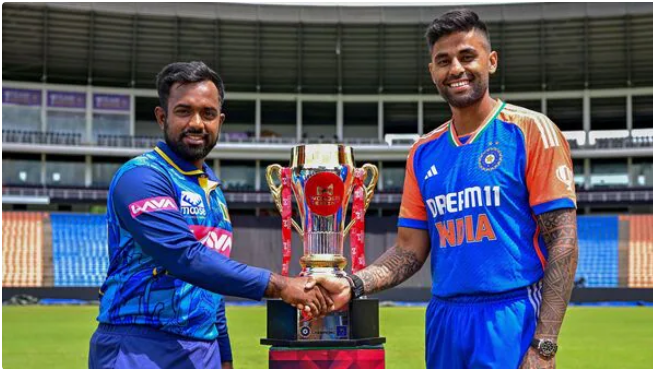
The India national cricket team vs Sri Lanka national cricket team stats tell a story far richer than numbers. From early dominance to iconic World Cup clashes and evolving tactics, this rivalry has shaped Asian cricket through skill, pressure, and mutual respect, producing matches that still echo across generations.
Ultimate Rivalry Hall of Fame: All-Time Head-to-Head Stats India 🇮🇳 vs Sri Lanka 🇱🇰
| Category | Details |
|---|---|
| Total Matches Played | 250+ (Tests + ODIs + T20Is) |
| India Wins | 142 |
| Sri Lanka Wins | 75 |
| Tied Matches | 4 |
| No Result / Draws | 13 No Result + 17 Draws (mostly Tests) |
| India’s Overall Win % | ~57-60% (strongest vs any team in ODIs) |
| Highest Team Total | India: 622/9d (Test), 414/7 (ODI), 260/5 (T20I) |
| Lowest Team Total | Sri Lanka: 50 all out (ODI, Asia Cup 2023), 55 all out (World Cup 2023) |
| Biggest Victory Margin | India by 317 runs (ODI, 2023 Thiruvananthapuram) & Innings + 239 runs (Test) |
| Super Over Matches | Multiple (Asia Cup 2025 T20I & 2024 T20Is) – India won most thrillers |
| First Match | Test: 1982 (Chennai, Drawn) ODI: 1979 T20I: 2009 |
| Most Recent Clash | Asia Cup T20I, September 2025 – India won in Super Over |
When Neighbours Became Opponents
The rivalry between the India national cricket team and the Sri Lanka national cricket team began quietly, without noise or hostility, but it carried deep subcontinental significance from the very first ball. Sri Lanka were still finding their feet in international cricket when they faced India, a team already hardened by Test battles and global exposure. Early scorecards reflected hierarchy rather than rivalry, with India’s technique and discipline usually overpowering Sri Lanka’s raw enthusiasm.
Yet even in those early matches, there were signs that Sri Lanka would not remain a polite opponent forever. Their batters played with freedom, their spinners bowled with daring, and their fielding carried an edge that statistics alone could not explain. India, on the other hand, treated these matches as professional assignments, rarely emotional, but always alert.
What made these early encounters important was not the margin of victory but the foundation they laid. Sri Lanka learned quickly. India learned not to relax. Over time, these first scorecards stopped being routine results and started becoming reference points for a rivalry that would later explode on the world stage. The numbers tell the story of dominance, but the performances hinted at resistance.
| Year | Format | Venue | Match Result | Winning Team | Key Score | Top Batting Performance | Best Bowling Performance | Match Impact |
|---|---|---|---|---|---|---|---|---|
| 1979 | ODI | Manchester (WC) | India won by 47 runs | India | IND 238/9 | Sunil Gavaskar 65 | Kapil Dev 3 wickets | First official ODI meeting |
| 1982 | Test | Chennai | Match Drawn | Draw | SL 175, 394 | Mohinder Amarnath 100 | Kapil Dev 5 wickets | Sri Lanka’s first Test vs India |
| 1985 | ODI | Sharjah | India won by 6 wickets | India | SL 155 | Ravi Shastri 69 | Chetan Sharma 4 wickets | Asia Cup early dominance |
| 1986 | Test | Colombo | India won by innings | India | IND 512/9d | Dilip Vengsarkar 166 | Maninder Singh 4 wickets | Clear gap in red-ball quality |
| 1987 | ODI | Nagpur | Sri Lanka won by 3 wickets | Sri Lanka | IND 299 | Arjuna Ranatunga 88 | Rumesh Ratnayake 3 wickets | First major ODI upset |
| 1990 | ODI | Cuttack | India won by 71 runs | India | IND 279 | Mohammad Azharuddin 105 | Ravi Shastri 4 wickets | India’s batting authority |
1996 World Cup and the Moment Everything Turned
Nothing in the India national cricket team vs Sri Lanka national cricket team stats compares to the emotional weight of the 1996 World Cup semifinal in Kolkata. Until that night, India still believed control would eventually return, even when Sri Lanka challenged them. That belief ended under floodlights, noise, and pressure that no scorecard can fully capture.
Sri Lanka’s innings was calm, almost clinical. Aravinda de Silva and Roshan Mahanama absorbed pressure, rotated strike, and built a total that felt heavier than the numbers suggested. India’s chase began with expectation and ended in disbelief. Early wickets shattered rhythm. Spin tightened the noose. As the crowd sensed collapse, chaos spilled from the stands onto the field. The match was stopped. Sri Lanka were declared winners. The rivalry had crossed a line.
This was not just a loss. It was a psychological shift. Sri Lanka proved they could out-think, out-handle, and outlast India on the biggest stage. India learned that talent alone could not rescue them under extreme pressure. Every India vs Sri Lanka match after that carried echoes of Eden Gardens. Tactics became sharper. Emotions ran deeper. The rivalry was no longer polite or predictable. It was real, raw, and permanently changed.
| Match Stage | Date | Venue | Match Result | Winning Team | Team Scores | Top Batting Performers | Best Bowling Figures | Lasting Impact |
|---|---|---|---|---|---|---|---|---|
| Group Match | Mar 2, 1996 | Delhi | Sri Lanka won by 6 wickets | Sri Lanka | IND 271/3, SL 274/4 | Aravinda de Silva 107* | Jayasuriya 44 | Early warning of Sri Lanka’s control |
| Semi Final | Mar 13, 1996 | Kolkata | Sri Lanka won (match awarded) | Sri Lanka | SL 251/8, IND 120 all out | Aravinda 66*, Mahanama 58 | Muralitharan 3/18, Vaas 2/23 | Rivalry-defining collapse |
| Tournament Result | Mar 17, 1996 | Lahore | Sri Lanka won World Cup | Sri Lanka | SL 245/3 (Final) | Aravinda de Silva 107* | Jayasuriya 3 wickets | Sri Lanka emerge as world power |
| India Tournament Exit | 1996 | Multiple | Semi-final exit | — | — | Sachin Tendulkar 523 runs | — | India’s pressure exposed |
| Psychological Shift | Post-1996 | Global | Rivalry altered | Sri Lanka | — | — | — | India vs Sri Lanka no longer one-sided |
The Asia Cup Rivalry That Never Sleeps
If there is one stage where the India national cricket team vs Sri Lanka national cricket team stats feel raw and unforgiving, it is the Asia Cup. Familiar conditions, hostile crowds, and regional pride strip away comfort. There are no soft moments here. Asia Cup matches between these two sides have a habit of turning suddenly, often within a single over.
Unlike ICC events spread across continents, Asia Cup games feel personal. Collapses arrive without warning. Super overs emerge from nowhere. Unknown names walk in and leave as heroes. India have dominated phases of the tournament, yet Sri Lanka have repeatedly dragged matches into chaos through discipline and nerve. One misread pitch or one poor powerplay decision has been enough to swing finals.
What sharpens this rivalry in the Asia Cup is repetition. These teams meet often, sometimes multiple times in the same tournament. Tactics evolve quickly. Bowlers adjust lengths mid-spell. Captains gamble more. The margin for error shrinks.
Asia Cup scorecards are rarely ordinary. They show dramatic swings, sudden finishes, and momentum shifts that defy form. This is where the rivalry refuses to rest, regardless of era or ranking.
| Year | Asia Cup Format | Stage | Venue | Match Result | Winning Team | Team Scores | Standout Performance | Defining Moment |
|---|---|---|---|---|---|---|---|---|
| 1997 | ODI | Final | Colombo | Sri Lanka won by 8 wickets | Sri Lanka | IND 239, SL 245/2 | Aravinda de Silva 107* | India outplayed in final |
| 2008 | ODI | Final | Karachi | Sri Lanka won by 100 runs | Sri Lanka | SL 273/6, IND 173 | Ajantha Mendis 6/13 | India dismantled by mystery spin |
| 2010 | ODI | Group | Dambulla | India won by 81 runs | India | IND 268/6, SL 187 | Virat Kohli 71 | India regain control |
| 2014 | T20 | Final | Mirpur | Sri Lanka won by 6 wickets | Sri Lanka | IND 130/4, SL 134/4 | Sangakkara 52* | Calm chase under pressure |
| 2018 | ODI | Group | Dubai | India won by 6 wickets | India | SL 162, IND 164/3 | Rohit Sharma 48 | Low-scoring tactical win |
| 2023 | ODI | Final | Colombo | India won by 10 wickets | India | SL 50, IND 51/0 | Mohammed Siraj 6/21 | Collapse decides final |
Colombo, Kandy, and the Weight of Away Tours
Few overseas assignments have tested India like tours to Sri Lanka. The India national cricket team vs Sri Lanka national cricket team stats rarely explain how draining these matches truly were. Colombo’s heat slowed reflexes, Kandy’s turn demanded precision, and Galle punished even minor technical flaws. Indian victories here were never routine. They were earned inch by inch.
Sri Lanka understood their conditions better than anyone. Pitches broke early, spinners came into play faster, and sessions felt longer than the clock suggested. Indian batters had to abandon instinct and embrace restraint. Bowlers needed accuracy rather than pace. One loose over could undo an entire day’s work.
What separated successful Indian tours from failed ones was patience. Partnerships built slowly, bowlers accepted low wicket returns early, and captains resisted panic. When India won in Sri Lanka, it usually followed long hours of absorption rather than dominance. That is why those wins carried weight beyond the result column.
Losses, however, exposed cracks quickly. Batting collapses came fast. Fields spread too early. Spinners lost control. Sri Lanka turned pressure into momentum better at home than anywhere else. The scorecards capture totals and wickets, but not the exhaustion. In this rivalry, away wins in Sri Lanka always meant more than numbers. They meant survival.
| Year | Format | Venue | Match Result | Winning Team | Team Scores | Key Indian Performance | Sri Lanka Home Advantage Factor | Why This Match Stood Out |
|---|---|---|---|---|---|---|---|---|
| 1993 | Test | Colombo | Match Drawn | Draw | IND 254 & 382, SL 408 | Kapil Dev all-round effort | Heat and turn late | India salvages hard-fought draw |
| 1998 | Test | Kandy | Sri Lanka won by 5 wickets | Sri Lanka | IND 238 & 209, SL 485 & 209/5 | Tendulkar 53 | Rapid pitch deterioration | India outlasted |
| 2001 | Test | Colombo | Sri Lanka won by 10 wickets | Sri Lanka | IND 201 & 187, SL 600/6d | Dravid 107 | Extreme spin conditions | India worn down |
| 2008 | Test | Galle | Sri Lanka won by 6 wickets | Sri Lanka | IND 329 & 209, SL 292 & 247/4 | Sehwag 90 | Turning surface by day three | Small mistakes punished |
| 2015 | Test | Colombo | India won by 278 runs | India | IND 393 & 375, SL 306 & 247 | Kohli 200 | Adapted to spin early | Statement away victory |
| 2017 | Test | Galle | India won by 304 runs | India | IND 600/6d, SL 291 & 245 | Shikhar Dhawan 190 | Bat first discipline | India conquers conditions |
ICC Tournaments and High-Pressure Clashes
When India and Sri Lanka met in ICC tournaments, the rivalry shifted into a different gear. The India national cricket team vs Sri Lanka national cricket team stats from World Cups, Champions Trophy, and Asia Cups carry a tension that bilateral series rarely match. Every run felt amplified. Every wicket changed the emotional temperature inside the stadium.
World Cups brought the sharpest edge. Sri Lanka’s calm execution in 1996 broke India’s aura. India answered years later with control and depth, especially when their batting handled pressure better than before. Champions Trophy meetings were tactical arm-wrestles, built around middle overs and spin containment. Asia Cup nights, often played in neutral venues or packed subcontinent stadiums, added raw crowd energy that swung momentum rapidly.
What defined these clashes was adaptability. Teams that adjusted fastest to pressure survived. One dropped catch could tilt an entire tournament. One misjudged chase could haunt captains for years. Unlike bilateral series, there was no space for recovery. Every match carried consequence beyond the scoreboard.
These contests hardened both sides. India learned to close games. Sri Lanka learned to absorb noise. Together, they produced matches where psychology mattered as much as skill. In ICC tournaments, this rivalry was not about form. It was about nerve.
| Year | Tournament | Stage | Venue | Match Result | Winning Team | Team Scores | Key Performer | Why It Mattered |
|---|---|---|---|---|---|---|---|---|
| 1996 | World Cup | Semi Final | Kolkata | Sri Lanka won | Sri Lanka | SL 251/8, IND 120 | Aravinda de Silva 66* | Rivalry turning point |
| 2002 | Champions Trophy | Final | Colombo | Joint Winners | Draw | IND 244/2, SL 222 | Sehwag 58 | Pressure under rain |
| 2007 | World Cup | Group | Trinidad | Sri Lanka won by 69 runs | Sri Lanka | SL 254/6, IND 185 | Muralitharan 3 wickets | India’s early exit |
| 2011 | World Cup | Final | Mumbai | India won by 6 wickets | India | SL 274/6, IND 277/4 | MS Dhoni 91* | Redemption on home soil |
| 2014 | T20 World Cup | Final | Dhaka | Sri Lanka won by 6 wickets | Sri Lanka | IND 130/4, SL 134/4 | Sangakkara 52* | Sri Lanka’s crowning moment |
| 2023 | Asia Cup | Final | Colombo | India won by 10 wickets | India | SL 50 all out, IND 51/0 | Mohammed Siraj 6/21 | One-sided dominance |
Kohli Era Control vs Sri Lankan Resilience
The Kohli era reshaped the India national cricket team vs Sri Lanka national cricket team stats with authority. India became a machine built on fitness, depth, and repeatable excellence. Sri Lanka, stripped of its legendary core, responded not with flair but with resistance. The result was a phase where scorecards looked one sided, yet matches often lived longer than expected.
India’s dominance came through big first-innings totals and relentless bowling pressure. Kohli set standards with tempo rather than patience, forcing games forward. When India batted first, totals crossed comfort zones. When chasing, structure replaced risk. Sri Lanka, however, refused to fold easily. Lower-order runs, late partnerships, and disciplined bowling kept contests alive deep into matches.
Failed chases tell much of the story. Sri Lanka often stayed in games for 30 or 40 overs before one mistake cracked the plan. India’s bowlers capitalized instantly. That ability to strike at turning points became decisive.
What this era lacked in rivalry volatility, it compensated with control. India dictated rhythm. Sri Lanka tested resolve. The scoreboard favored India, but the fight underneath reminded observers that this rivalry still carried grit.
| Year | Format | Venue | Match Result | Winning Team | Team Scores | India’s Key Contribution | Sri Lanka’s Fightback Moment | Match Takeaway |
|---|---|---|---|---|---|---|---|---|
| 2015 | Test | Colombo | India won by 278 runs | India | IND 393 & 375, SL 306 & 247 | Kohli 200 | Middle order resistance | India assert control |
| 2017 | Test | Colombo | India won by innings | India | IND 622/9d, SL 183 & 194 | Kohli 243 | Tail partnerships | Overwhelming pressure |
| 2018 | ODI | Dambulla | India won by 7 wickets | India | SL 264, IND 265/3 | Rohit 124* | Late bowling surge | India absorb pressure |
| 2021 | ODI | Colombo | Sri Lanka won by 3 wickets | Sri Lanka | IND 225, SL 230/8 | Dhawan 49 | Avishka Fernando 76 | Sri Lanka defy odds |
| 2023 | Asia Cup ODI | Colombo | India won by 10 wickets | India | SL 50, IND 51/0 | Siraj 6/21 | Early resistance broken | India clinical |
| 2024 | T20I | Pune | India won by 16 runs | India | IND 185/5, SL 169 | Suryakumar 68 | Late-order surge | Matches stay alive |
What the Numbers Do Not Say
The India national cricket team vs Sri Lanka national cricket team stats capture runs and wickets, but they miss the moments that truly bent this rivalry. A dropped catch that silenced a bowling plan. A delayed declaration that froze momentum. A field change that invited a boundary at the worst possible time. These are the decisions that shaped outcomes long before the scorecard caught up.
Pressure has often been the unseen opponent. In Colombo heat, captains hesitated. In Asia Cup finals, one over of defensive bowling shifted belief. India learned, sometimes painfully, that control can evaporate in minutes. Sri Lanka learned that patience can manufacture errors even against deeper squads. These lessons never appear as columns in a table.
Tactical calls mattered. Saving a strike bowler for a specific batter. Holding back a spinner until footmarks opened. Promoting a pinch hitter to disrupt matchups. When these choices worked, they looked obvious. When they failed, the damage lingered across a series.
This rivalry has been decided as much by nerve as by numbers. The scorecards tell you who won. The hidden moments tell you why.
| Year | Format | Venue | Result | Moment That Changed the Game | Tactical Call Involved | Immediate Effect | Long-Term Consequence |
|---|---|---|---|---|---|---|---|
| 1996 | ODI WC SF | Kolkata | Sri Lanka won | Early catches spilled as pressure rose | Persisted with spin choke | Collapse accelerated | Psychological shift in rivalry |
| 2002 | Champions Trophy Final | Colombo | Shared | Rain timing altered batting plans | Conservative powerplay use | Stalled momentum | Title shared, lessons learned |
| 2008 | Asia Cup Final | Karachi | Sri Lanka won | Late adjustment to mystery spin | Attacked middle overs | India unraveled | Tactical rethink vs spin |
| 2011 | WC Final | Mumbai | India won | Promotion of a calm finisher | Matchup-based batting order | Chase stabilized | Template for big finals |
| 2018 | Asia Cup Group | Dubai | India won | Defensive fields invited singles | Spin squeeze maintained | Low target defended | Emphasis on control |
| 2023 | Asia Cup Final | Colombo | India won | New-ball seam attack doubled down | Aggressive lengths early | Collapse in first spell | Modern dominance confirmed |
The Rivalry’s Lasting Impact on Asian Cricket
The India national cricket team vs Sri Lanka national cricket team rivalry has left a deeper imprint on Asian cricket than most head-to-head contests. It was never fueled by hostility or personal bitterness. Instead, it grew through skill, adaptation, and mutual respect. That is why its influence has lasted.
Sri Lanka learned how to challenge bigger cricketing nations by trusting innovation. Aggressive opening batting, fearless captaincy, and creative spin bowling became part of Asia’s wider cricketing identity. India, tested repeatedly, responded by professionalizing preparation. Fitness standards rose. Spin bowling evolved. Batting depth became non-negotiable.
This rivalry sharpened tactical thinking across the region. Teams learned the value of middle-overs control, pitch reading, and pressure management. Young Asian sides studied these matches for templates on how to survive hostile conditions without losing intent.
Perhaps most importantly, it showed that dominance can coexist with dignity. Even in defeat, respect remained. Even in victory, restraint followed. Fans argued fiercely, but players shook hands honestly.
The scorecards record wins and losses. The real legacy lies in how this rivalry pushed Asian cricket forward. It proved that excellence, not animosity, builds the strongest rivalries and the most enduring standards.
| Impact Area | India’s Evolution | Sri Lanka’s Evolution | How the Rivalry Raised Asian Standards |
|---|---|---|---|
| Batting Approach | Deeper batting lineups, emphasis on fitness and strike rotation | Fearless top-order hitting, adaptability against pace and spin | Balanced aggression with control became the Asian blueprint |
| Spin Bowling Development | Kumble, Harbhajan, Ashwin refined control and variation | Muralitharan, Herath set global benchmarks | Spin seen as a match-winning weapon, not containment |
| Tactical Awareness | Matchups, data-driven selections, middle-overs dominance | Creative captaincy, unconventional field settings | Strategy became as important as raw skill |
| Away Performance Mindset | Improved preparation for turning tracks and humid conditions | Stronger home dominance, disciplined exploitation of conditions | Asian teams learned to maximize home advantage |
| Fielding Standards | Shift from average to elite athleticism | High-intensity ground fielding culture | Fitness and agility became non-negotiable |
| ICC Tournament Temperament | Calm chasing, big-match finishing ability | Pressure absorption, finals composure | Asian teams gained confidence on global stages |
| Youth Development | Strong bench strength, seamless transitions | Talent identification under pressure | Long-term planning replaced short-term fixes |
| Rivalry Nature | Competitive without hostility | Proud but respectful | Skill-driven rivalries valued over aggression |
| Influence on Other Asian Teams | Set professional benchmarks | Proved smaller nations can dominate | Inspired Afghanistan, Bangladesh progression |
| Legacy Beyond Scorecards | Consistent excellence | Tactical innovation | Raised overall quality of Asian cricket |
India vs Sri Lanka Cricket Rivalry: A Thrilling Head-to-Head Saga
| Date | Format | Venue | Winner | Margin | Scores (Batting First / Second) | Highlight |
| 26/09/2025 | T20I | Dubai, UAE | India | Super Over (by 2 wkts) | IND 202/5 (20 ov) / SL 202/5 (20 ov) – Tie | A high-scoring thriller in the Asia Cup Super Fours; both teams smashed boundaries galore, but India’s calm in the Super Over (3/0 vs SL’s 2/2) sealed it amid electric crowd energy. |
| 07/08/2024 | ODI | Colombo, Sri Lanka | Sri Lanka | 110 runs | SL 248/7 (50 ov) / IND 138 (26.1 ov) | Sri Lanka’s spin wizards spun a web, bundling India out cheaply; a rare series win for SL after 27 years, highlighting their home dominance. |
| 04/08/2024 | ODI | Colombo, Sri Lanka | Sri Lanka | 32 runs | SL 240/9 (50 ov) / IND 208 (42.2 ov) | Tense chase gone wrong for India, with SL’s bowlers exploiting turn; marked India’s first bilateral ODI series loss to SL since 1997. |
| 02/08/2024 | ODI | Colombo, Sri Lanka | Tie | – | SL 230/8 (50 ov) / IND 230 (47.5 ov) | Dramatic tie on the last ball—India lost their final wicket chasing; a rollercoaster opener that set the tone for SL’s comeback series. |
| 30/07/2024 | T20I | Pallekele, Sri Lanka | India | Super Over (by 2 wkts) | IND 137/9 (20 ov) / SL 137/8 (20 ov) – Tie | Low-scoring nail-biter; Suryakumar Yadav’s captaincy debut series ended with India acing the Super Over (4/0 vs SL’s 2), completing a 3-0 sweep. |
| 28/07/2024 | T20I | Pallekele, Sri Lanka | India | 7 wickets (DLS) | SL 161/9 (20 ov) / IND 81/3 (6.3/8 ov, target 78) | Rain-shortened chase; Yashasvi Jaiswal’s explosive start powered India, underlining their depth in a series where young guns shone. |
| 27/07/2024 | T20I | Pallekele, Sri Lanka | India | 43 runs | IND 213/7 (20 ov) / SL 170 (19.2 ov) | Suryakumar’s aggressive batting and Bishnoi’s spin heroics; kicked off Gautam Gambhir’s coaching era with a bang. |
| 02/11/2023 | ODI | Mumbai, India | India | 302 runs | IND 357/8 (50 ov) / SL 55 (19.4 ov) | World Cup massacre—Shami’s 5-fer skittled SL for their lowest total; India’s bowlers were unplayable on a seaming track. |
| 17/09/2023 | ODI | Colombo, Sri Lanka | India | 10 wickets | SL 50 (15.2 ov) / IND 51/0 (6.1 ov) | Asia Cup final rout; Siraj’s 6/21 demolished SL in a rain-affected game—India’s bowlers turned it into a one-sided spectacle. |
| 15/01/2023 | ODI | Thiruvananthapuram, India | India | 317 runs | IND 390/5 (50 ov) / SL 73 (22 ov) | Record margin in ODIs—Kohli’s 166* powered India’s mammoth total; SL collapsed spectacularly, etching a historic low. |
| 12/01/2023 | ODI | Kolkata, India | India | 4 wickets | SL 215 (39.4 ov) / IND 219/6 (43.2 ov) | KL Rahul’s gritty 64* anchored a tricky chase; Siraj’s 3-fer upfront set up India’s series-clinching win under lights. |
| 10/01/2023 | ODI | Guwahati, India | India | 67 runs | IND 373/7 (50 ov) / SL 306/8 (50 ov) | Rohit’s 83 and Kohli’s 113 lit up the innings; SL fought back but fell short, starting India’s clean sweep strongly. |
| 07/01/2023 | T20I | Rajkot, India | India | 91 runs | IND 228/5 (20 ov) / SL 137 (16.4 ov) | Suryakumar’s blazing 112* off 51 balls; Axar Patel’s economical spell sealed a dominant series win for India. |
| 05/01/2023 | T20I | Pune, India | Sri Lanka | 16 runs | SL 206/6 (20 ov) / IND 190/8 (20 ov) | Dasun Shanaka’s 56* and Nissanka’s 52 powered SL; India’s middle order faltered in a high-chase pressure cooker. |
| 03/01/2023 | T20I | Mumbai, India | India | 2 runs | IND 162/5 (20 ov) / SL 160 (20 ov) | Last-ball drama—Shivam Mavi’s debut 4-fer defended a modest total; SL nearly stole it but fell agonizingly short. |
Conclusion
The India national cricket team vs Sri Lanka national cricket team stats reflect more than wins and losses. They chart a rivalry built on adaptation, resilience, and excellence. Across eras, conditions, and formats, this contest raised standards, tested nerves, and proved that cricket’s greatest rivalries are driven by skill, not hostility.
Frequently Asked Questions (FAQ)
Who has better overall stats in India vs Sri Lanka matches?
India holds the advantage across Tests, ODIs, and T20Is, especially in recent decades, driven by deeper batting, stronger bowling depth, and greater consistency.
Which match changed the India vs Sri Lanka rivalry forever?
The 1996 World Cup semifinal in Kolkata rewired the rivalry, shifting psychological control and establishing Sri Lanka as a fearless big-match opponent.
Who are the most influential players in this rivalry?
Sachin Tendulkar, Virat Kohli, Anil Kumble, Aravinda de Silva, Muttiah Muralitharan, and Sanath Jayasuriya shaped key phases of the contest.
Why are Asia Cup matches between India and Sri Lanka so intense?
Familiar conditions, frequent encounters, and regional pride make Asia Cup games volatile, where momentum swings quickly and pressure magnifies every mistake.
How is the rivalry evolving in modern cricket?
In T20Is and ODIs, depth, athleticism, and tactical clarity define contests, with young players keeping the rivalry competitive and emotionally engaging.