Table of Contents
The Zimbabwe vs New Zealand cricket rivalry tells a gripping tale of hope, defiance, and harsh reality. From Zimbabwe’s bold entry in the early 1990s—gritty draws, spirited ODI upsets, and Andy Flower heroics—to New Zealand’s relentless modern dominance, the series has delivered drama, massive margins, and unforgettable moments. It remains a fascinating study in underdog pride against elite power.
Latest Matches
| Format | Venue | Date | Toss | Scores | Result | Series | Player of the Match |
|---|---|---|---|---|---|---|---|
| Test | Queens Sports Club, Bulawayo | August 07 – 09, 2025 | Zimbabwe (bat) | Zimbabwe 125 & 117 New Zealand 601/3d | New Zealand won by an innings and 359 runs | New Zealand in Zimbabwe 2025 | Devon Conway (NZ) |
| Test | Queens Sports Club, Bulawayo | July 30 – August 01, 2025 | Zimbabwe (bat) | Zimbabwe 149 & 165 New Zealand 307 & 8/1 | New Zealand won by 9 wickets | New Zealand in Zimbabwe 2025 | Matt Henry (NZ) |
| T20I | Harare Sports Club, Harare | July 24, 2025 | New Zealand (bat) | New Zealand 190/6 (20) Zimbabwe 130 (18.5) | New Zealand won by 60 runs | Zimbabwe Twenty20 Tri-Series 2025 | Ish Sodhi (NZ) |
| T20I | Harare Sports Club, Harare | July 18, 2025 | New Zealand (field) | Zimbabwe 120/7 (20) New Zealand 122/2 (13.5) | New Zealand won by 8 wickets (with 37 balls remaining) | Zimbabwe Twenty20 Tri-Series 2025 | Devon Conway (NZ) |
| Test | Queens Sports Club, Bulawayo | August 06 – 10, 2016 | New Zealand (bat) | New Zealand 582/4d & 166/2d Zimbabwe 362 & 132 | New Zealand won by 254 runs | New Zealand in Zimbabwe 2016 | Kane Williamson (NZ) |
| Test | Queens Sports Club, Bulawayo | July 28 – 31, 2016 | Zimbabwe (bat) | Zimbabwe 164 & 295 New Zealand 576/6d | New Zealand won by an innings and 117 runs | New Zealand in Zimbabwe 2016 | Ross Taylor (NZ) |
| T20I | Harare Sports Club, Harare | August 09, 2015 | Zimbabwe (field) | New Zealand 198/5 (20) Zimbabwe 118/8 (20) | New Zealand won by 80 runs | New Zealand in Zimbabwe 2015 | George Worker (NZ) |
| ODI | Harare Sports Club, Harare | August 07, 2015 | Zimbabwe (field) | New Zealand 273/6 (50) Zimbabwe 235 (47.4) | New Zealand won by 38 runs | New Zealand in Zimbabwe 2015 | Kane Williamson (NZ) |
| ODI | Harare Sports Club, Harare | August 04, 2015 | Zimbabwe (bat) | Zimbabwe 235/9 (50) New Zealand 236/0 (42.2) | New Zealand won by 10 wickets (with 46 balls remaining) | New Zealand in Zimbabwe 2015 | Martin Guptill (NZ) |
| ODI | Harare Sports Club, Harare | August 02, 2015 | Zimbabwe (field) | New Zealand 303/4 (50) Zimbabwe 304/3 (49) | Zimbabwe won by 7 wickets (with 6 balls remaining) | New Zealand in Zimbabwe 2015 | Craig Ervine (ZIM) |
| T20I | Seddon Park, Hamilton | February 14, 2012 | Zimbabwe (bat) | Zimbabwe 200/2 (20) New Zealand 202/5 (19.4) | New Zealand won by 5 wickets (with 2 balls remaining) | Zimbabwe in New Zealand 2011/12 | James Franklin (NZ) |
| T20I | Eden Park, Auckland | February 11, 2012 | Zimbabwe (bat) | Zimbabwe 159/8 (20) New Zealand 160/3 (16.5) | New Zealand won by 7 wickets (with 19 balls remaining) | Zimbabwe in New Zealand 2011/12 | Martin Guptill (NZ) |
| ODI | McLean Park, Napier | February 09, 2012 | New Zealand (bat) | New Zealand 373/8 (50) Zimbabwe 171 (44) | New Zealand won by 202 runs | Zimbabwe in New Zealand 2011/12 | Brendon McCullum (NZ) |
| ODI | Cobham Oval, Whangarei | February 06, 2012 | Zimbabwe (field) | New Zealand 372/6 (50) Zimbabwe 231/8 (50) | New Zealand won by 141 runs | Zimbabwe in New Zealand 2011/12 | Rob Nicol (NZ) |
| ODI | University Oval, Dunedin | February 03, 2012 | Zimbabwe (field) | New Zealand 248 (48.3) Zimbabwe 158 (41.1) | New Zealand won by 90 runs | Zimbabwe in New Zealand 2011/12 | Martin Guptill (NZ) |
Head-to-Head Summary: Zimbabwe vs New Zealand Cricket Rivalry
| Format | Matches Played | New Zealand Wins | Zimbabwe Wins | Ties | Draws/No Results |
|---|---|---|---|---|---|
| Test | 19 | 13 | 0 | 0 | 6 |
| ODI | 38 | 27 | 9 | 1 | 1 |
| T20I | 8 | 8 | 0 | 0 | 0 |
| Total | 65 | 48 | 9 | 2 | 7 |
Top Run-Scorers in Zimbabwe vs New Zealand Matches (All Formats Combined)
| Rank | Player (Team) | Formats | Matches | Runs | Average | Highest Score | 100s | 50s | Notable Highlight |
|---|---|---|---|---|---|---|---|---|---|
| 1 | KS Williamson (NZ) | Test/ODI | 15 | 1245 | 103.75 | 200* | 5 | 4 | Three centuries in 2016 Tests alone, averaging 256 in red-ball clashes. |
| 2 | A Flower (ZIM) | Test/ODI | 27 | 1148 | 57.40 | 232* | 3 | 7 | Iconic 232* in 2000 Test, Zimbabwe’s highest ever against NZ—pure defiance. |
| 3 | BRM Taylor (ZIM) | All | 35 | 1135 | 40.53 | 122* | 2 | 8 | Clutch in ODIs/T20Is; his 122* in 2011 nearly stole a game. |
| 4 | MJ Guptill (NZ) | ODI/T20I | 19 | 971 | 60.68 | 105 | 3 | 5 | Unbeaten 236/0 chase in 2015 ODI—world record opening stand. |
| 5 | GW Flower (ZIM) | Test/ODI | 32 | 965 | 32.16 | 201* | 2 | 5 | 201* in 1997 Test, anchoring Zimbabwe’s rare draws. |
| 6 | LRPL Taylor (NZ) | All | 20 | 912 | 65.14 | 217 | 3 | 3 | Double-ton in 2016 Test; consistent destroyer across formats. |
| 7 | CR Ervine (ZIM) | All | 18 | 685 | 45.66 | 130* | 2 | 4 | Unbeaten 130 in 2015 ODI upset—Zimbabwe’s last win over NZ. |
| 8 | BB McCullum (NZ) | All | 16 | 678 | 48.42 | 81* | 0 | 5 | Explosive 81* in 2012 T20I; redefined aggressive batting. |
| 9 | H Masakadza (ZIM) | All | 22 | 652 | 29.63 | 84 | 0 | 4 | T20I specialist; 162 runs in 6 games at 27 avg, with power-hitting flair. |
| 10 | R Ravindra (NZ) | All | 6 | 425 | 106.25 | 165* | 1 | 2 | Blazing 165* in 2025 Test; emerging as NZ’s next big thing. |
Top Wicket-Takers in Zimbabwe vs New Zealand Matches (All Formats Combined)
| Rank | Player (Team) | Formats | Matches | Wickets | Average | Economy | Best Figures | 5w | Notable Highlight |
|---|---|---|---|---|---|---|---|---|---|
| 1 | MJ Henry (NZ) | All | 10 | 43 | 15.46 | 3.85 | 6/45 | 3 | 16 wickets in 2025 Tests; avg under 10—utter dominance. |
| 2 | HH Streak (ZIM) | Test/ODI | 28 | 41 | 32.12 | 3.92 | 6/87 | 1 | All-round legend; 33 Test wickets, including a 6-fer in 2000. |
| 3 | DL Vettori (NZ) | All | 24 | 38 | 26.78 | 3.45 | 6/64 | 1 | Spin wizard; 22 Test scalps, controlling games with guile. |
| 4 | PA Strang (ZIM) | Test/ODI | 18 | 35 | 31.45 | 3.68 | 8/109 | 2 | Epic 8/109 in 1997 Test; Zimbabwe’s best bowling vs NZ. |
| 5 | KD Mills (NZ) | ODI/T20I | 12 | 28 | 20.14 | 4.72 | 4/30 | 0 | White-ball specialist; 15 ODI wickets in just 6 games. |
| 6 | CL Cairns (NZ) | Test/ODI | 15 | 27 | 22.33 | 4.01 | 7/75 | 1 | Fiery 7/75 in 2000 Test; swung matches with pace. |
| 7 | Z Foulkes (NZ) | Test/T20 | 4 | 25 | 12.20 | 3.15 | 5/37 | 2 | Debut dream: 9/75 in 2025 Test—best by any NZ rookie. |
| 8 | RW Price (ZIM) | Test/ODI | 12 | 24 | 30.50 | 3.22 | 6/73 | 1 | Left-arm spin magic; 20 Test wickets in 4 games. |
| 9 | DAJ Bracewell (NZ) | All | 9 | 23 | 18.65 | 4.58 | 4/28 | 0 | Versatile; 16 combined in 2012 series blitz. |
| 10 | CZ Harris (NZ) | ODI | 22 | 22 | 28.09 | 4.12 | 3/15 | 0 | Economical off-spin; stifled Zimbabwe in the 90s. |
The Dawn of the Duel: First Clashes in the 1990s and Zimbabwe’s Bold Arrival
The rivalry between the Zimbabwe National Cricket Team and the New Zealand National Cricket Team sparked in 1992, as Zimbabwe stepped onto the global stage with fresh ambition. Their first encounter came at the Benson & Hedges World Cup in Napier on March 3. New Zealand posted 162/3 in a rain-hit 20.5 overs, thanks to Martin Crowe’s explosive 74 not out off 43 balls. Zimbabwe managed 105/7 chasing a revised 154 in 18 overs, with Andy Flower’s 30 the top score. Gavin Larsen and Chris Harris each claimed 3 wickets, sealing a 48-run win for the Kiwis.
Later that year, during New Zealand’s tour, the teams clashed in two ODIs and two Tests. In the first ODI at Bulawayo on October 31, New Zealand made 244/7, led by Andrew Jones’ 68, before Dipak Patel’s 3/26 restricted Zimbabwe to 222/9 despite Mark Dekker’s 79. The second ODI in Harare saw Zimbabwe post 271/6 with Grant Flower’s 63 and Dekker’s 55, but Crowe’s 94 guided New Zealand to 272/6 for a four-wicket victory.
The Tests showcased Zimbabwe’s grit. The Bulawayo opener drew after New Zealand declared at 325/3 and 222/5, with Rod Latham’s 119 shining; Zimbabwe replied with 219 and 197/1, Kevin Arnott unbeaten on 101. But in Harare, New Zealand dominated, winning by 177 runs after Crowe’s 140 and Patel’s 6/50.
| Category | Highlight | Details |
|---|---|---|
| Best Player | Martin Crowe | 74* (WC ODI), 94 (2nd ODI), 140 (2nd Test); aggressive batting set tone. |
| Highest Score | Martin Crowe – 140 | 2nd Test 1st innings, 163 balls, 17×4, 3×6; pivotal in NZ’s 335. |
| Best Bowling | Dipak Patel – 6/50 | 2nd Test 4th innings, dismantled Zim chase; also 6/113 in 1st Test. |
| Top Run Chase | NZ 272/6 vs Zim 271/6 | 2nd ODI; overcame strong Zim total with 19 balls spare, Crowe’s 94 key. |
| Notable Moment | Arnott’s 101* | 1st Test 2nd innings; defiant knock saved draw on debut series. |
| Interesting Fact | Rain Drama in WC | Match reduced multiple times; DL method debut feel, NZ edged underdog Zim. |
| Best Partnership | Jones & Crowe – 129 | WC ODI 3rd wicket; turned 25/2 into 154/3 in shortened game. |
| Record Breaker | Patel’s Spin Mastery | First 6-wicket haul in series; highlighted NZ’s tactical edge over Zim spinners. |
Defiance in Harare and Bulawayo: Zimbabwe’s Gritty Draws and First ODI Sparks
Zimbabwe’s defiance truly ignited during New Zealand’s 1997/98 tour, with gritty Test draws and ODI sparks lighting up Harare and Bulawayo. The series opener in Bulawayo saw the Kiwis smash 294/7, powered by Nathan Astle’s 95 and Chris Cairns’ 71, before Shayne O’Connor’s 4/41 skittled Zimbabwe for 211 in a lopsided 83-run defeat. Fans grumbled, but hope flickered.
In Harare’s second ODI, New Zealand stumbled to 185/7 amid tight spin from Paul Strang (1/13) and Craig Evans (2/27). Zimbabwe chased defiantly, Gavin Rennie’s 72 and Alistair Campbell’s unbeaten 77—with three sixes under pressure—sealing a three-wicket win with 10 balls left. Aggression boiled as Eddo Brandes sledged Cairns, heightening the rivalry.
The third ODI tied dramatically: Zimbabwe posted 233/8 (Guy Whittall 55), but New Zealand clawed to 233/9, last man Daniel Vettori surviving a tense final over. Pressure moments defined it, with fans erupting in mixed joy and frustration.
Tests followed suit. Bulawayo’s opener drew after Zimbabwe’s 461 (Grant Flower 151, Andy Flower 96) and 227/8d; New Zealand’s 403 (Fleming 134) and 275/8 resisted. Harare’s clash: Zimbabwe 298 and 311/9d; Kiwis 207 and 304/8, hanging on. Zimbabwe’s spinners like Adam Huckle (16 wickets series) tormented, but draws showcased their growing backbone against Kiwi tactics.
| Category | Highlight | Details |
|---|---|---|
| Best Player | Grant Flower | 387 Test runs at 96.75 avg; consistent across formats, anchoring innings with class. |
| Highest Score | Grant Flower – 151 | 1st Test 1st innings, 301 balls, 19×4; foundation for Zim’s 461. |
| Best Bowling | Adam Huckle – 6/109 | 1st Test, leg-spin wizardry broke NZ batting; series haul 16 wickets. |
| Top Run Chase | Zim 188/7 vs NZ 185/7 | 2nd ODI; gritty pursuit under lights, Campbell’s sixes turned tide. |
| Notable Moment | Dramatic Tie in 3rd ODI | NZ needed 1 off last ball but fell short; edge-of-seat finish fueled fan passion. |
| Interesting Fact | First Zim ODI Win vs NZ at Home | 2nd ODI marked breakthrough, ending long drought and boosting morale. |
| Best Partnership | Flower Brothers – 150+ | 1st Test; Andy (96) and Grant (151) blunted NZ attack in key stand. |
| Record Breaker | Huckle’s Debut Series | 16 wickets in 2 Tests; rare feat for Zim spinner, signaling spin era rise. |
The Turning Tide: New Zealand Pulls Ahead in the Late 1990s and Early 2000s
The tide turned decisively in the late 1990s and early 2000s as New Zealand asserted clear dominance, especially in Tests, while Zimbabwe clung to ODI resistance at home. In the 1997/98 series in New Zealand, the Kiwis crushed Zimbabwe 2-0. Wellington’s first Test saw NZ declare at 411 after Zimbabwe’s 180 and 250, winning by 10 wickets; Auckland followed with an innings and 13-run thrashing after NZ’s 460 against Zimbabwe’s 170 and 277. Stephen Fleming’s captaincy and Chris Cairns’ all-round flair exposed Zimbabwe’s vulnerabilities.
The 2000/01 tour to Zimbabwe flipped expectations. Bulawayo’s first Test: Zimbabwe posted 350 (Andy Flower 183*), but collapsed to 119 in the second innings; NZ chased 132/3 for a 7-wicket win. Harare’s second: NZ amassed 465 (Nathan Astle 222*), bowled Zimbabwe out for 166 then enforced follow-on, winning by 8 wickets despite a defiant 370. New Zealand swept 2-0.
ODIs offered sparks—Zimbabwe won the 2000/01 home series 2-1, with tight chases and home crowd energy. Heath Streak’s pace and the Flower brothers kept fights alive, but NZ’s batting depth and bowling variety shifted power permanently. Aggression grew as Kiwi pacers targeted Zimbabwe’s top order relentlessly.
| Category | Highlight | Details |
|---|---|---|
| Best Player | Nathan Astle | 222 in 2nd Test Harare 2000; marathon knock with 28 fours, turned match decisively. |
| Highest Score | Andy Flower – 183* | 1st Test Bulawayo 2000; heroic double ton effort in losing cause, 25×4. |
| Best Bowling | Chris Cairns / Daniel Vettori | Cairns all-round impact; Vettori’s spin control in follow-on; key wickets series-wide. |
| Top Run Chase | NZ 132/3 vs Zim 350 & 119 | 1st Test Bulawayo; comfortable pursuit after Zim collapse, showing tactical edge. |
| Notable Moment | Astle’s 222 | 2nd Test; highest individual score in series, blunted Zim attack for dominance. |
| Interesting Fact | NZ 2-0 Test Sweeps | Back-to-back whitewashes 1997/98 & 2000/01; marked end of Zim’s competitive phase. |
| Best Partnership | Fleming & Astle | Multiple big stands; Astle-Fleming combos frustrated Zim bowlers repeatedly. |
| Record Breaker | Flower’s 183* | Highest by Zim vs NZ in period; showed brief defiance amid growing gap. |
White-Ball Mismatches: T20 Clean Sweeps and Limited-Overs Lessons
In the T20 format, New Zealand has delivered ruthless clean sweeps, exposing the widening chasm against Zimbabwe. The rivalry kicked off at the 2010 World T20 in Guyana, where NZ edged a rain-affected thriller by 7 runs (D/L). From there, dominance grew: 2011/12 series in New Zealand saw 2-0 whitewashes, with Martin Guptill’s explosive knocks and pace attacks overwhelming Zimbabwe’s line-up.
Home comforts offered no respite. In 2015 Harare one-off, NZ chased 101/3 after posting 152/4. Recent 2025 T20I Tri-Series clashes in Harare hammered home the lesson—NZ chased 121 in 13.5 overs (8-wkt win), then posted 190/6 and bowled Zim out for 130 (60-run victory). Kiwis’ aggressive powerplay batting, death-over precision (Tim Southee, Lockie Ferguson styles), and fielding sharpness crushed hope. Zimbabwe fought with spinners like Sikandar Raza, but collapses under pressure highlighted tactical gaps—poor starts, middle-order fragility, and inability to match NZ’s strike rates. Fan emotions swung from quiet pride in resistance to frustration at one-sided outcomes; aggression showed in NZ celebrations, Zim determination despite odds. These mismatches taught harsh lessons: adaptability in power-hitting and execution under lights remain key for Zimbabwe to close the white-ball divide.
| Category | Highlight | Details |
|---|---|---|
| Best Player | Devon Conway | 59* (40 balls) in 2025 3rd T20; unbeaten chase masterclass, anchored easy wins. |
| Highest Score | NZ team totals | 202 in one game; consistent high scores vs Zim’s lower totals like 120/7, 130 all out. |
| Best Bowling | NZ pace attack | Multiple low Zim totals; e.g., bundled out for 130 in 18.5 overs (2025), tight lines & variations. |
| Top Run Chase | NZ 122/2 vs Zim 120/7 | 2025 Harare; chased in 13.5 overs with 37 balls spare, ruthless efficiency. |
| Notable Moment | 60-run win 2025 | Final T20; NZ 190/6 to Zim 130/10; big margin in home conditions crushed spirits. |
| Interesting Fact | Perfect 8-0 Record | NZ unbeaten in all 8 T20Is vs Zim (2010-2025); no close calls post-2010. |
| Best Partnership | Conway & others | Quick stands in chases; e.g., unbroken partnerships turned games fast. |
| Record Breaker | Clean Sweeps | Multiple 2-0 & tri-series dominance; highlighted NZ’s T20 superiority gap. |
The Brutal 2025 Chapter: Record-Breaking Innings Wins and Modern Realities
The 2025 New Zealand tour to Zimbabwe turned into a harsh reckoning, underscoring the gulf in modern cricket. In the first Test at Bulawayo from July 30 to August 1, Zimbabwe crumbled to 149 all out, with Matt Henry’s fiery 5/53 dismantling their batting. New Zealand replied with 307, led by solid contributions amid tactical seam dominance. Zimbabwe’s second innings yielded 165, as Henry’s haul continued; Kiwis chased 8/1 for a nine-wicket win. Fans in Bulawayo felt the sting, their hopes dashed by relentless Kiwi pressure.
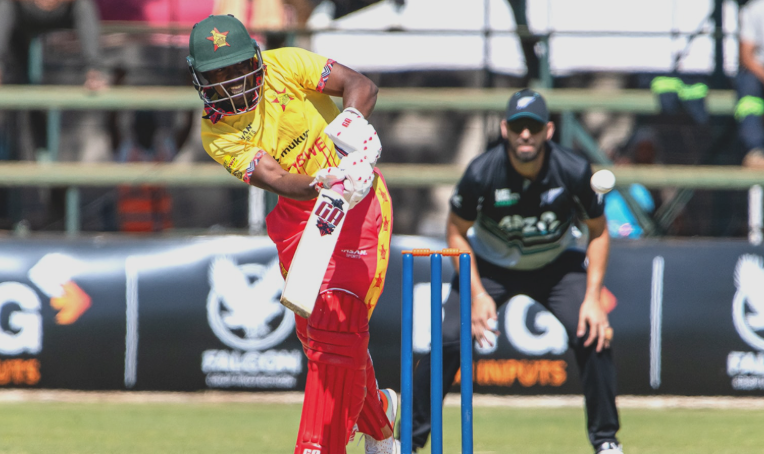
The second Test, August 7-9, was merciless. Zimbabwe managed 125 first up, bowled out by Henry’s 6/19. New Zealand declared at 601/3, powered by Devon Conway’s monumental 267 and Rachin Ravindra’s 200, exploiting flat pitches with aggressive strokeplay. Zimbabwe folded for 117 second time, handing NZ victory by an innings and 359 runs—the third-largest margin in Test history. Aggression peaked with short-pitched barrages; Zim fans despaired at the mismatch, while NZ celebrated tactical mastery in spin and pace. T20 Tri-Series added salt: NZ thrashed Zim twice, by eight wickets (122/2 chasing 121) and 60 runs (190/6 to 130). Modern realities? Zimbabwe’s rebuilding exposed against elite depth.
| Category | Highlight | Details |
|---|---|---|
| Best Player | Devon Conway | 267 in 2nd Test; anchored NZ’s 601/3d, match-winning knock with 32×4, 5×6. |
| Highest Score | Devon Conway – 267 | 2nd Test 1st innings; marathon effort on 412 balls, crushed Zim bowlers. |
| Best Bowling | Matt Henry – 6/19 | 2nd Test Zim 1st innings; devastating spell, career-best in series dominance. |
| Top Run Chase | NZ 8/1 vs Zim 149 & 165 | 1st Test; effortless pursuit in 2.2 overs, highlighted one-sided affair. |
| Notable Moment | Innings & 359-Run Win | 2nd Test; historic hammering left Zim reeling, fans in shock at collapse. |
| Interesting Fact | Third-Largest Test Margin | Innings defeat ranks behind only two others; underscored NZ’s 2025 supremacy. |
| Best Partnership | Conway & Ravindra – 300+ | 2nd Test; unbreakable stand built massive total, tactical patience paid off. |
| Record Breaker | Henry’s 10-Wicket Series Haul | Tri-Series POM with 10 scalps; pace terror defined brutal chapter. |
Conclusion
In the end, the stats paint a stark picture: New Zealand’s overwhelming superiority in Tests, whitewashes in T20s, and record-breaking humiliations like 2025’s innings and 359-run win. Yet Zimbabwe’s rare golden victories and fighting spirit keep the rivalry emotionally alive, reminding us that cricket’s beauty lies in both the thrashing and the occasional triumph against the odds.