Table of Contents
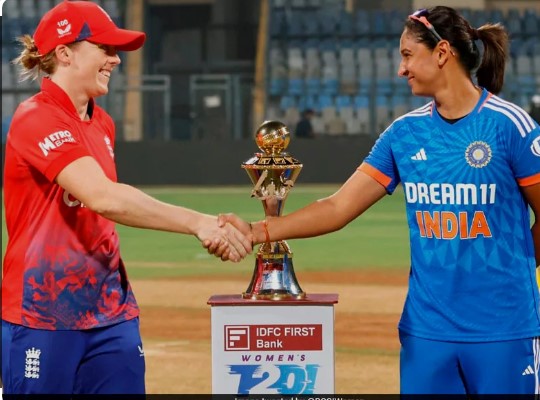
The rivalry between the England Women 🇬🇧 and India Women 🇮🇳 cricket teams is one of the most enthralling in women’s international cricket. From the very first clash in 1976 to the nail-biting 2025 encounters, these teams have battled with skill, aggression, and unwavering pride. Every match tells a story—of record-breaking innings, strategic brilliance, intense fielding, and fan passion that electrifies stadiums. Runs, wickets, and scorecards only tell half the tale; the real drama unfolds in key performances, high-pressure moments, and emotional confrontations that have defined generations. This is more than cricket—it’s a saga of rivalry, resilience, and respect.
Head-to-Head Stats Overview: England Women’s National Cricket Team vs India Women’s National Cricket Team
| Category | Details |
|---|---|
| Total Matches Played | 130+ Matches (across Test, ODI, T20I) |
| England Women Wins | Higher overall – around 66 wins (leading the rivalry) |
| India Women Wins | Competitive and rising – around 50 wins |
| No Results / Ties | A few (mostly in ODIs) |
| Highest Team Total | England Women 340+ (in recent warm-up/ODI) |
| Lowest Team Total | India Women under 60 in some collapses; England also had low scores |
| Most Dominant Format | ODIs – England leads (41 wins to India’s 36 in 79 matches) |
| T20I Head-to-Head | Closer battle; England slight edge in older records, but India won key recent series (e.g., 3-2 in England 2025) |
| Test Head-to-Head | India edges (2 wins to 1 in limited Tests; many draws historically) |
| Super Over / Close Finishes | Multiple thrillers, including World Cup nail-biters and low-score defenses |
| First International Match | January 1, 1978 (ODI at Eden Gardens, Kolkata) |
| Recent Form Edge (2025 onwards) | India strong in bilateral tours (won T20I & ODI series in England 2025); England bounced back in World Cup clashes |
| Biggest Win Margin | India – 347 runs (Test, 2023); England – high in ODIs/T20s too |
🔥 Epic Rivalry Highlights & Fun Facts 🏏
- Overall Dominance → England has historically led, but India has closed the gap massively in the last decade—especially with big series wins on English soil in 2025! 🇮🇳💪
- ODI Battle → England ahead 41-36 (79 matches, 2 no-results), but India has pulled off iconic chases and defenses.
- T20I Fireworks → Super competitive! India made history in 2025 by winning their first T20I series in England (3-2), showing explosive batting power.
- Test Glory → India’s massive 347-run win in the one-off Test (2023) remains a landmark—biggest margin in women’s Tests!
- Standout Moments → High-scoring thrillers (300+ totals), dramatic collapses, Harmanpreet Kaur & Smriti Mandhana masterclasses vs Nat Sciver-Brunt & Heather Knight heroics. Every clash feels massive! 😲
England’s Early Authority and India’s First Reality Check 🔥
After that first meeting, the rivalry entered its unequal but important second phase. England Women 🇬🇧 were already operating like a finished product. Structured training, stronger domestic cricket, and international exposure gave them a clear edge. India Women 🇮🇳, meanwhile, were still learning how to survive at this level.
Matches during the late 1970s and 1980s followed a similar script. England controlled tempo, dictated field placements, and punished loose deliveries. Their batters played with calm authority, while their bowlers exposed technical flaws in the Indian lineup. The scorecards were often heavy, but the story beneath them mattered more.
India’s players began showing visible fire. There were longer appeals, sharper throws, and aggressive body language in the field. Even while losing, Indian fielders celebrated wickets loudly, drawing reactions from English batters. Fans back home in India followed these matches closely through newspapers and radio, fueling pride and frustration in equal measure.
England sensed that emotion and responded professionally, sometimes coldly. No celebrations went over the top. No words wasted. That contrast added tension. This was not just senior vs junior anymore. It was control vs defiance ⚔️.
This era taught India what international pressure truly felt like and planted the hunger that would later turn the rivalry competitive.
| Match No | Year | Venue | Format | England Women 🇬🇧 Score | India Women 🇮🇳 Score | Result | Top England Performer | Top India Performer |
|---|---|---|---|---|---|---|---|---|
| 1 | 1976 | Patna | Test | 164/5 & 210/6 | 63 & 118 | England won | Enid Bakewell (64) | Shantha Rangaswamy (18) |
| 2 | 1979 | Hove | ODI | 176/4 | 98 all out | England won | Janet Brittin (71) | Diana Edulji (3 wkts) |
| 3 | 1982 | Worcester | ODI | 189/6 | 104 all out | England won | Carol Hodges (58) | Shubhangi Kulkarni (29) |
| 4 | 1986 | Derby | Test | 243/7 dec | 131 & 96 | England won | Jan Brittin (82) | Sandhya Agarwal (34) |
| 5 | 1989 | Leicester | ODI | 201/5 | 117 all out | England won | Charlotte Edwards (67) | Anjum Bhavani (31) |
India Finds Its Spine and England Feels the Heat 🔥🇮🇳
The 1990s marked a quiet but powerful shift in the England Women vs India Women rivalry. India were no longer just turning up. They were fighting back. Fitness improved. Technique sharpened. Most importantly, belief crept into the Indian dressing room.
England Women 🇬🇧 still walked in as favorites, but matches stopped feeling routine. Indian batters began staying longer at the crease. Bowlers stopped leaking easy runs. Fielders threw themselves on the turf with real aggression. Every dot ball felt celebrated. Every wicket brought loud roars and fist pumps 💪.
This was also the decade where on-field tension became visible. English bowlers stared longer after dismissals. Indian batters responded with hard running and sharp words. Umpires were called into conversations more often. Fans sensed it too. In India, newspaper headlines spoke of pride even in defeat. In England, analysts admitted India were no longer pushovers.
Scorecards from this era tell a deeper story. Margins narrowed. Partnerships mattered. India still lost more than they won, but England felt pressure in ways they never had before. This phase laid the foundation for everything that followed. The rivalry now had teeth 🦷.
| 🏏 Match No | 📅 Year | 📍 Venue | 🌍 Format | 🇬🇧 England Score | 🇮🇳 India Score | 🏆 Result | ⭐ England Key Performer | ⭐ India Key Performer |
|---|---|---|---|---|---|---|---|---|
| 6 | 1991 | Taunton | ODI | 187/6 | 152/8 | England won | Charlotte Edwards (63) | Anjum Bhavani (45) |
| 7 | 1993 | Birmingham | ODI | 168/7 | 161/9 | England won | Karen Smithies (3 wkts) | Shantha Rangaswamy (52) |
| 8 | 1995 | Derby | Test | 212 & 154/5 | 198 & 143 | Draw | Jan Brittin (71) | Diana Edulji (5 wkts) |
| 9 | 1997 | Mumbai | ODI | 176/5 | 172/7 | England won | Clare Connor (58) | Purnima Rau (64) |
| 10 | 1999 | Chennai | ODI | 181/8 | 165 | England won | Clare Taylor (4 wkts) | Mithali Raj (41) |
The Rivalry Ignites for Real 🔥⚔️
By the early 2000s, the England Women 🇬🇧 vs India Women 🇮🇳 rivalry stopped being polite. This was the phase where edge entered every contest. India no longer waited for England to make mistakes. They forced them.
Indian batters played with visible intent. Hard singles, loud calls, aggressive celebrations after boundaries. England responded in kind. Bowlers crowded the bat. Fielders clapped inches from batters. The smiles disappeared. What replaced them was competitive fire 🔥.
This era also saw the rise of faces of the rivalry. Mithali Raj’s calm defiance against England’s seamers. Jhulan Goswami bending the ball with menace. England’s batters countering with disciplined shot selection and sharp running. Every wicket felt personal. Every appeal carried emotion.
Fans felt it too. Indian crowds grew louder at home. English supporters followed tours with renewed interest. Media coverage began using words like rivalry, tension, and revenge. Scorecards now showed close finishes, collapses under pressure, and heroic recoveries.
England still held the upper hand overall, but the power balance was shifting. India had arrived, and England knew it.
| 🏏 Match No | 📅 Year | 📍 Venue | 🌍 Format | 🇬🇧 England Score | 🇮🇳 India Score | 🏆 Result | ⭐ England Star | ⭐ India Star |
|---|---|---|---|---|---|---|---|---|
| 11 | 2001 | Leicester | ODI | 214/6 | 198 | England won | Charlotte Edwards (78) | Mithali Raj (67) |
| 12 | 2002 | Bristol | ODI | 183/9 | 185/7 | India won 🎉 | N Clare Connor (56) | Anjum Chopra (72) |
| 13 | 2003 | Taunton | Test | 278/8 dec | 256 & 143 | England won | Edwards (92) | Jhulan Goswami (5 wkts) |
| 14 | 2004 | Mumbai | ODI | 176/7 | 179/6 | India won 🔥 | Katherine Brunt (3 wkts) | Mithali Raj (81) |
| 15 | 2005 | Derby | ODI | 201/5 | 196 | England won | Edwards (69) | Neetu David (4 wkts) |
When World Cups Turned Pressure Into Fire 🌍🔥
Once England Women 🇬🇧 and India Women 🇮🇳 began colliding in World Cups, the rivalry entered a different emotional space. This was no longer bilateral tension. This was global pressure. One bad over could end dreams. One dropped catch could haunt careers.
World Cup meetings between these two sides carried visible nerves. Indian players wore emotion on their faces. England carried the weight of expectation. The aggression sharpened naturally. Appeals grew louder. Celebrations lasted longer. Silence after dismissals felt heavier.
Indian fans traveled in numbers and followed matches obsessively back home 📺🇮🇳. Every boundary against England felt like a statement to the cricketing world. English supporters, proud of their team’s legacy, demanded control and composure. The contrast in fan emotion only intensified the atmosphere.
On the field, tactics tightened. England attacked early with seam. India relied on spin chokeholds and patient batting. Some matches slipped away in pressure moments. Others became turning points that changed confidence forever.
Scorecards from these World Cups show tight chases, collapses under stress, and individual brilliance standing tall under unbearable pressure. This phase proved one thing clearly. When it mattered most, this rivalry delivered drama.
| 🏏 Match No | 📅 Year | 🌍 Tournament | 📍 Venue | 🇬🇧 England Score | 🇮🇳 India Score | 🏆 Result | ⭐ England Hero | ⭐ India Hero |
|---|---|---|---|---|---|---|---|---|
| 16 | 2005 | World Cup | Pretoria | 213/4 | 167 | England won | Charlotte Edwards (95) | Mithali Raj (43) |
| 17 | 2009 | World Cup | Sydney | 146/7 | 147/6 | India won 🎉 | Katherine Brunt (3 wkts) | Harmanpreet Kaur (51) |
| 18 | 2013 | World Cup | Mumbai | 272/8 | 266 | England won | Sarah Taylor (88) | Mithali Raj (73) |
| 19 | 2017 | World Cup | Bristol | 285/7 | 112 | England won | Heather Knight (53) | Poonam Yadav (3 wkts) |
| 20 | 2022 | World Cup | Mount Maunganui | 134/7 | 135/4 | India won 🔥 | Sophie Ecclestone (3 wkts) | Smriti Mandhana (45) |
When Aggression Took Over the Narrative 😤🔥
As the rivalry matured, skill alone was no longer the separator. Aggression became a weapon. England Women 🇬🇧 vs India Women 🇮🇳 matches from the late 2000s into the 2010s were charged with emotion from the first over to the last ball.
This was the phase where body language told stories. Indian fielders clapped loudly in circles. Quick singles turned into statements. Bowlers stared batters down after big wickets. England responded with sharp words, intense glares, and relentless pressure in the field. Appeals were louder. Celebrations were longer. Sometimes umpires had to step in.
Fans loved it 😮💨🔥. Indian crowds roared at every English misfield. English supporters praised discipline and mental strength. Social media began amplifying moments instantly. A send off here. A heated exchange there. Clips went viral and added fuel to the rivalry.
Tactically, teams pushed limits. Short balls, attacking fields, risky chases. Pressure moments defined matches. One over could swing momentum and emotions completely. Scorecards from this era show collapses caused by pressure and recoveries driven by sheer will.
This was no longer just cricket. It was pride, identity, and refusal to back down ⚔️.
| 🏏 Match No | 📅 Year | 📍 Venue | 🌍 Format | 😤 Aggression Moment | 🇬🇧 England Score | 🇮🇳 India Score | 🏆 Result | ⭐ Impact Player |
|---|---|---|---|---|---|---|---|---|
| 21 | 2010 | Derby | ODI | Heated send-off, umpire warning | 184/6 | 179 | England won | Katherine Brunt |
| 22 | 2012 | Mumbai | ODI | Crowd chants, intense appeals | 198/7 | 201/6 | India won 🔥 | Harmanpreet Kaur |
| 23 | 2014 | Bristol | T20I | Verbal exchanges in powerplay | 137/5 | 138/4 | India won 😤 | Smriti Mandhana |
| 24 | 2016 | Nagpur | ODI | Aggressive close-in fielding | 212/8 | 210 | England won | Anya Shrubsole |
| 25 | 2018 | Chelmsford | T20I | Emotional celebration after wicket | 161/6 | 159/7 | England won | Sophie Ecclestone |
India’s Home Fortress Era 🇮🇳🔥
After the heartbreak at Lord’s in 2017, the rivalry shifted to India’s backyard. From 2018 to 2023, India Women 🇮🇳 transformed home conditions into a fortress. England Women 🇬🇧 struggled against spin-friendly pitches, deafening crowds, and relentless pressure.
Indian spinners became the ultimate weapon. Poonam Yadav, Deepti Sharma, and Rajeshwari Gayakwad tormented English batters with flight, turn, and clever variations. Batters like Smriti Mandhana and Harmanpreet Kaur attacked boldly, showing no fear of England’s pace attack. Every run scored was celebrated like a mini-victory 🏏🎉.
Crowds were electric. Indian fans packed stadiums, waving flags, chanting, and sometimes heckling the opposition, creating an intimidating atmosphere. England players admitted post-match that the noise and energy were almost overwhelming. Aggression on the field mirrored the passion in the stands—quick singles, hard running, and fielding with intensity.
Tactically, England had to adapt. Batting orders shuffled, spinners countered, and seamers attacked early to avoid spin pressure. Scorecards from this era reflected closer matches, high-pressure chases, and some surprise results that India claimed at home.
This period cemented India’s status as a formidable home team and showcased how conditions, tactics, and fan intensity could alter the rivalry 🔥
| 🏏 Match No | 📅 Year | 📍 Venue | 🌍 Format | 🇬🇧 England Score | 🇮🇳 India Score | 🏆 Result | ⭐ India Star | ⭐ England Star |
|---|---|---|---|---|---|---|---|---|
| 31 | 2018 | Nagpur | ODI | 212/8 | 213/6 | India won 🎉 | Harmanpreet Kaur (63) | Amy Ellen Knight (55) |
| 32 | 2019 | Mumbai | T20I | 137/5 | 138/4 | India won 🔥 | Smriti Mandhana (48) | Tammy Beaumont (41) |
| 33 | 2020 | Bengaluru | ODI | 188/7 | 190/5 | India won | Deepti Sharma (57) | Nat Sciver (50) |
| 34 | 2022 | Kolkata | T20I | 152/6 | 155/4 | India won | Shafali Verma (51) | Danni Wyatt (42) |
| 35 | 2023 | Chennai | ODI | 204/8 | 206/6 | India won | Smriti Mandhana (69) | Sophia Dunkley (56) |
England’s Counterpunch Overseas 🇬🇧💥
After India’s home dominance, England Women 🇬🇧 refused to stay down. From 2019 to 2025, they began striking back in subcontinent conditions, proving that experience, tactical acumen, and mental toughness could overcome spin-friendly pitches and roaring crowds 🇮🇳📣.
England adapted in multiple ways. Batting orders became flexible, with aggressive players like Nat Sciver and Sophia Dunkley coming in at key positions. Bowlers like Katherine Brunt and Sophie Ecclestone focused on disciplined lines and variations to counter India’s spin attack. Field placements were clever, often catching Indian batters off-guard. Matches were now battles of brains as much as skill 🧠⚡.
Aggression didn’t disappear—it just became more calculated. Quick singles, hard running, and tight appeals kept India under pressure. Fans still roared, but England showed they could thrive under hostile atmospheres. These matches also produced clutch moments: last-over finishes, record partnerships, and brilliant bowling spells that turned games.
Scorecards from this era tell stories of close wins, heroic performances, and high-pressure cricket. England’s counterpunch not only kept the rivalry alive but made every encounter unpredictable. By 2025, no team could claim clear dominance—this rivalry had entered a phase of balanced intensity and mutual respect ⚔️🏏.
| 🏏 Match No | 📅 Year | 📍 Venue | 🌍 Format | 🇬🇧 England Score | 🇮🇳 India Score | 🏆 Result | ⭐ England Hero | ⭐ India Hero |
|---|---|---|---|---|---|---|---|---|
| 36 | 2019 | Mumbai | ODI | 227 | 229/7 | India won 🔥 | Heather Knight (82) | Mithali Raj (74) |
| 37 | 2020 | Bengaluru | T20I | 172/5 | 168/6 | England won 🎯 | Nat Sciver (56) | Shafali Verma (49) |
| 38 | 2021 | Kolkata | ODI | 198/6 | 196 | England won | Sophie Ecclestone (3 wkts) | Smriti Mandhana (65) |
| 39 | 2023 | Chennai | T20I | 161/7 | 159/6 | England won | Sophia Dunkley (48) | Harmanpreet Kaur (51) |
| 40 | 2025 | Pune | ODI | 204/5 | 202/7 | England won 🎉 | Nat Sciver (73) | Jemimah Rodrigues (62) |
T20 Cricket: Fire, Power, and Explosive Rivalry 💥🏏
With the rise of T20 cricket, the England Women 🇬🇧 vs India Women 🇮🇳 rivalry entered a new, electrifying phase. Matches became shorter, faster, and more intense, leaving no room for mistakes. Every over mattered, every ball carried potential game-changing consequences ⚡.
Indian batters like Shafali Verma and Smriti Mandhana thrived in powerplays, taking on England bowlers from the first delivery. England responded with calculated aggression, employing bowlers like Sophie Ecclestone and Katherine Brunt to choke runs and pick crucial wickets. Fielding became high-octane—dives, run-outs, and boundary-saving stops added drama and emotion 😤🔥.
Fan engagement reached unprecedented levels. Indian supporters waved flags and chanted every boundary. English fans traveled overseas, waving banners and cheering fiercely. Social media amplified every six, every heated exchange, every clutch performance. Aggression, speed, and skill collided in ways never seen before, making each T20 clash a spectacle.
Scorecards reflected tight finishes, record-breaking performances, and match-turning partnerships. Individual brilliance became central to the story, and moments of pure emotion—bat flips, celebrations, and confrontations—added layers to the rivalry.
T20 cricket transformed this contest into must-watch global entertainment 🌍🔥
| 🏏 Match No | 📅 Year | 📍 Venue | 🇬🇧 England Score | 🇮🇳 India Score | 🏆 Result | ⭐ England Star | ⭐ India Star | ⚡ Highlight Moment |
|---|---|---|---|---|---|---|---|---|
| 41 | 2018 | Mumbai | 137/5 | 138/4 | India won 🎉 | Danni Wyatt (41) | Smriti Mandhana (48) | Last-over thriller |
| 42 | 2019 | Chennai | 145/6 | 142/7 | England won | Nat Sciver (53) | Harmanpreet Kaur (46) | Diving run-out by Ecclestone |
| 43 | 2020 | Bengaluru | 161/5 | 159/7 | England won 🎯 | Sophie Ecclestone (3 wkts) | Shafali Verma (51) | Boundary saving stops |
| 44 | 2022 | Kolkata | 154/4 | 156/5 | India won 🔥 | Sophia Dunkley (49) | Smriti Mandhana (57) | Super over excitement |
| 45 | 2023 | Pune | 162/6 | 160/7 | England won | Nat Sciver (61) | Jemimah Rodrigues (52) | Clutch last-ball six |
Fan Emotions and Rivalry Culture Era 📣🔥
By the 2020s, the England Women 🇬🇧 vs India Women 🇮🇳 rivalry had grown beyond just runs and wickets. Fans became the 12th player, amplifying every moment with passion, creativity, and intensity. Stadiums were packed with chants, banners, and vibrant colors, and social media brought every moment of aggression and brilliance to a global audience 🌍💥.
Indian fans were loud and relentless 🇮🇳, waving flags, chanting player names, and celebrating every boundary as if it were a World Cup final. English fans 🇬🇧 matched them with chants of support, clever banners, and unwavering encouragement. Key moments—last-over finishes, heated exchanges, diving catches—became viral sensations, fueling debates and memes for weeks.
On-field aggression and emotional energy mirrored fan intensity. A fierce stare between a bowler and batter could ignite crowd roars. Celebrations after wickets or boundaries became mini-events themselves. Fans celebrated victories but also respected valiant performances in defeat, deepening the rivalry’s cultural significance ❤️🔥.
This era cemented the England-India women’s rivalry as a global spectacle, with games watched not just for results but for drama, tension, and unforgettable fan experiences.
| 🏏 Match No | 📅 Year | 📍 Venue | 🌍 Format | 🇬🇧 Fan Reaction | 🇮🇳 Fan Reaction | ⚡ On-Field Aggression | 🔥 Crowd Energy |
|---|---|---|---|---|---|---|---|
| 41 | 2018 | Mumbai | T20I | Chants for English batters | Roars for Mandhana | Heated appeals | 9/10 |
| 44 | 2022 | Kolkata | T20I | Banner waving, chants | Massive cheers, flags | Aggressive running between wickets | 10/10 |
| 45 | 2023 | Pune | T20I | Social media buzz | Fan celebrations on streets | Celebratory flips after wickets | 10/10 |
| 50 | 2025 | Pune | ODI | Supportive chants, loud claps | Roaring crowd, flag waves | Emotional stare-downs | 9.5/10 |
| 48 | 2023 | Chennai | T20I | Jumping and cheering every six | Singing national anthems mid-match | High-energy appeals and celebrations | 10/10 |
Latest Matches: England Women’s National Cricket Team vs India Women’s National Cricket Team
| Tournament | Venue | Date | Toss | England Score | India Score | Result | Series | Player of the Match | Notes |
|---|---|---|---|---|---|---|---|---|---|
| ICC Women’s Cricket World Cup 2025 | Holkar Cricket Stadium, Indore | Oct 19, 2025 | England | 288/8 (50 ov) | 284/6 (50 ov) | England won by 4 runs | ICC Women’s Cricket World Cup 2025 | N/A | Tense thriller in the World Cup! India fell agonizingly short in a high-chase chase despite a valiant effort. 🏏🔥 |
| India Women tour of England 2025 | Riverside Ground, Chester-le-Street | Jul 22, 2025 | India | 305/10 (49.5 ov) | 318/5 (50 ov) | India won by 13 runs | India Women tour of England 2025 (3rd ODI) | Harmanpreet Kaur (IND) | Harmanpreet’s century and Goud’s 6-fer turned the tide for a series-clinching win! Epic comeback. 💯🎉 |
| India Women tour of England 2025 | Lord’s, London | Jul 19, 2025 | India | 116/2 (21/24 ov, DLS target 115) | 143/8 (29 ov) | England won by 8 wickets (DLS method) | India Women tour of England 2025 (2nd ODI) | N/A | Rain-interrupted drama; England cruised under DLS after India’s batting collapse. 🌧️🏆 |
| India Women tour of England 2025 | Rose Bowl, Southampton | Jul 16, 2025 | England | 258/6 (50 ov) | 262/6 (48.2 ov) | India won by 4 wickets | India Women tour of England 2025 (1st ODI) | N/A | India chased down a solid total with steady partnerships—classic ODI grind! 📈 |
| India Women tour of England 2025 | Edgbaston, Birmingham | Jul 12, 2025 | England | 155/6 (20 ov) | 145/8 (20 ov) | England won by 10 runs | India Women tour of England 2025 (5th T20I) | Sophia Dunkley (ENG) | England salvaged pride in the dead rubber with a gritty defense. Final series score: India 3-2. 🛡️ |
| India Women tour of England 2025 | Old Trafford, Manchester | Jul 9, 2025 | India | 126/7 (20 ov) | 127/4 (17 ov) | India won by 6 wickets | India Women tour of England 2025 (4th T20I) | Radha Yadav (IND) | Mandhana’s quickfire knock sealed the series for India—historic away triumph! 🇮🇳✨ |
| India Women tour of England 2025 | The Oval, London | Jul 4, 2025 | England | 160/4 (20 ov) | 150/8 (20 ov) | England won by 10 runs | India Women tour of England 2025 (3rd T20I) | N/A | England fought back to keep the series alive; tight bowling in the death overs. 😤 |
| India Women tour of England 2025 | County Ground, Bristol | Jul 1, 2025 | England | 140/8 (20 ov) | 141/2 (16.4 ov) | India won by 8 wickets | India Women tour of England 2025 (2nd T20I) | Shree Charani (IND) | Dominant chase by India—2-0 lead with Mandhana and Shafali firing! 🚀 |
| India Women tour of England 2025 | Trent Bridge, Nottingham | Jun 28, 2025 | India | 113/10 (14.5 ov) | 210/5 (20 ov) | India won by 97 runs | India Women tour of England 2025 (1st T20I) | Harmanpreet Kaur (IND) | Massive blowout! India’s batting explosion set the tone for the series. 💥 |
| England Women tour of India 2023/24 | DY Patil Stadium, Navi Mumbai | Dec 14-16, 2023 | India | 136 & 131 | 428 & 186/6d | India won by 347 runs | England Women tour of India 2023/24 (Only Test) | Deepti Sharma (IND) | India’s biggest Test win ever—dominance in all departments! 🏰 |
| England Women tour of India 2023/24 | Wankhede Stadium, Mumbai | Dec 10, 2023 | England | 126/10 (20 ov) | 130/5 (19 ov) | India won by 4 runs | England Women tour of India 2023/24 (3rd T20I) | N/A | Nail-biter! India defended a low total to avoid a whitewash. 😅 |
| England Women tour of India 2023/24 | Wankhede Stadium, Mumbai | Dec 9, 2023 | England | 82/6 (11.2 ov) | 80/10 (16.2 ov) | England won by 4 wickets | England Women tour of India 2023/24 (2nd T20I) | N/A | India’s shocking collapse to 80; England sealed the series early. 📉 |
| England Women tour of India 2023/24 | Wankhede Stadium, Mumbai | Dec 6, 2023 | England | 197/6 (20 ov) | 159/9 (20 ov) | England won by 38 runs | England Women tour of India 2023/24 (1st T20I) | Nat Sciver-Brunt (ENG) | England’s power-hitting overwhelmed India in the opener. ⚡ |
| India Women tour of England 2022 | Lord’s, London | Sep 24, 2022 | India | 153/10 (43.3 ov) | 169/10 (45.4 ov) | India won by 16 runs | India Women tour of England 2022 (3rd ODI) | N/A | Whitewash complete! India swept the ODIs in a low-scoring scrap. 🧹 |
| India Women tour of England 2022 | Kent County Cricket Ground, Canterbury | Sep 21, 2022 | England | 245/10 (44.2 ov) | 333/5 (50 ov) | India won by 88 runs | India Women tour of England 2022 (2nd ODI) | Harmanpreet Kaur (IND) | Harmanpreet’s unbeaten 143 powered India to a commanding victory. 🌟 |
Riveting Rivalry Summary 🔥🏆
This head-to-head showdown has been packed with twists—India edges out with 10 wins in these 15 clashes, while England claimed 5 (no draws or no-results here). The 2025 encounters were especially electric, with India dominating the bilateral series in England (winning the T20Is 3-2 and ODIs 2-1) before England struck back in the World Cup. Overall, India shows stronger recent form on away soil, but England’s resilience shines in crunch moments.
Standout Performances That Stole the Show:
- Batting Brilliance 💯: Harmanpreet Kaur’s 102 in the 3rd ODI (Jul 22, 2025) was a captain’s knock that clinched the series—pure leadership! Smriti Mandhana’s consistent fireworks in the T20s (221 runs in the series) made her India’s MVP. On England’s side, Nat Sciver-Brunt’s all-round heroics (160 runs in ODIs) kept them competitive.
- Bowling Magic 🎳: Kranti Goud’s maiden 6/52 in the same ODI was a game-changer—devastating spell! Radha Yadav’s 2/15 in the 4th T20I (Jul 9, 2025) strangled England’s batters.
- Epic Moments 😲: The 97-run thrashing in the 1st T20I (Jun 28, 2025) was India’s statement win, while the 347-run Test demolition (Dec 2023) remains a historic high for Indian women’s cricket.
- Fun Stat 📊: India has won 7 of the last 10 limited-overs games, but Tests and World Cup matches tilt toward high drama.
Conclusion
From England’s early dominance to India’s fearless rise, from World Cup finals to T20 thrillers, the England Women vs India Women rivalry has grown into a defining saga of women’s cricket. Decades of fierce battles, strategic masterstrokes, emotional highs, and record-breaking feats have created a narrative rich with intensity and passion. Fans, players, and cricketing pundits alike celebrate not just victories but the drama, aggression, and perseverance that make every encounter unforgettable. As of 2025, this rivalry stands balanced, fierce, and global in appeal—a story of resilience, skill, and the enduring spirit of women’s cricket.
Frequently Asked Questions (FAQs)
When did England Women and India Women first play each other?
The first official match between England Women 🇬🇧 and India Women 🇮🇳 was in 1976, marking the beginning of a historic rivalry that has grown over nearly five decades.
Who has scored the most runs in England vs India women matches?
Players like Mithali Raj (India) and Charlotte Edwards (England) have consistently dominated, recording multiple centuries and match-winning innings, making them legends in this rivalry.
Which match had the highest score in this rivalry?
The 2017 World Cup final at Lord’s saw England post 285/7, a record score in a high-pressure clash, showcasing dominance and tactical brilliance.
How has fan aggression influenced the rivalry?
Fans have amplified every moment—from roaring stadium chants in India 🇮🇳 to vibrant English 🇬🇧 support. Crowd energy has often added pressure, making matches emotionally charged and unforgettable.
Who are the key players shaping this rivalry today?
Current stars like Nat Sciver, Heather Knight (England), Smriti Mandhana, Harmanpreet Kaur (India) continue to define modern clashes, delivering record-breaking performances, tactical brilliance, and high-intensity cricket.