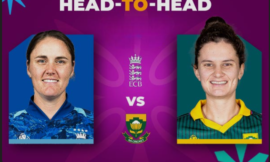
The rivalry between the West Indies women’s cricket team and the South Africa women’s national cricket team has produced some of the most exciting contests in women’s cricket. From tense World Cup clashes to dramatic T20 finishes, both teams have pushed each other to higher standards over the years. West Indies brought fearless batting power and natural flair, while South Africa relied on disciplined bowling and tactical control. Legendary players like Stafanie Taylor, Deandra Dottin, Shabnim Ismail, and Laura Wolvaardt turned this rivalry into a global attraction filled with emotion, pressure, and unforgettable scorecards.
Head-to-Head Summary Table
Format
Matches Played
West Indies Wins
South Africa Wins
Tied
No Result or Abandoned
ODI
35
11
18
3
3
T20I
26
16
8
0
2
Total
61
27
26
3
5
Recent Match Results Table
Date
Format
Venue
Winner
Margin
23 June 2025
T20I
Cave Hill, Barbados
West Indies Women
6 wickets
22 June 2025
T20I
Cave Hill, Barbados
West Indies Women
6 wickets
20 June 2025
T20I
Cave Hill, Barbados
South Africa Women
50 runs
17 June 2025
ODI
Cave Hill, Barbados
South Africa Women
166 runs DLS
14 June 2025
ODI
Cave Hill, Barbados
South Africa Women
40 runs
11 June 2025
ODI
Cave Hill, Barbados
West Indies Women
4 wickets DLS
4 October 2024
T20I
Dubai, UAE
South Africa Women
10 wickets
25 January 2023
T20I
East London, South Africa
South Africa Women
10 wickets
21 January 2023
T20I
East London, South Africa
South Africa Women
44 runs
24 March 2022
ODI
Wellington, New Zealand
No Result
Match Abandoned
Top 5 All-Time Wicket-Takers Table
Rank
Player
Team
Total Wickets
Career Span vs Opponent
1
Marizanne Kapp
South Africa
33
2009 to 2025
2
Shabnim Ismail
South Africa
29
2009 to 2023
3
Hayley Matthews
West Indies
29
2016 to 2025
4
Ayabonga Khaka
South Africa
24
2016 to 2025
5
Anisa Mohammed
West Indies
24
2009 to 2021
Top Standout Batters Table
Player
Team
Primary Role
Key Modern H2H Strengths and Recent Exploits
Laura Wolvaardt
South Africa
Opening Batter
Dynamic Proteas captain; holds a dominant T20I strike rate of 117.40 and scored a vital match-winning 59 in Dubai.
Hayley Matthews
West Indies
All-Rounder
Engine room of the Windies; single-handedly won the June 2025 T20I series with back-to-back half-centuries including 65 off 50.
Tazmin Brits
South Africa
Opening Batter
Aggressive modern anchor; blasted a brilliant 101 in the 2025 ODI series leg and holds a stunning H2H average of 75.7.
Marizanne Kapp
South Africa
All-Rounder
Ultimate clutch player; spans across eras but remains vital in modern middle-overs recovery and accelerated finishing.
Shemaine Campbelle
West Indies
Wicketkeeper-Batter
Resilient veteran anchor; marshals the modern Windies middle order with critical fighting knocks like her 42 in the late June 2025 decider.
Caribbean Flair Meets Protea Grit
The rivalry between the West Indies women’s cricket team and the South Africa women’s national cricket team has grown into one of the most competitive contests in women’s cricket. West Indies built their identity around fearless batting, aggressive stroke play, and natural athleticism, while South Africa focused on pace bowling, disciplined fielding, and tactical planning. Every meeting between these sides brings emotional pressure and momentum swings. ICC tournaments made the rivalry even bigger as both teams fought for global recognition. Fans witnessed dramatic finishes, powerful batting displays, and world-class bowling spells over the years. The rivalry also helped women’s cricket expand worldwide, inspiring younger players in both regions to pursue the international stage with confidence and ambition.
Season
Score
Winning Team
Performance
Key Moment
2013 ODI
198 vs 190
West Indies Women
Taylor all-round show
Tight chase defense
2016 WT20
125 vs 122
West Indies Women
Dottin finishing burst
Last overs drama
2020 WT20
136 vs 95
South Africa Women
Ismail fast bowling
Top-order collapse
2023 T20I
168 vs 165
West Indies Women
Matthews captaincy
Last-ball finish
Stafanie Taylor Changes the Rivalry’s Direction
Stafanie Taylor played a massive role in transforming the rivalry against South Africa. Her calm batting style and smart captaincy helped West Indies compete consistently against a disciplined Proteas side. Taylor often absorbed pressure in difficult run chases and contributed important wickets with her off-spin bowling. South Africa struggled whenever she controlled the middle overs because her game awareness shifted momentum quickly. Fans admired her ability to perform under pressure in ICC tournaments and bilateral series alike. She also inspired younger Caribbean players to believe they could defeat stronger bowling attacks. Many memorable wins against South Africa carried Taylor’s influence, whether through partnerships, bowling breakthroughs, or tactical field placements during tense moments in close matches.
Season
Score
Winning Team
Performance
Key Moment
2013 ODI
210 vs 202
West Indies Women
Taylor 89 runs
Match-winning partnership
2016 Series
175 vs 168
West Indies Women
3 wickets by Taylor
Middle-order collapse
2018 ODI
189 vs 192
South Africa Women
Taylor 71 runs
Narrow chase success
2022 ODI
234 vs 229
West Indies Women
Taylor all-round effort
Final over pressure
When Pace Bowling Turned Matches Into Battles
South Africa’s rise in the rivalry came largely through their dangerous pace attack led by Shabnim Ismail and Marizanne Kapp. Their ability to swing the new ball and attack aggressively often pushed West Indies into defensive situations early in innings. Ismail’s raw pace created fear among top-order batters, while Kapp controlled the game with disciplined seam bowling and lower-order batting contributions. West Indies responded with counterattacking cricket, especially through aggressive middle-order partnerships. Several matches became emotional battles where early wickets completely changed momentum. The rivalry gained intensity because both sides approached matches with different strategies. South Africa trusted control and precision, while West Indies relied on instinct and fearless shot-making during high-pressure moments.
Season
Score
Winning Team
Performance
Key Moment
2017 ODI
220 vs 170
South Africa Women
Ismail 5 wickets
Powerplay destruction
2018 T20I
140 vs 137
South Africa Women
Kapp bowling spell
Tight death overs
2020 WT20
136 vs 95
South Africa Women
Fast bowling dominance
Early collapse
2021 ODI
196 vs 191
West Indies Women
Late recovery batting
Counterattack finish
T20 Cricket Added Fire to the Rivalry
T20 cricket brought explosive energy into the rivalry between these two teams. Matches became faster, more emotional, and unpredictable as big hitters changed games within a few overs. Deandra Dottin became a major threat for South Africa because of her fearless power hitting and ability to finish games under pressure. South Africa responded with tactical bowling plans and athletic fielding that often restricted the Caribbean side in tense run chases. Fans enjoyed dramatic final overs, quick scoring bursts, and emotional celebrations after close victories. T20 World Cups added even greater pressure because qualification spots depended on these results. Every boundary, dropped catch, or bowling mistake suddenly carried massive importance in shaping tournament outcomes.
Season
Score
Winning Team
Performance
Key Moment
2016 WT20
125 vs 122
West Indies Women
Dottin finishing attack
Final over tension
2018 T20I
151 vs 149
South Africa Women
Kapp all-round game
Close chase
2020 WT20
136 vs 95
South Africa Women
Wolvaardt batting
Dominant chase
2023 Series
168 vs 165
West Indies Women
Matthews leadership
Last-ball boundary
World Cup Clashes That Changed Everything
ICC tournaments elevated this rivalry to another level because every match carried knockout pressure and global attention. Both teams understood the importance of these contests for rankings, confidence, and international recognition. South Africa often entered tournaments with disciplined strategies and strong pace attacks, while West Indies relied on explosive batting and emotional momentum. Fans witnessed tense finishes, unexpected collapses, and unforgettable partnerships during World Cup meetings. Players carried enormous pressure because one victory could change an entire tournament campaign. These matches also created several iconic performances that shaped careers and strengthened the rivalry’s legacy in women’s cricket history. The intensity of World Cup battles ensured that every future bilateral series between the two teams carried extra emotional significance and competitive fire.
Season
Score
Winning Team
Performance
Key Moment
2017 World Cup
184 vs 176
South Africa Women
Kapp bowling spell
Middle overs pressure
2020 WT20
136 vs 95
South Africa Women
Ismail fast bowling
Early wickets
2022 World Cup
185 vs 181
West Indies Women
Matthews partnership
Crucial chase
2023 WT20
158 vs 149
South Africa Women
Wolvaardt innings
Powerplay dominance
Conclusion
The battle between the West Indies women’s cricket team and the South Africa women’s national cricket team is more than just statistics and scorecards. It represents the growth of women’s cricket through courage, skill, and competitive spirit. Every series added new heroes, memorable performances, and emotional moments that fans still remember today. Whether it was West Indies fighting through aggressive batting or South Africa dominating with fast bowling discipline, both teams created a rivalry filled with intensity and respect. As new generations continue to emerge, this contest promises even bigger matches, stronger rivalries, and more historic performances that will shape the future of international women’s cricket.